Children account for half of suspected mpox cases in Guinea-Bissau
UNICEF strengthens surveillance, prevention, and community outreach as country responds to its first mpox outbreak
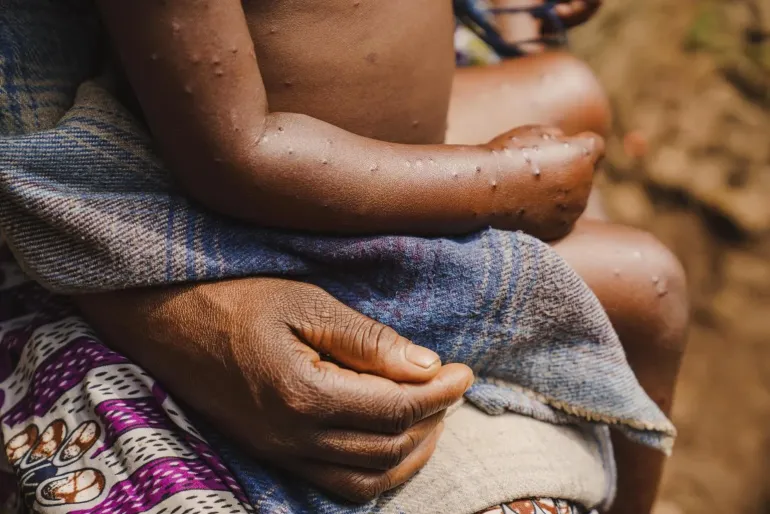
BISSAU/DAKAR, 20 August 2026 – Children under 15 account for half of all 46 suspected mpox cases in Guinea-Bissau. UNICEF is scaling up its support to the Ministry of Public Health in direct response to the country’s first-ever mpox outbreak.
“This is the first time mpox cases have been reported in Guinea-Bissau, making even a small outbreak a major public health event,” said Sandra Martins, UNICEF Deputy Representative in Guinea Bissau. “While the country’s surveillance system remains extremely fragile, we face the risk that cases are going undetected, particularly among children who are the most vulnerable to severe complications.”
Since the outbreak was declared on 4 July 2026, Guinea-Bissau has reported seven confirmed mpox cases, all among adults, as of 17 August. Six of the confirmed cases are in the Autonomous Sector of Bissau while one is in Biombo Region. No deaths have been reported to date.
However, of the 46 suspected cases, 23 are children aged under 15. Sixteen of those children are aged 0-4 years, raising concerns for their health given the greater risk of complications from the virus among young children. The reopening of schools in September further compounds these concerns, given the potential for increased transmission among children.
Confirmed cases do not appear connected to each other, suggesting undetected chains of transmission, and the possibility that additional cases may be going unidentified.
Critical gaps remain in community-based surveillance, especially in identifying contacts, testing samples, and systematically tracing how the virus is spreading.
UNICEF is working closely with the Ministry of Public Health, WHO, and partners to support the government-led response, strengthen surveillance and contact tracing, reinforce infection prevention control and water, sanitation and hygiene measures in health facilities, and ensure that children and families receive timely, and accurate and information to help prevent further spread of mpox.
“With early detection, care, and prevention, mpox can be managed and its spread reduced,” said Sandra Martins. “We urge families to seek care immediately if a child or family member develops a rash, fever, swollen lymph nodes or other symptoms, and to follow guidance on handwashing, avoiding close contact with suspected cases, and reducing stigma.”
While the broader national response is underway, UNICEF requires more than US$150,000 to support targeted, critical pillars of the mpox intervention in Guinea-Bissau. Flexible emergency funding is urgently required to deploy these vital resources and protect vulnerable populations.
#####
Media contacts
About UNICEF
UNICEF, the United Nations agency for children, works to protect the rights of every child, everywhere, especially the most disadvantaged children and in the toughest places to reach. Across more than 190 countries and territories, we do whatever it takes to help children survive, thrive, and fulfil their potential.
Follow UNICEF on X, Facebook, Instagram and YouTube