

Powering progress
Climate disasters are increasingly responsible for critical disruptions to energy systems. Investing in resilient, sustainable and green energy can keep children connected to vital services.

Climate change may be the greatest common threat facing the world’s children. In 2023, extreme weather events significantly impacted every continent on the planet, disrupting the essential services children rely on – starting with energy.
Without power, water plants cease to function. Hospitals operate without light and medical equipment. Schools and homes lose heating and cooling. And children enduring floods, droughts and severe temperatures get cut off from vital care.
From the cold chain to the classroom, we need reliable energy solutions that keep services for children turned on when climate disasters strike. UNICEF is building them on a small scale. You can build them on a great one.
The case for turning up investment
Addressing energy poverty is the right thing to do. It’s also the smart thing: Investing in resilient energy solutions for health, education and water systems can triple the return in developing countries.
A green light to take action
- UNICEF calls for collective action from the public and private sectors to bring resilient, sustainable and green energy to the communities most vulnerable to climate hazards. Investing in energy resilience can triple the return through positive impacts in health, education and water provision.
- UNICEF asks for investment also beyond the business value chain – to critical sectors like health, education and water provision. By diversifying and decentralizing energy infrastructure, businesses can protect themselves from supply chain disruptions, stay ahead of regulatory requirements, enhance their brand reputation, and drive long-term value creation.
- UNICEF asks to advocate for policies supporting renewable energy adoption and climate resilience in communities. We urge policymakers and regulators to improve the enabling environment for private investment, while partnering with development finance institutions to offer blended finance solutions. Governments can incentivize private sector investors, stimulate innovation and foster the transition to net-zero.
- UNICEF advocates for investments that promote people-centred, just and equitable development – including by directing capital towards capacity building and education – and the integration of investment into local value chains to ensure the long-term sustainability of energy infrastructure. Where possible, investors should source parts locally and create business models around maintenance and repair to boost local economies.
- UNICEF invites business leaders to partner with us through innovative financing models for sustainable energy projects. We have a proven track record of redesigning systems around children, to the benefit of entire societies.
Sustainable energy powers UNICEF
Hundreds of millions of children live without adequate access to reliable electricity – many of them, in the countries most vulnerable to extreme weather.
UNICEF works in more off-grid contexts than nearly any organization on the planet. The world’s largest provider of vaccines, we keep children healthy and safe from disease. We bring clean water and sanitation to those hardest to reach, and provide quality education so they see a future more bright.
Many know us for our blue backpacks. But it’s green energy that lets UNICEF power up.

Solarizing schools, hospitals and water systems
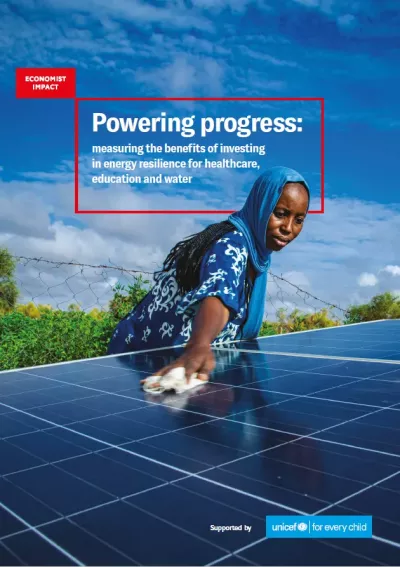
UNICEF builds off-grid solutions to keep vital services turned on. We support the solarization of vaccine cold chain equipment, electrification, heating, and cooling at health facilities and medical warehouses. We connect schools to renewable energy, and install solar-powered water systems in learning centres, health facilities and communities vulnerable to climate disaster and conflict.
Shaping the market for sustainable energy
UNICEF has decades of experience influencing the market to improve access to sustainable, affordable energy products and services. We help activate global supply and demand – engaging with new manufacturers, procuring supplies where they’re most needed, and incentivising companies to innovate products and business models.


Rightsizing off-grid solutions
For decades, UNICEF has assessed and influenced the sustainable energy market to identify optimal solutions for development and humanitarian contexts. This means facilitating public and private partnerships to create synergies, implement proofs of concept and scale up delivery.
Engaging governments
We advocate for the inclusion of child-sensitive climate, disaster risk reduction and renewable energy action in public planning – working with governments to facilitate enabling policy environments, enhance national ownership and catalyse public and private investments across sectors.
