Understanding their inner realities
In western Nepal, UNICEF and Jo Malone London are partnering to equip healthworkers to better understand and serve the mental health needs of children and adolescents

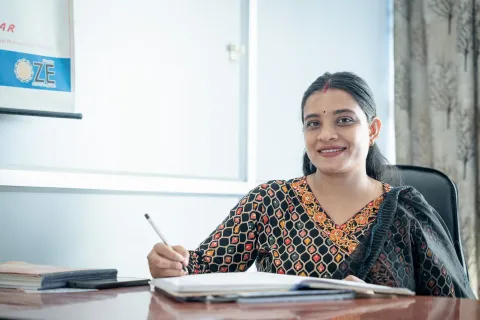
Surkhet, Nepal: "The notion that children and adolescents don’t suffer from anxiety or depression is wrong," says Nikita Puri, a mental health nurse at Mehelkuna Hospital in Surkhet District, Karnali Province.
“Caregivers often believe that if all their children's basic needs are met, then the children cannot possibly struggle with mental health issues. But that’s not the case.”
Nikita emphasizes this message to all parents and caregivers she meets as part of her work.
She explains that children have their “own inner realities and their own worries and concerns, things they might be finding hard to express.”
This understanding is a cornerstone of her approach to mental health, reflecting the training she received through a partnership between UNICEF and Jo Malone London. This initiative - undertaken in collaboration with the Government of Nepal – aims to strengthen mental health services for children and adolescents in Nepal, particularly in remote areas.


Through this collaboration, trained nurses like Nikita work alongside hospital teams and community workers to identify and support young people in need of mental health care.
Their efforts include raising awareness, referring cases, and coordinating with the tele-mental health facility at Kanti Children’s Hospital in Kathmandu.
Despite the high prevalence of mental health issues among children and young people in Nepal — one of the countries with the highest rates of adolescent suicide in South Asia — these issues often go unrecognized and untreated.
This is due to a combination of factors, including a lack of awareness, the stigma surrounding mental health, and limited access to services and trained providers, most of whom are concentrated in Kathmandu and a few other urban centers
The focus of the UNICEF-Jo Malone London initiative on Karnali Province, one of the country’s more deprived regions, is critical in addressing these challenges. Here, access to basic services is often limited, and mental health struggles can feel like an insurmountable burden. This was certainly the case for one young girl from Surkhet District, who battled stress and anxiety from a young age. Her struggles deepened after an early marriage and the birth of her daughter.
"Our financial situation was not good — we could barely afford basic necessities," she recalls. "That added to my mental struggles." This was certainly the case for one young girl from Surkhet District, who battled stress and anxiety from a young age. Her struggles deepened after an early marriage and the birth of her daughter.
"Our financial situation was not good — we could barely afford basic necessities," she recalls. "That added to my mental struggles."
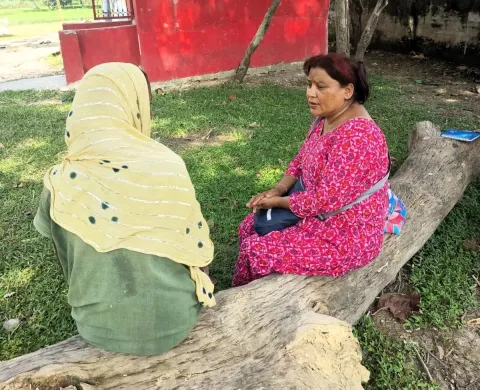
As her condition worsened, it was a Female Community Health Volunteer (FCHV) who first recognized the signs and advised her to seek help at Mehelkuna Hospital.
"I live quite a distance away," she says, "but I came here, consulted with the doctors, and was prescribed medication. Now, I feel much better compared to before."


Many of the adolescent girls who come to her have similarly experienced child marriage or are dealing with family problems, compounded by the high poverty rates in the region, Nikita says. She explains that recent outreach efforts, including training for FCHVs and health workers, have helped bring more patients to the hospital.
"We spend a long time talking to them to understand their situation, counseling them accordingly, and connecting them to doctors when necessary. We have also started teleconferencing with experts at Kanti Hospital, enabling patients here to interact directly with psychiatrists,” she says.

At Mehelkuna Hospital, the appointment of a dedicated mental health nurse has been critical in improving the quality and reach of mental health services, according to medical officer Ashish Poudel.
“The OPD is often crowded, and before, we weren’t able to spend the needed time with patients suffering from mental health problems,” he explains.
Nikita’s presence has allowed for more systematic follow-ups, ensuring that patients receive the care they need, whether through telephone check-ins or in-person visits.
“It has made things a lot easier for us,” Ashish says.
For Nikita, the reward for all her efforts lies in the improvement that she is able to see in her patients.
“Most patients tell us that they’ve been able to use the techniques we've taught them in their daily lives, which has brought them a lot of relief,” she says.

UNICEF Nepal/2024/RUpadhayay
“There are those who initially suffered severe depression, even suicidal thoughts, but now, they’ve undergone a noticeable improvement and are much happier." Nikita says.