A clearer path to child and adolescent mental wellbeing
A once-invisible field, child and adolescent mental health in Nepal has taken stronger shape in recent years through coordinated efforts in training, services and digital outreach

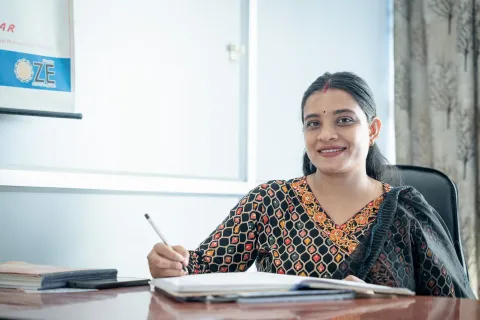
Kathmandu, Nepal: When Dr. Jasmine Ma entered the field of child and adolescent mental health (CAMH) a decade ago, the landscape in Nepal was almost unrecognizable compared to today.
“Back then, CAMH was in a very, very early stage,” she recalls. “There was only one child psychiatrist in the whole country. Most people didn’t even realise that children needed a different kind of mental health care than adults.”
Her own interest had begun during her academic research, but deepened after the 2015 earthquake, when she joined CWIN to support children and adolescents struggling in the aftermath. The experience made one thing clear: Nepal needed trained professionals, structured guidance and services that could reach children wherever they were.
Building from scratch
This is the context in which the collaboration between CWIN and UNICEF on mental health took shape in 2019. The initial priority was straightforward: create a dedicated CAMH care package that could be used by doctors, nurses, health workers and community volunteers.
Working with government counterparts, the team developed a training manual, alongside videos, flipchart and pilot trainings. The Ministry of Health then endorsed the manual in 2020.
Soon after, however, COVID-19 dramatically shifted the needs on the ground.
“It became a very stressful time for children, for parents, for teachers, for everyone,” Jasmine says.
UNICEF and CWIN quickly adapted, developing a COVID-specific CAMH manual and training master trainers. Those trainers went on to reach thousands – 40,000 parents and caregivers, 60,000 children and adolescents, and over 2,000 frontline workers – with messages about coping, spotting distress and supporting children who no longer had access to school, peers or routines.
The shift toward digital care
“Nepal’s terrain, the unpredictability of our climate events, the limited number of mental health specialists… all this makes regular follow-up for patients extremely difficult,” Jasmine explains. “Traveling long distances just for a one-hour consultation, many families and children can’t manage that.”
This understanding led to the next major shift for the project: toward digital care. In 2022, with Rettig’s support, UNICEF and CWIN established a tele-mental health OPD at Kanti Children’s Hospital, along with a satellite clinic in the provincial hospital in Surkhet. A team of psychiatrists and psychologists stationed at Kanti provided specialist consultations through video or audio calls, supporting local providers to assess and treat children.

“People sometimes think a tele-consultation is less ‘real’,” Jasmine says. “But for many children, it’s the only practical way to get care. And we don’t rely only on the child’s account… we speak to caregivers, sometimes even teachers. We build a full picture.”
Alongside the tele-OPD, the team also introduced the MaChhuNi mental health chatbot, which Jasmine says has been useful for providing information and directing young people toward services, especially during periods of social tension, such as the recent Gen Z protests.
Looking back and ahead
This year, with satellite clinics up and running in Madhesh and Lumbini Provinces, and efforts to strengthen the services at Kanti, Jasmine sees the project entering a new phase. “The systems we’ve been building are finally taking root,” she says.
One of the most encouraging changes for her to witness is the growing openness among the teachers the project has reached, who increasingly notice and describe behavioural changes they see in their students. Parents, however, still face barriers. “The stigma is still strong,” she says. “Many parents hear ‘mental health’ and think it means something very extreme, which makes early identification difficult.”
She pauses, recalling again those early earthquake days. “At that time, CAMH felt so invisible,” she sayd quietly.
“Now at least it feels like it’s coming into the light. Not perfectly, not everywhere, but the shift is happening. And that’s because of partnerships like this one. Without UNICEF and Rettig’s support, we simply wouldn’t have made it this far.”
The work continues, but today, there are more trained professionals, more entry points for care, more digital tools, and more children receiving services than ever before.
And for Jasmine, that steady, practical progress is what matters most.