A return to the classroom
For 12-year-old Susin in flood-hit Nuwakot, returning to class offers a first measure of stability after the flood swept through his home and school.
NUWAKOT, Nepal — Susin was at the hospital with his mother when someone ran inside shouting that a large flood was coming.
The 12-year-old had gone to have stitches removed from his hand. Within minutes, people were running, doors were closing and ambulances were moving out. From the hospital, he saw people — including students — running uphill.
His younger brother and grandmother were still at home.
“My mother was looking all over for them,” Susin says. “We found them three hours later.”
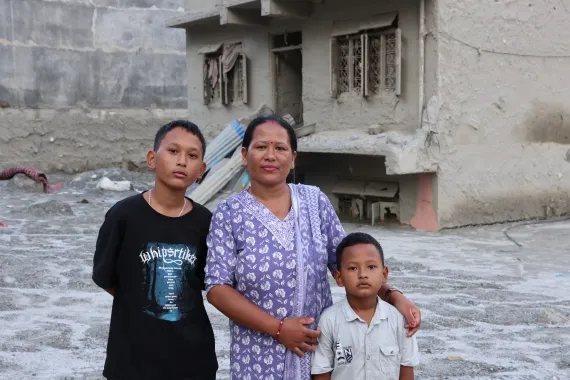
Sita, Susin’s mother and a mathematics teacher at Tribhuvan Trishuli Secondary School, remembers those hours in painful detail. A young man renting a room in their house had managed to take her younger son and mother-in-law to safety on his scooter.
According to the family, they had just reached the top of the hill when the flood struck the house.
“Even if our house was gone, at least we still had our family,” Sita says.
When they later returned, mud had reached the upper floors. The house was not liveable, and the family struggled to retrieve even important documents. They moved into a room at Sita’s maternal home while looking for somewhere to rent.
The loss also removed part of the family’s income. Sita and her husband had taken a loan to build the house and rented out rooms to help repay it. Her husband was overseas, having left only recently.
“So, how do we educate our children? Where do we live?” Sita asks.

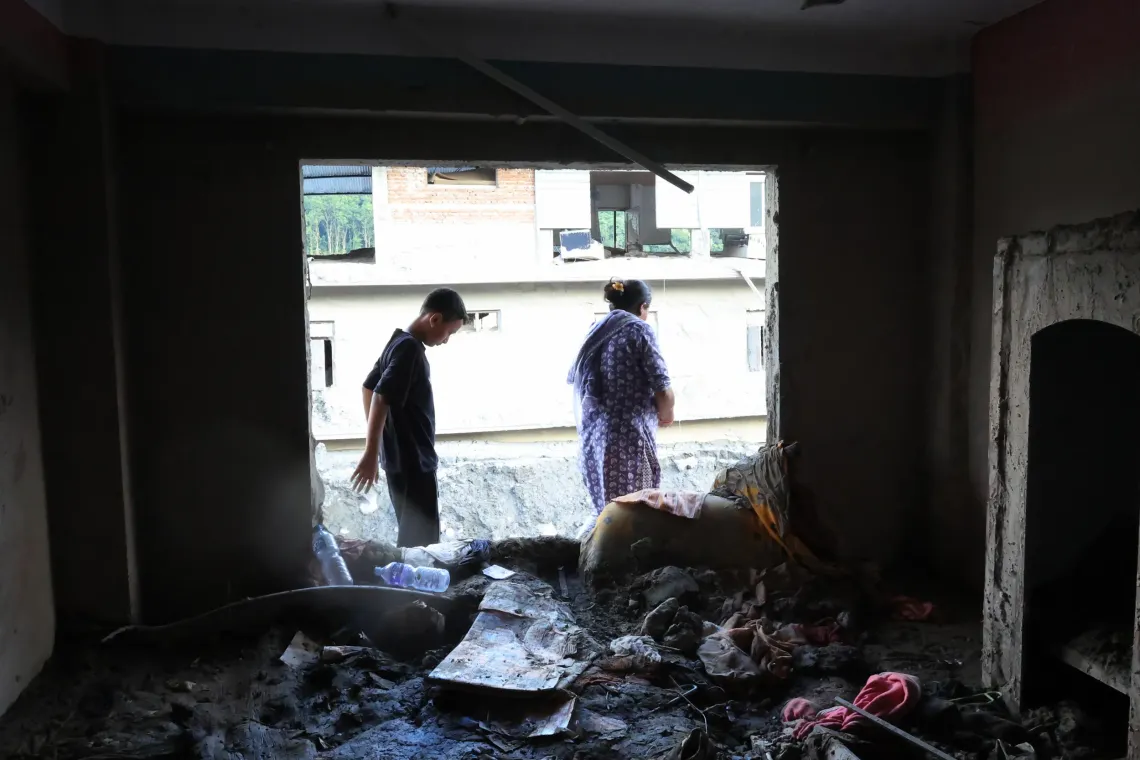

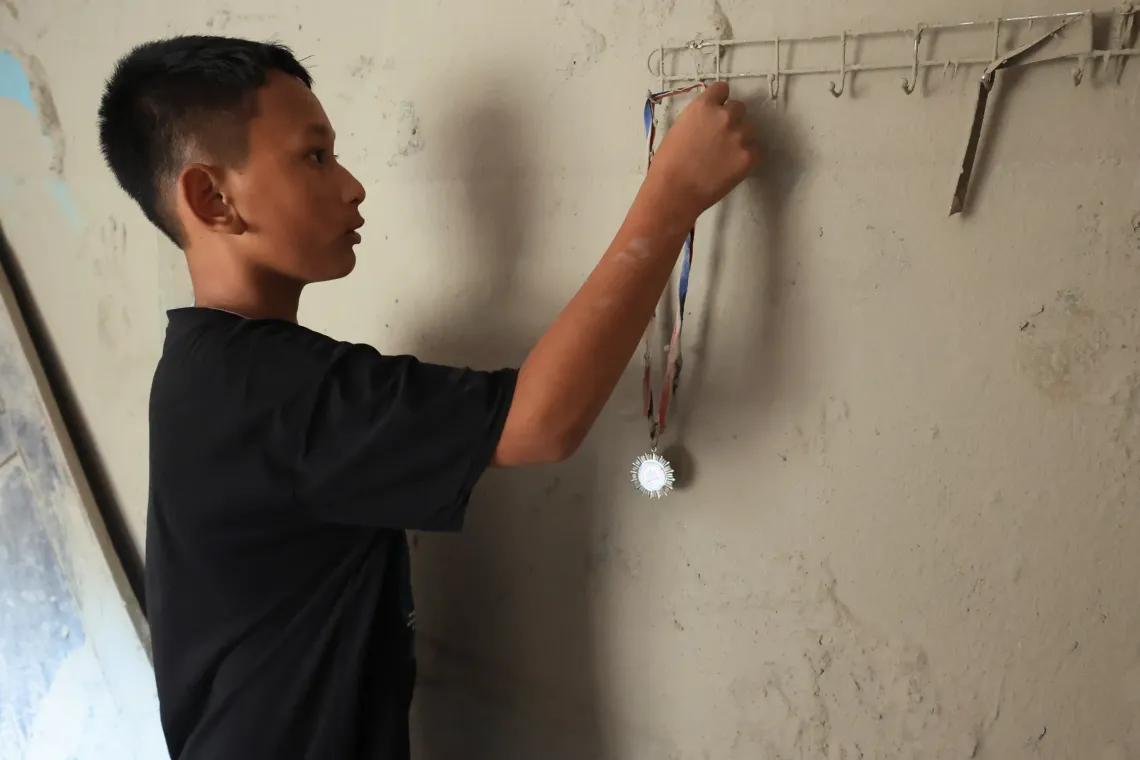

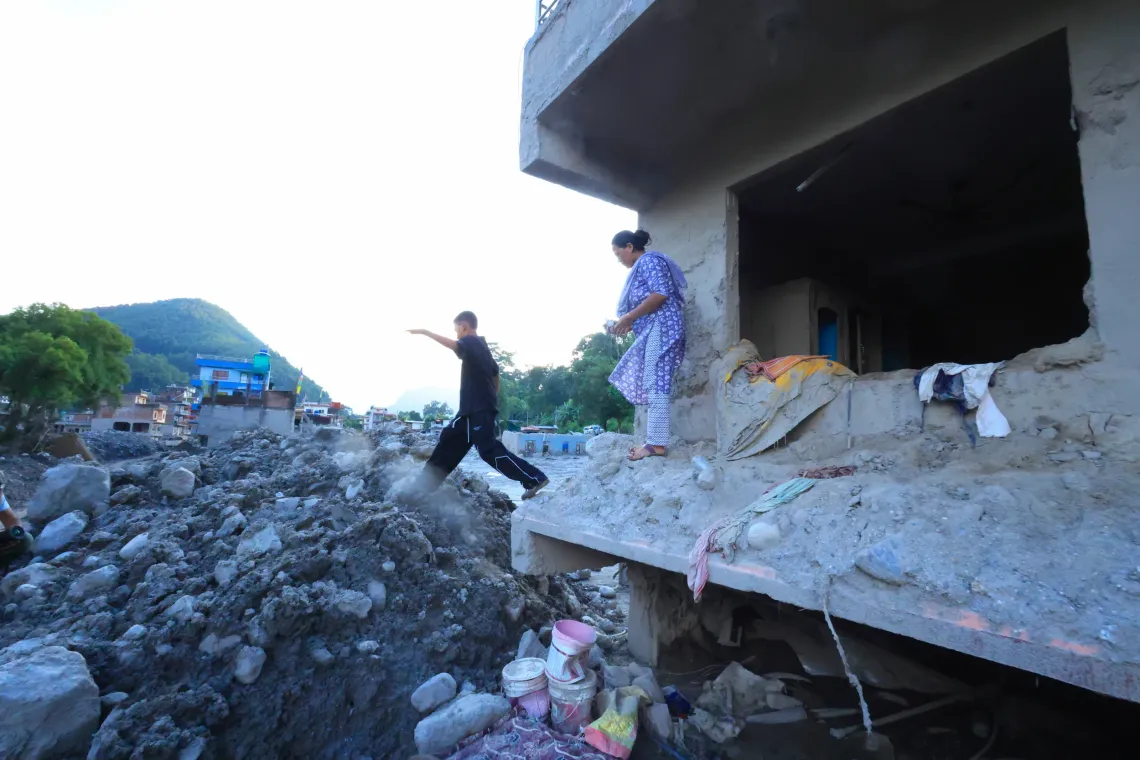
Susin’s losses are recorded in smaller details too. Before the flood, he had been making a “Lakhey” mask, inspired by the traditional demon from Nepali folklore. He had left it on the ground floor, planning to continue the work after returning from the hospital. It disappeared with the rest of the family’s belongings.
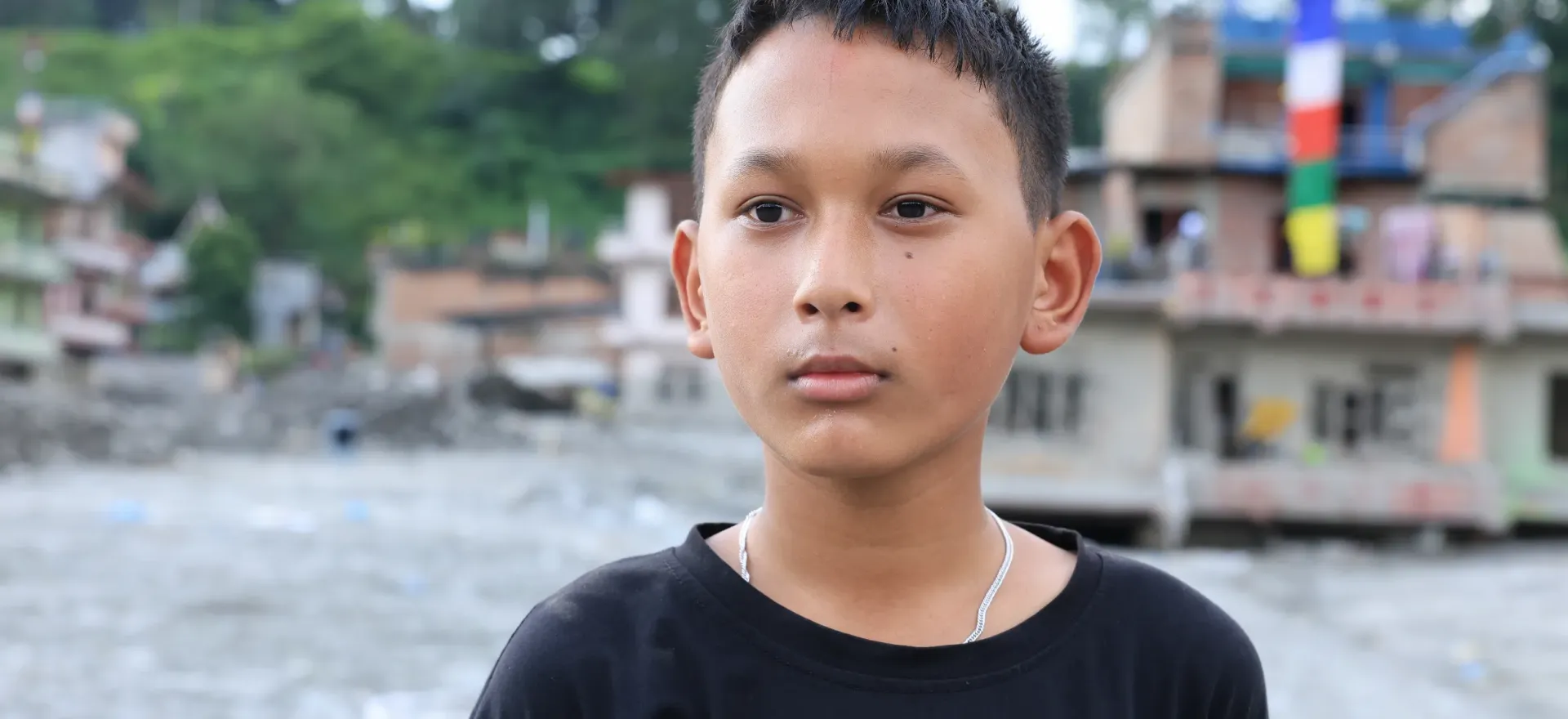
His school was also profoundly changed. Buildings, benches, papers and smartboards were lost. Standing near the site, he points out where his classroom had been and where he used to sit with friends, play football and spend time on the school stage
UNICEF Nepal/2026/LPNgakhusi
“I have a lot of memories in this school,” he says. “I want to go back to school.”
His return carried particular weight. Surgery on his hand had already kept him out of class for two months before the flood. Sita worried about the disruption and the stress affecting both her sons.
“They kept asking when can we go to school, where will we attend classes?” she says.
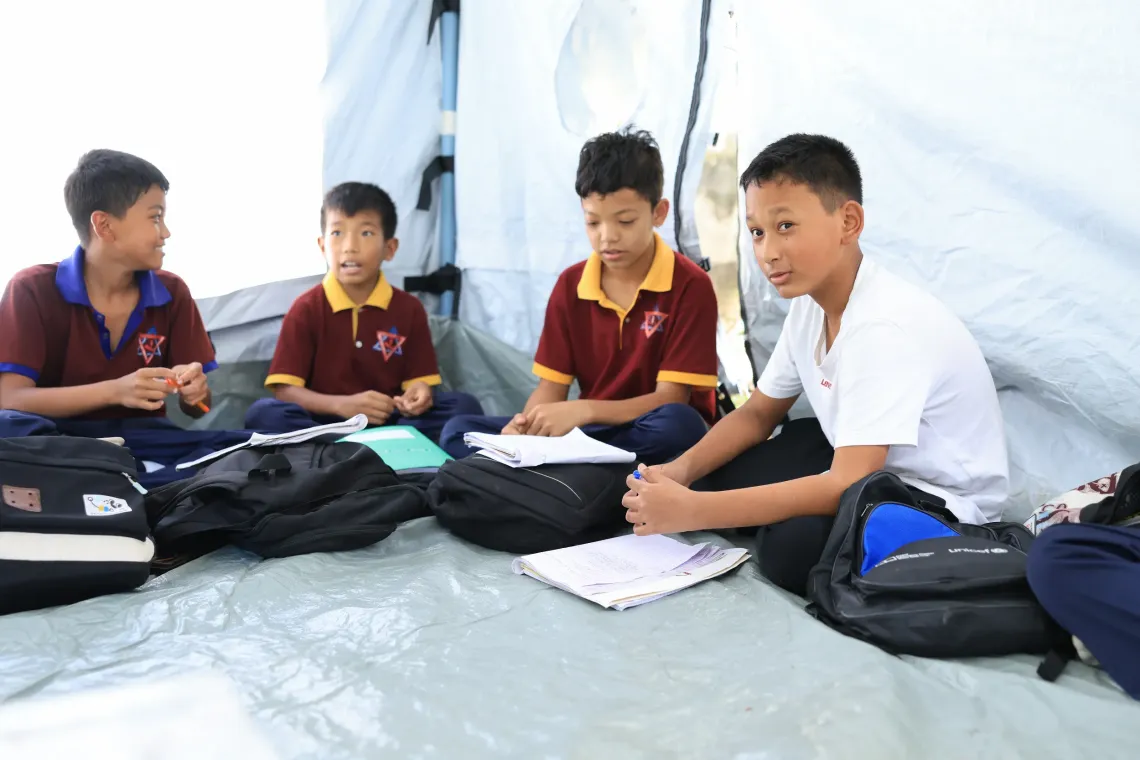
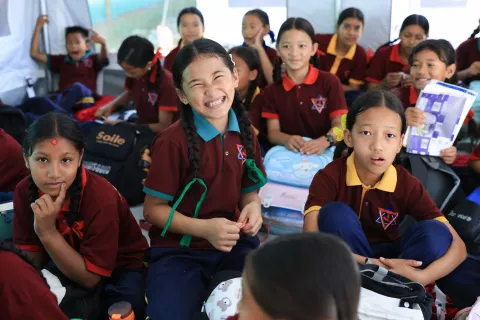
Classes have now resumed in temporary learning centres installed by UNICEF.
For Sita, seeing children back with their teachers has eased one immediate worry even as the family faces uncertainty over housing, income and debt.
“You saw today, all these children back in class and learning again,” she says. “That’s made me very happy.”
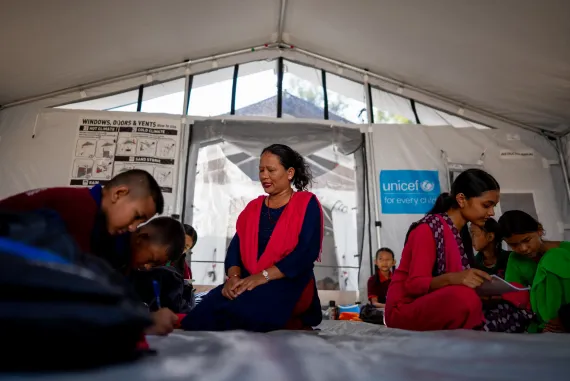
Susin has met only a handful of friends since returning. Some remained unaccounted for at the time of his interview, leaving him unsure whether they were safe. The school around him no longer looks as it did in his memories, but the temporary classrooms have given him a place to start again.
“I’m feeling good about the tents,” he says. “We’re getting to study again.”