“Nothing but riverbank now”
A teacher from Nuwakot reflects on the loss of her home and school after the Bhotekoshi floods, and on why children need safe spaces to learn, play and begin recovering.
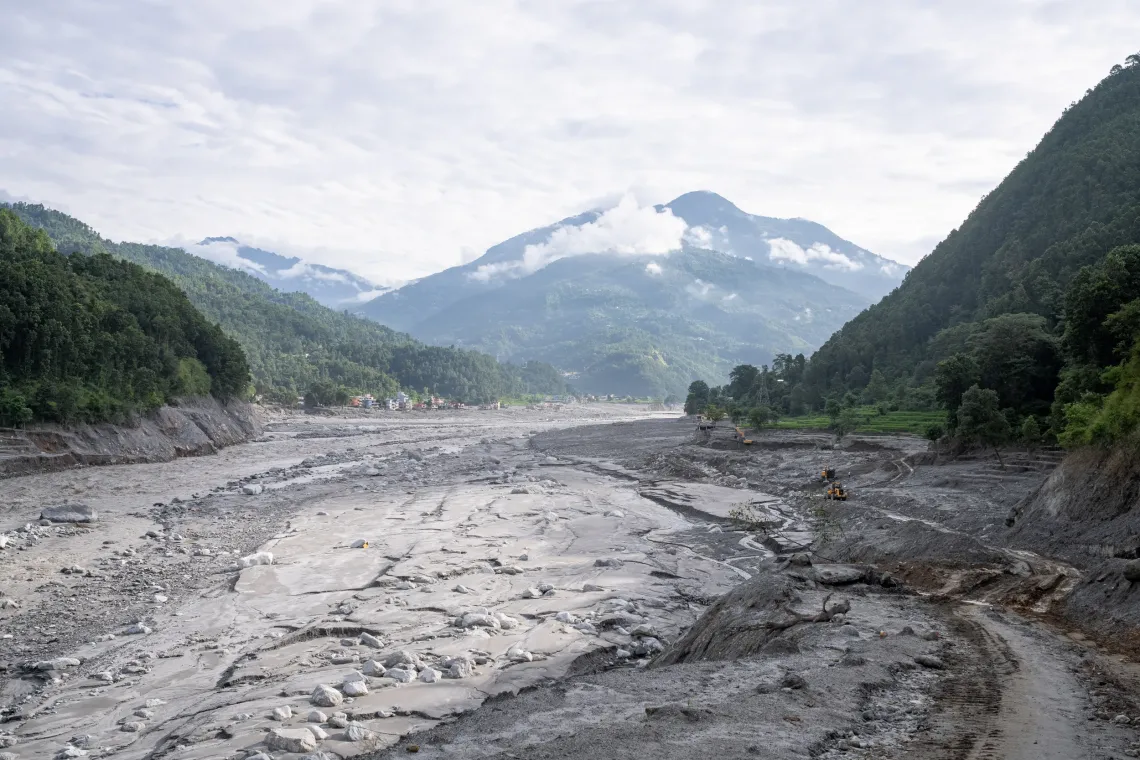
Nuwakot, Nepal – Standing above what used to be her village, Shobha Adhikari points toward the wide, grey stretch of stones and silt below. “Look at our village of Bhaise,” she says.
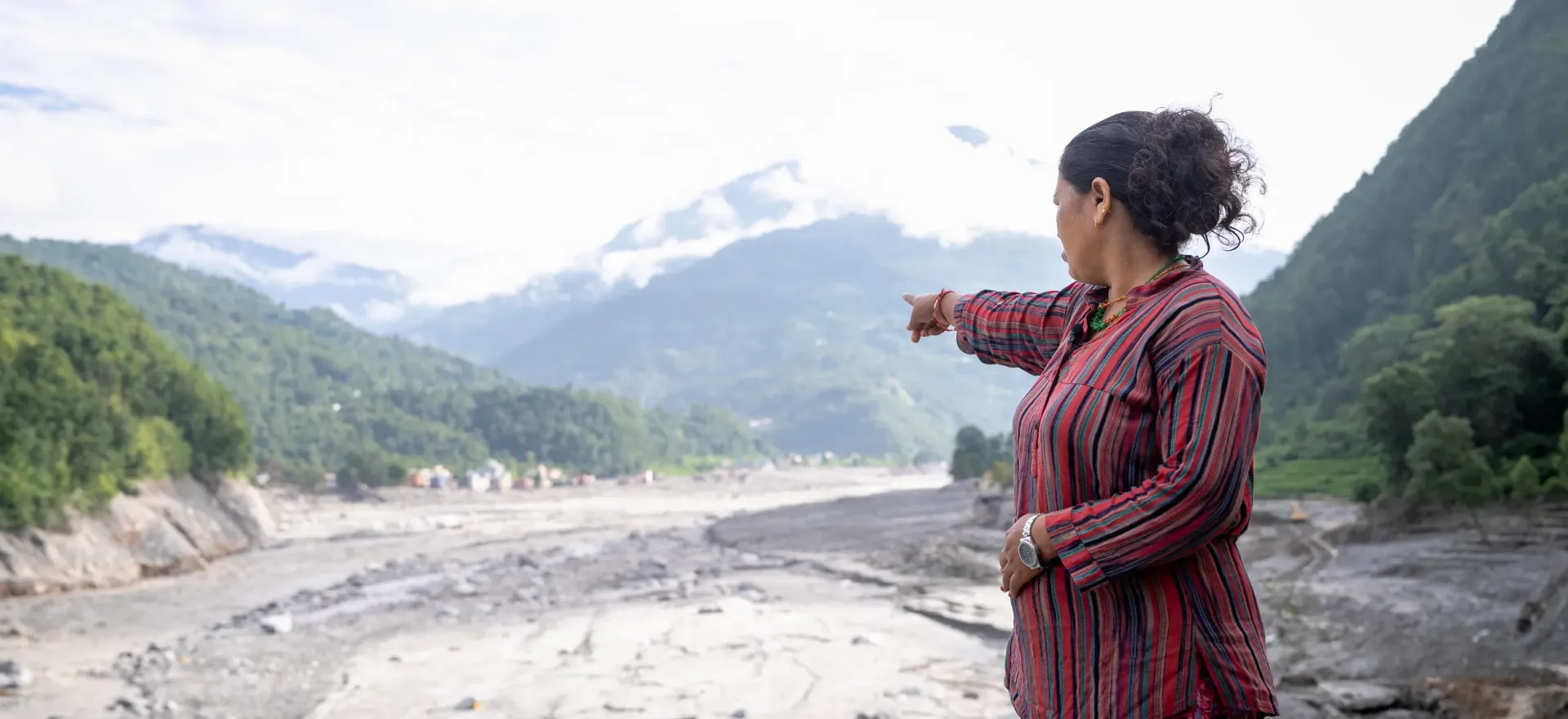
UNICEF Nepal/2025/RUpadhayay
“What a wonderful place this used to be. But see what the Bhotekoshi floods have turned it into. It looks like a desert.” - Shobha
Somewhere along that riverbank, she says, was her home. Nearby was Chetana Basic School, where she taught children between the ages of 3 and 5 at the Early Childhood Education and Development Centre. The classrooms, the homes around them, and the familiar paths through the village are no longer visible.
“No homes, no schools, nothing,” she says. “All our houses, school, just flattened to be part of the riverbank.”
On the morning of the flood, Shobha was at home having breakfast and getting ready to leave for school, just two minutes away. It was around 9 a.m. when her sister, who teaches at a school higher up the hill, saw the flood coming and warned her to run.
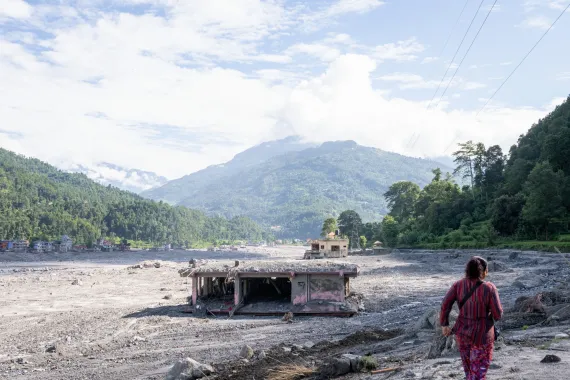
At first, Shobha still thought she had time to close the windows and lock the doors. She did not imagine that, within moments, there would be no house to return to.
When she reached the road and looked back, the water had risen higher than her home.
“I was so relieved we had gotten out in time,” she says.
Shobha and others began climbing up the slope. With them were a young mother, just two months after giving birth, and three children aged 3 and 4.
“We just grabbed them and ran up,” she says. From above, they watched the river take their homes one by one.
In Bhaise, around 50 households were swept away. Shobha says 15 residents are still missing, family members are accounted for, a fact she calls her biggest consolation, even as she grieves with other families.
Across flood-affected areas in Nepal, the impact on education has been severe. According to UNICEF’s latest humanitarian situation report, at least 20 schools have been damaged, affecting around 7,000 children, while 80 more schools near riverbanks are still being assessed for flood-related damage. Eight schools are currently being used as temporary shelters for displaced families, disrupting learning for an additional 1,300 children.
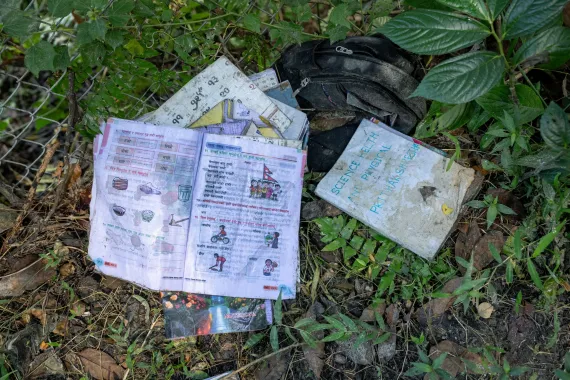
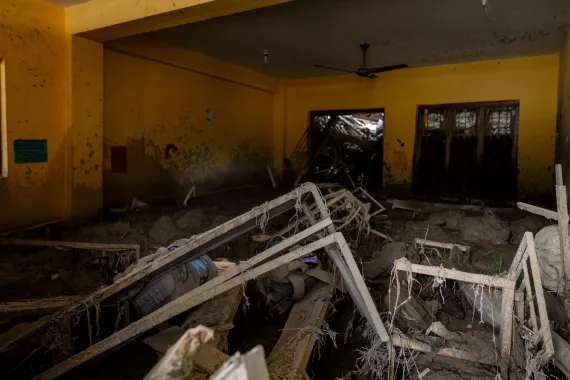
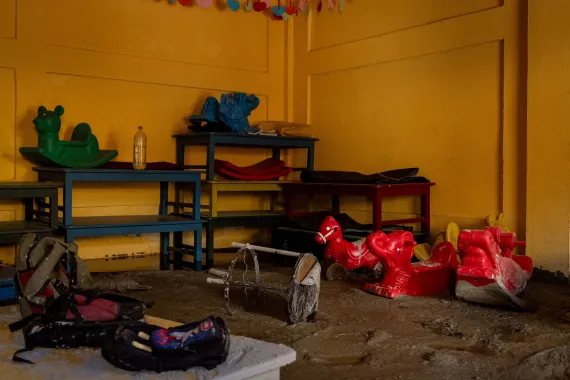
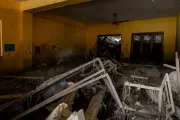
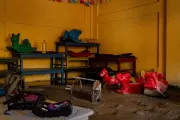
For Shobha, these numbers are reflected in the faces of her youngest students. Her classroom was not only a place for lessons. It was where children played, ate, rested, made friends and slowly prepared for the next stage of school.
“The mental impact on the children is huge,” she says. “There are young children saying, we’ve lost our homes, we’ve lost our schools. It’s hard to hear that.”
She remembers a recent school holiday, before the floods, when a parent sent her a video of one of her students crying and asking to go to school. “School is somewhere children socialize, play,” Shobha says. “Many of them are lonely at home, and enjoy meeting others at school.”
Now, with both homes and classrooms gone, she worries about what children are carrying inside. “It’s crucial that we return them to an environment of learning, even in temporary spaces, as soon as possible,” she says. “It would also help lessen the mental burden and anxiety they are feeling.”
UNICEF is supporting the Government of Nepal and humanitarian partners to respond to the needs of children and families affected by the floods. Across the response, UNICEF is delivering support in education, child protection, water, sanitation and hygiene, health, nutrition, social protection and risk communication.
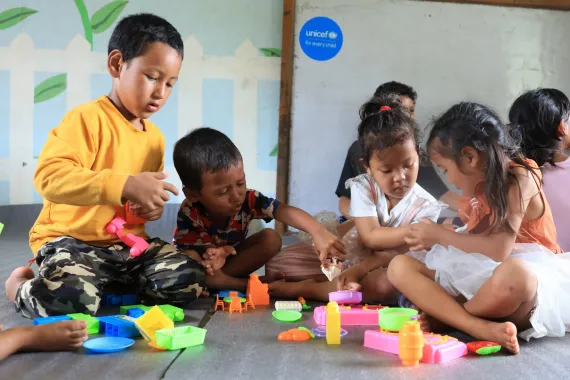
To help children continue learning, UNICEF has dispatched education supplies to flood-affected areas, including 148 teacher kits, 2,694 student kits and 43 early childhood development kits. UNICEF is also supporting rapid education needs assessments to help identify the needs of affected learners, teachers and schools, and to inform where assistance is most urgently needed.
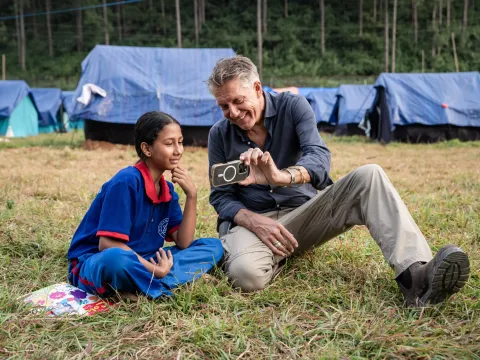
Alongside this, UNICEF and partners have reached children and families with psychosocial support, safe spaces, essential supplies and services.
This includes child-friendly spaces where children can take part in structured play and recreational activities, and support to holding centres and communities where displaced families are staying.
For Shobha, restarting education is also about rebuilding better. Permanent structures may take time, she says, but temporary learning spaces can help children begin to feel safe again.
When schools are rebuilt, she hopes they will be located away from flood and landslide risks, and designed to withstand earthquakes too.
“How will schools be re-established? How will our homes be rebuilt?” she asks. “These are the questions we’re confronting right now.”
Looking out at the place where Bhaise once stood, Shobha says she had expected to see at least some signs of what had been there. Instead, there is only riverbank.
“I didn’t think you wouldn’t be able to tell where schools or homes were,” she says. “I didn’t imagine it would be like this.”