Saved by the bell
Preparedness helped Tribhuvan Trishuli Secondary School evacuate hundreds of students before the flood. Temporary classrooms are now helping children and teachers return.
NUWAKOT, Nepal — It began as a normal Wednesday at Tribhuvan Trishuli Secondary School. Around 900 students from Grades 8 to 12 were on the premises when Principal Rajendra Dawadi received information that a flood was coming.
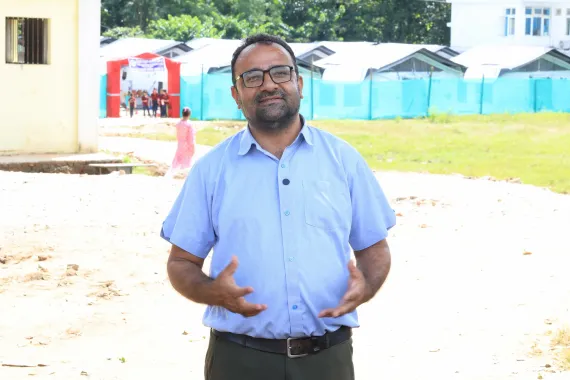
He and his colleagues had to decide quickly.
If the warning was wrong, students would lose a day of learning. If it was right, the consequences of keeping them in class could be immeasurable.
“So we stopped classes, rung the bell, and sent all the students out from the school,” Rajendra says.
The school also contacted its bus drivers and told them to stop in safe places.
Students moved uphill. Soon after, the flood tore through the school, sweeping away buildings and learning materials.
Rajendra says training in comprehensive school safety, received with Government and UNICEF support several years ago, shaped his response.
It had taught him that when a flood threatened, people needed to move to higher ground.
“When I got the information about the floods, I thought, ‘We have to be safe,’” he says.
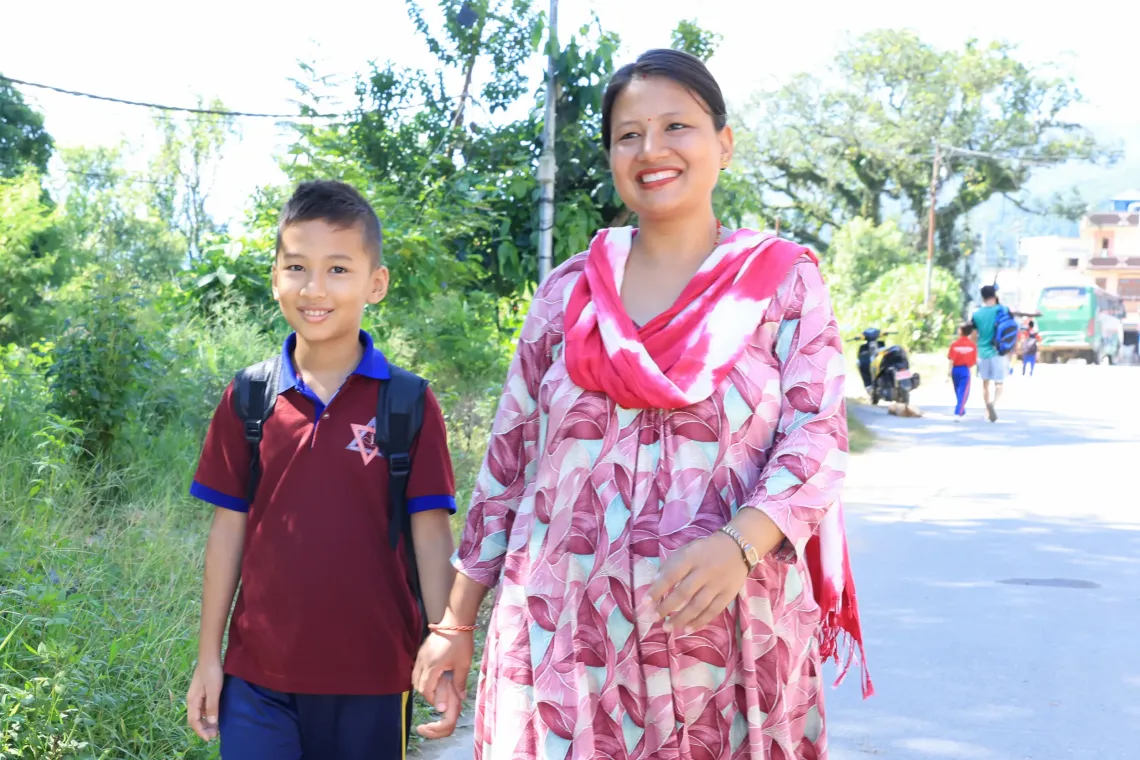
For 10-year-old Swastik, a student at the school, and who was at home that morning, the warning came from his mother. He was brushing his teeth when she ran in and told him they had to leave.
“I ran down the stairs, throwing my toothbrush away,” he says.

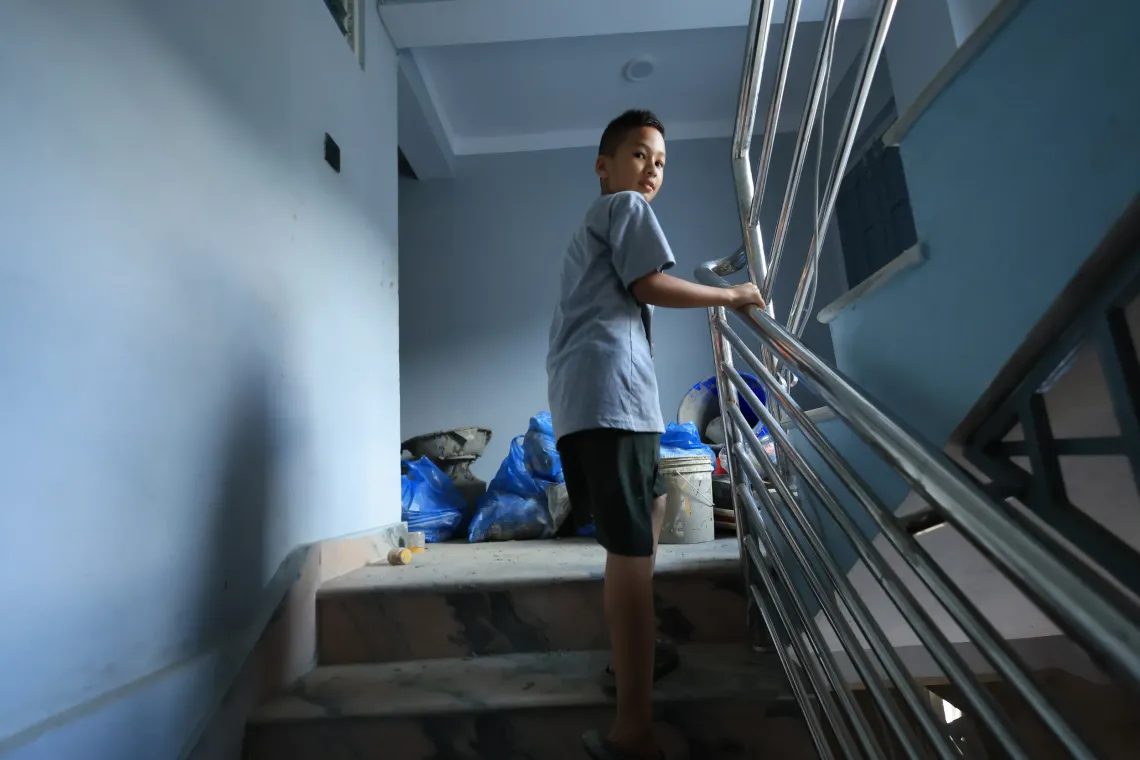

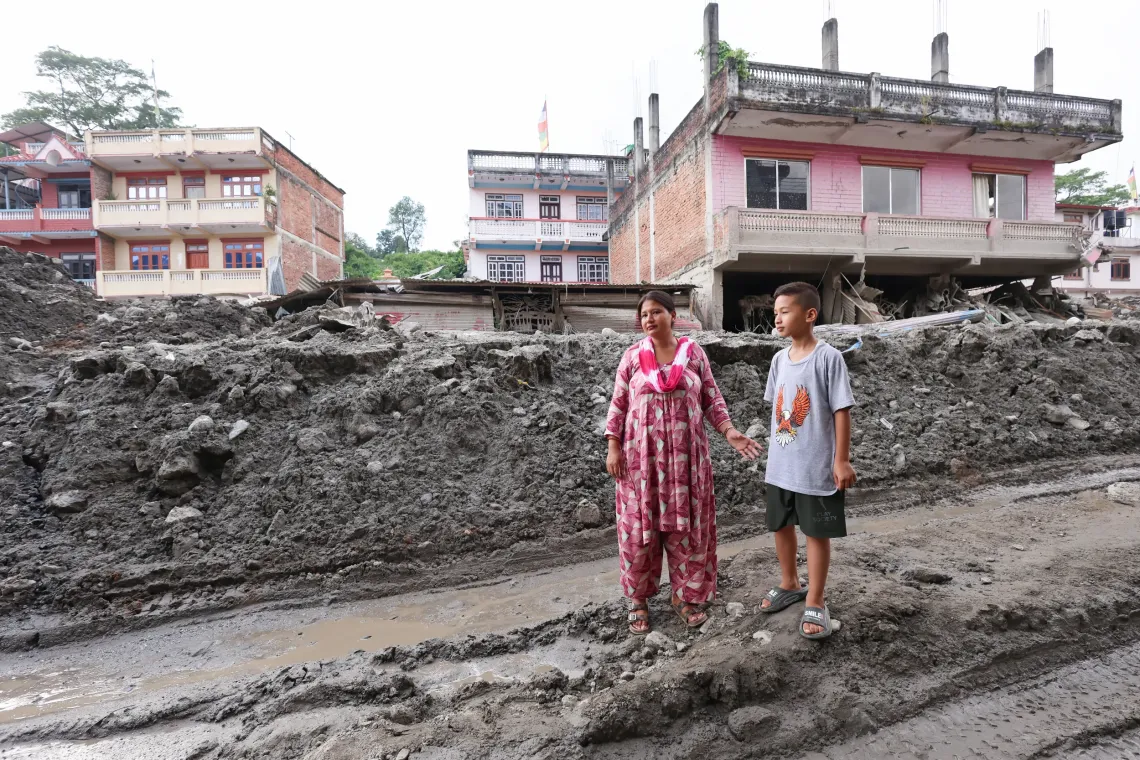

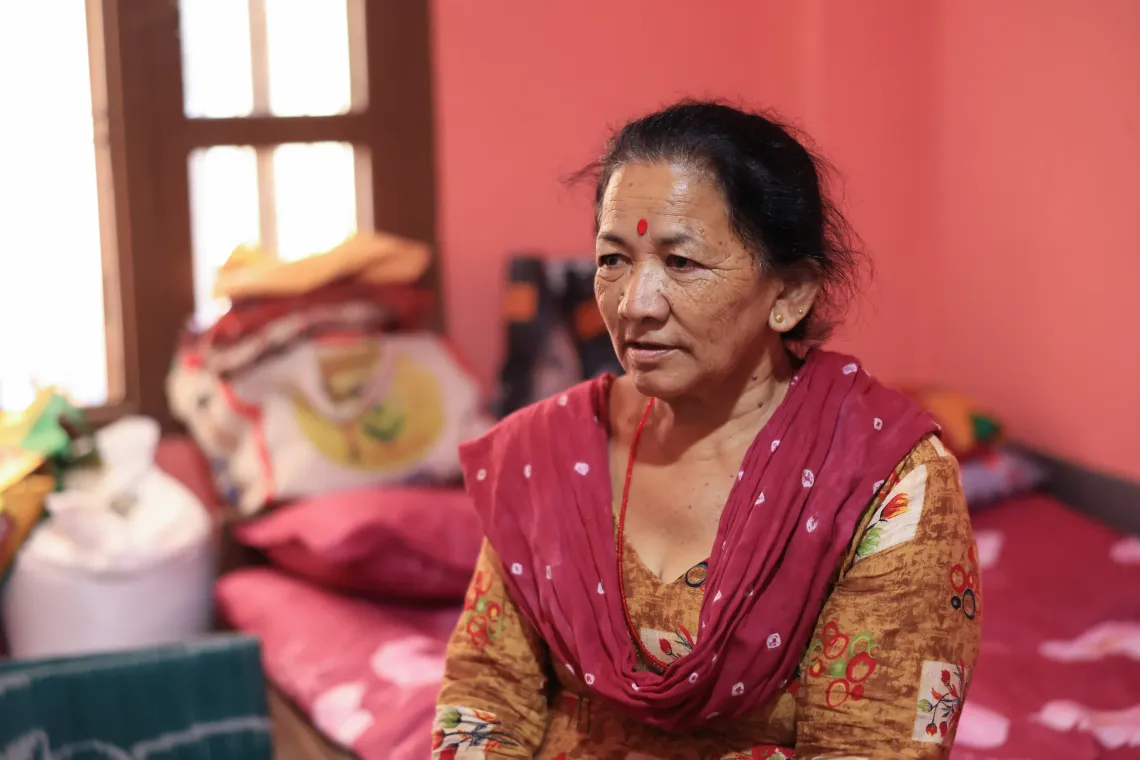
His mother, Sailaja, teaches primary-level students at the same school. Her husband had called after encountering rising water on his way to work. Pregnant and with Swastik beside her, Sailaja ran to higher ground. Her father-in-law followed, but her mother-in-law remained trapped in the house until the next day.
From higher ground, Sailaja saw that schools and houses had been swept away.
“It was a terrible feeling,” she says.
The immediate escape did not end the fear. Swastik says he becomes scared whenever the river rises. Teacher Narayani Bogati has seen similar reactions among children across the school.
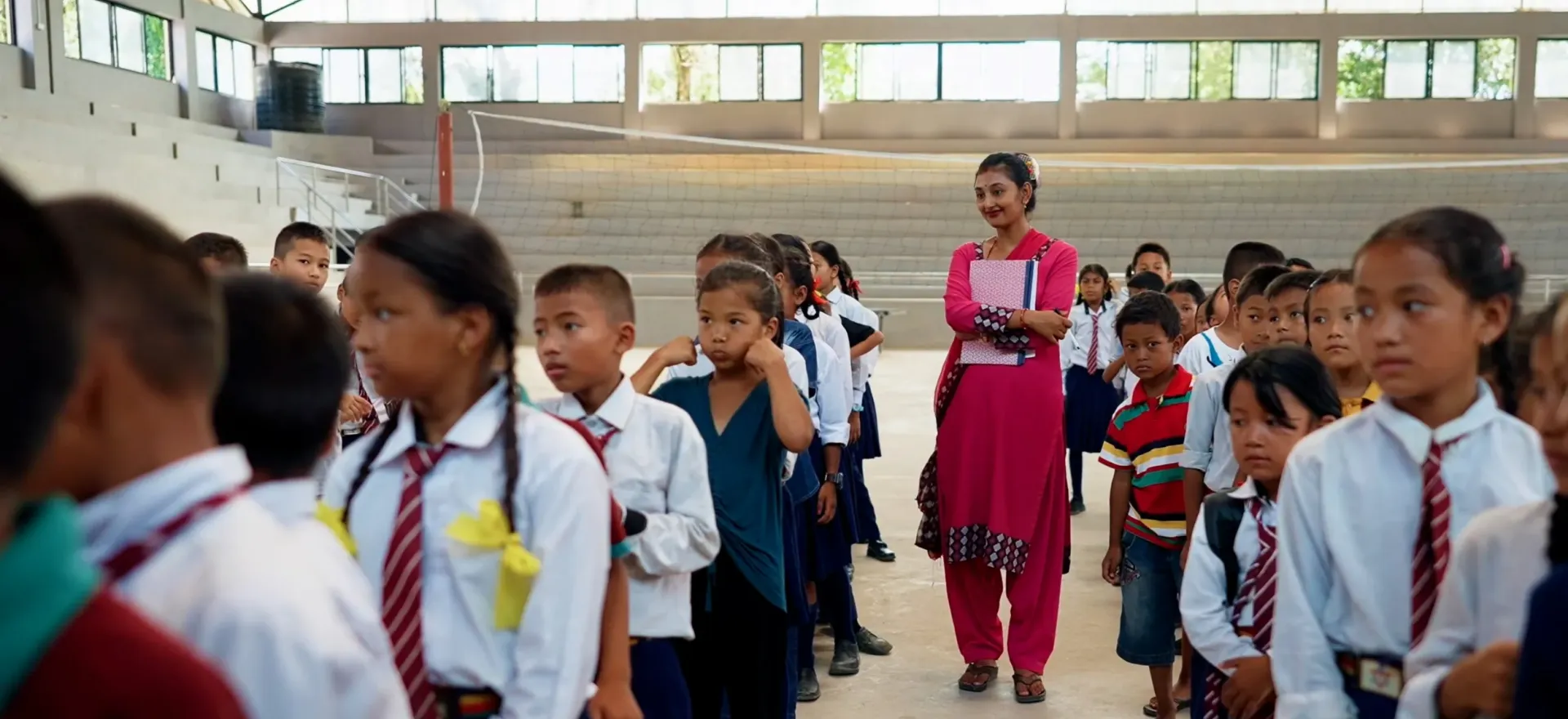
UNICEF Nepal/2026/RMaharjan
“Right now, I feel like children’s minds are completely consumed by the floods,” Narayani says. “So the smallest things are causing fear and anxiety.”
In the weeks after the disaster, teachers worried not only about damaged buildings but also about children losing contact with classmates, trusted adults and learning. The school serves 1,643 students, according to the principal, and much of its physical space was no longer usable.




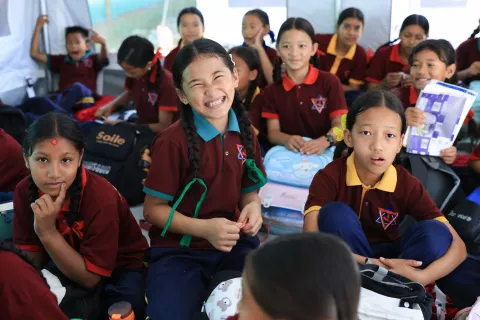
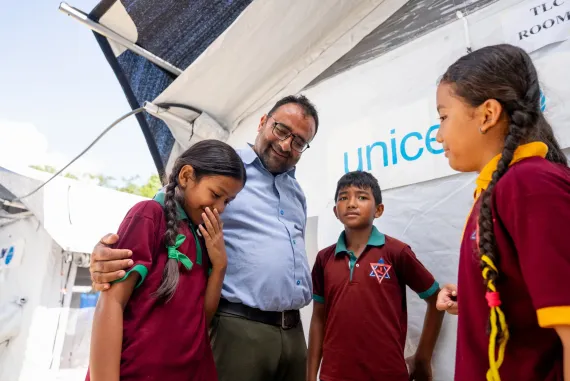
UNICEF installed nine temporary learning centres at the school, together with water, sanitation and hygiene facilities, and provided learning materials to students. Classes resumed in the temporary spaces.
On the first day back, Swastik talked and played with his friends. Teachers led games, and he received a school bag with learning materials.
His account of the day is simple:
“I’m feeling good about going back to school.”
Sailaja saw younger children playing the madal, dancing and laughing in the early childhood development tent. Having spent weeks away from the school, she was glad to be teaching again.
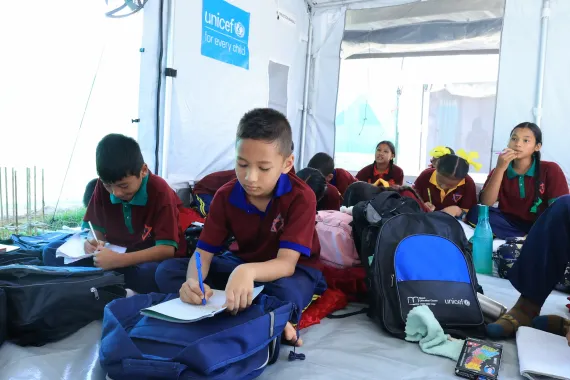
Narayani says the temporary setting gives children room to talk about what happened, including loved ones who were affected, while continuing to learn and spend time with friends and teachers.
“We were able to ease that fear, at least a little,” she says.
Rajendra hopes the lesson from the evacuation reaches beyond one school. Comprehensive school safety measures, he says, matter during floods, earthquakes and other disasters.
Swastik, meanwhile, wants the familiar parts of school life back – his friends, his routine and a permanent school. He also carries a wish shaped by the morning he ran from home:
“I hope there are no more floods.”