Not an average poultry farm
A community poultry operation run by a team of 20 mothers is living proof of what educated woman can do for other women

- English
- नेपाली
Doti, Nepal — The noise coming from inside a shed built of blue corrugated iron sheets, on a chilly November morning, is loud enough to be heard quite a distance away. But Sharada Khadka, who rubs her hands to warm them before proceeding to transfer the contents of a half-full sack of feed into a green bucket, seems utterly oblivious to the commotion.
The crowing and hustling increases in intensity when Khadka opens the door to the shed, which houses over 200 chickens. They mill busily about her feet as she pours the feed into an overhung conical bucket. And then the feasting begins. While the birds peck at their food, Khadka goes around the small space, collecting some 10 eggs, and closes the door when she leaves.
This farm, overlooking a rugged stretch of terrain in Baghkakani, Doti, isn’t just an average poultry farm. It is actually a community poultry operation run by a team of 20 women, led by Khadka — a mother of two — in the capacity of chairperson. In fact, all members of the group are mothers, specifically mothers of children less than 1,000 days of age.
The Melmilap Community Organization’s innovative efforts to involve mothers in nutrition-related activities has made it an exemplary project in the district. And Khadka herself is proof of what an educated woman can do for other women, particularly in rural areas like this, when she possesses an iron sense of commitment and the right backing.

The farm was set up with financial support worth Rs. 100,000 (approx. Euro 800) from the District Agricultural Office (DAO) as part of the Multi-Sectoral Nutrition Plan (MSNP). The shed was constructed with the seed amount, and once it was ready, the DAO provided them 320 chicks — 15 for each member and an extra 20 on top of that. UNICEF provided technical support with funding from the European Union.
Five months since the first batch of chicks arrived, the group has been able to sell chickens worth over Rs. 60,000, money that is reinvested in buying feed. And as the hens have begun to lay eggs, the women have also been selling these to the community.
“Now that the farm is running well, we want to encourage 1,000-day mothers to buy the birds and eggs for their own consumption,” says Khadka.
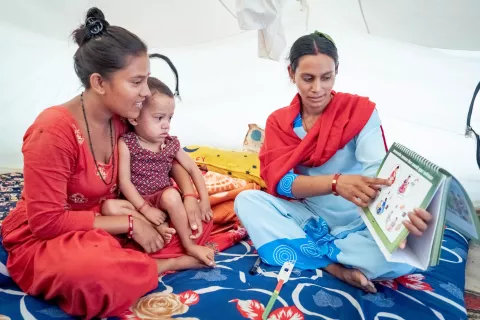
In this vein, at least once a month, she meets with her group to discuss plans to increase efficiency on the farm, as well as educate members on important issues like nutrition.

One of these members is Sumitra Joshi, 22, a mother of a three-month-old daughter. Joshi says that throughout her pregnancy, she ate a balanced diet of vegetables, meat, eggs and dairy every day, and continued that practice even after she’d given birth.
“Being part of the group has helped me really internalize the message that a proper diet is essential to the health of both mother and child,” says Joshi. “And now, not only do I help run the farm, I’m also one of its customers.”
To convince more mothers to eat healthy, Khadka is planning on discussing subsidized products for group members with the MSNP team. “That would be a great incentive for them, and help them make better dietary decisions,” she says.