One child at a time
At Nepal's only Human Milk Bank, a lifesaving gift - passed from one mother to another - is keeping fragile newborns alive
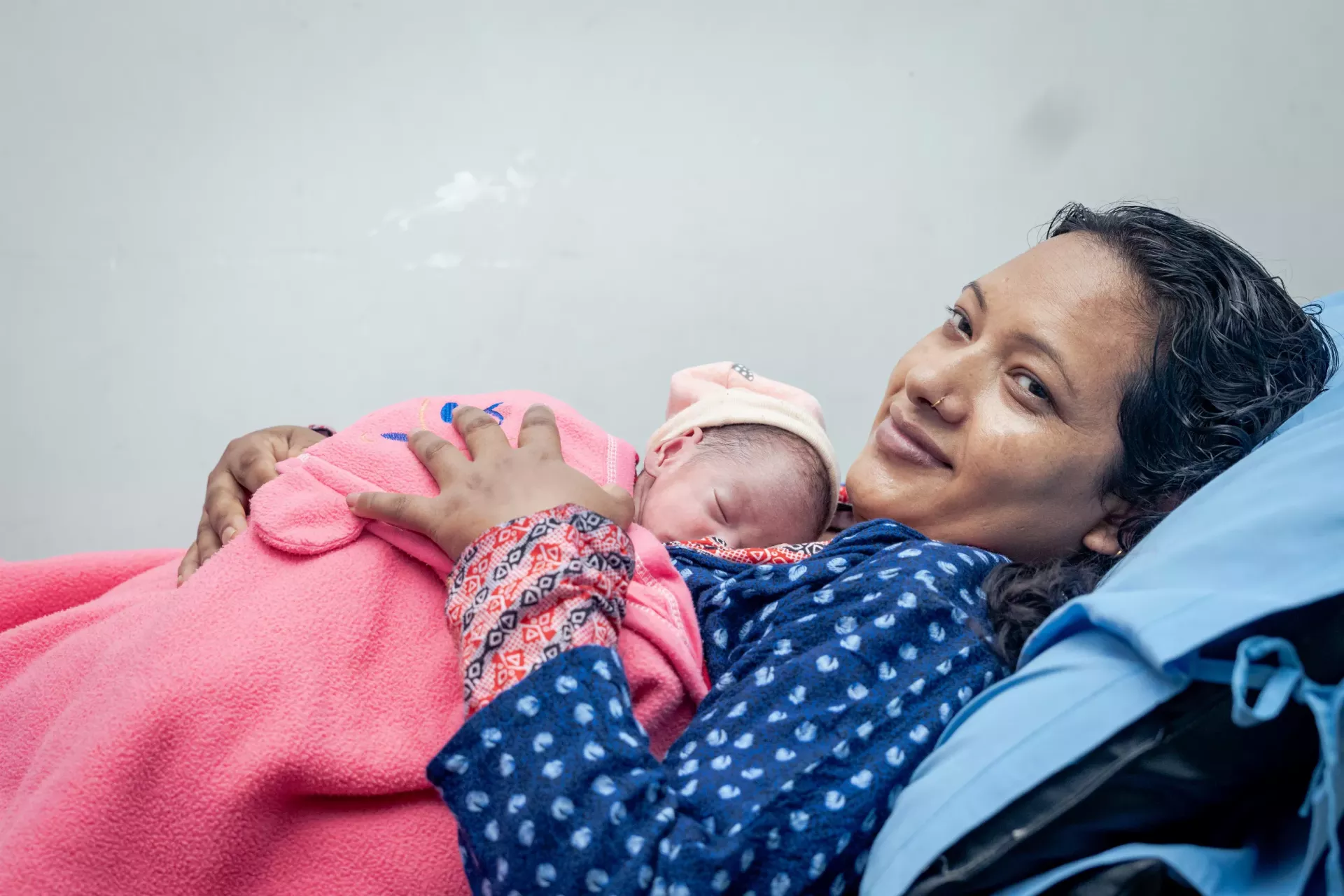
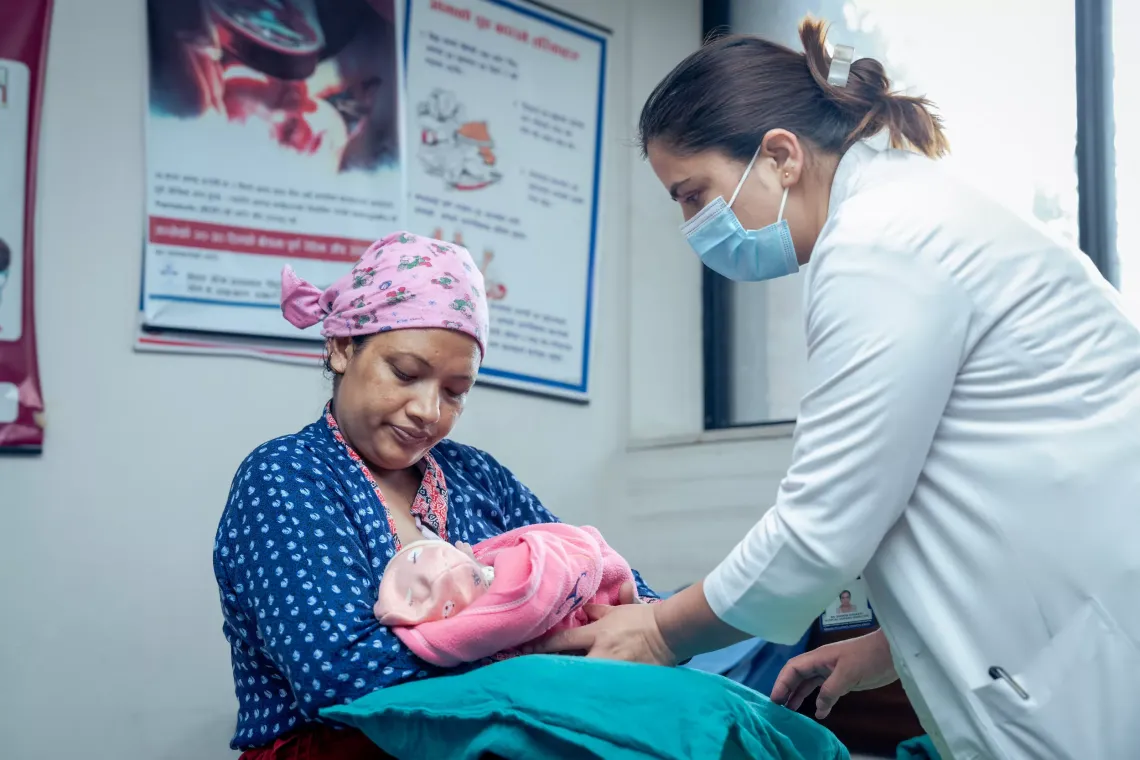
Kathmandu, Nepal: When Sarita Khatri held her newborn daughter for the first time, it was after 19 long days.
Her baby had arrived too soon, too small. After a complicated pregnancy and an emergency caesarean section at Paropakar Maternity and Women’s Hospital in Nepal’s capital Kathmandu, the infant — born underweight and struggling — was taken straight to the Neonatal Intensive Care Unit. Sarita, still recovering and too weak to walk, could only wait. She couldn’t hold her baby, couldn’t breastfeed her, couldn’t even see her properly in those early days.
In those long, restless days, as she lay apart from her baby, one thought haunted her: Is she going hungry?
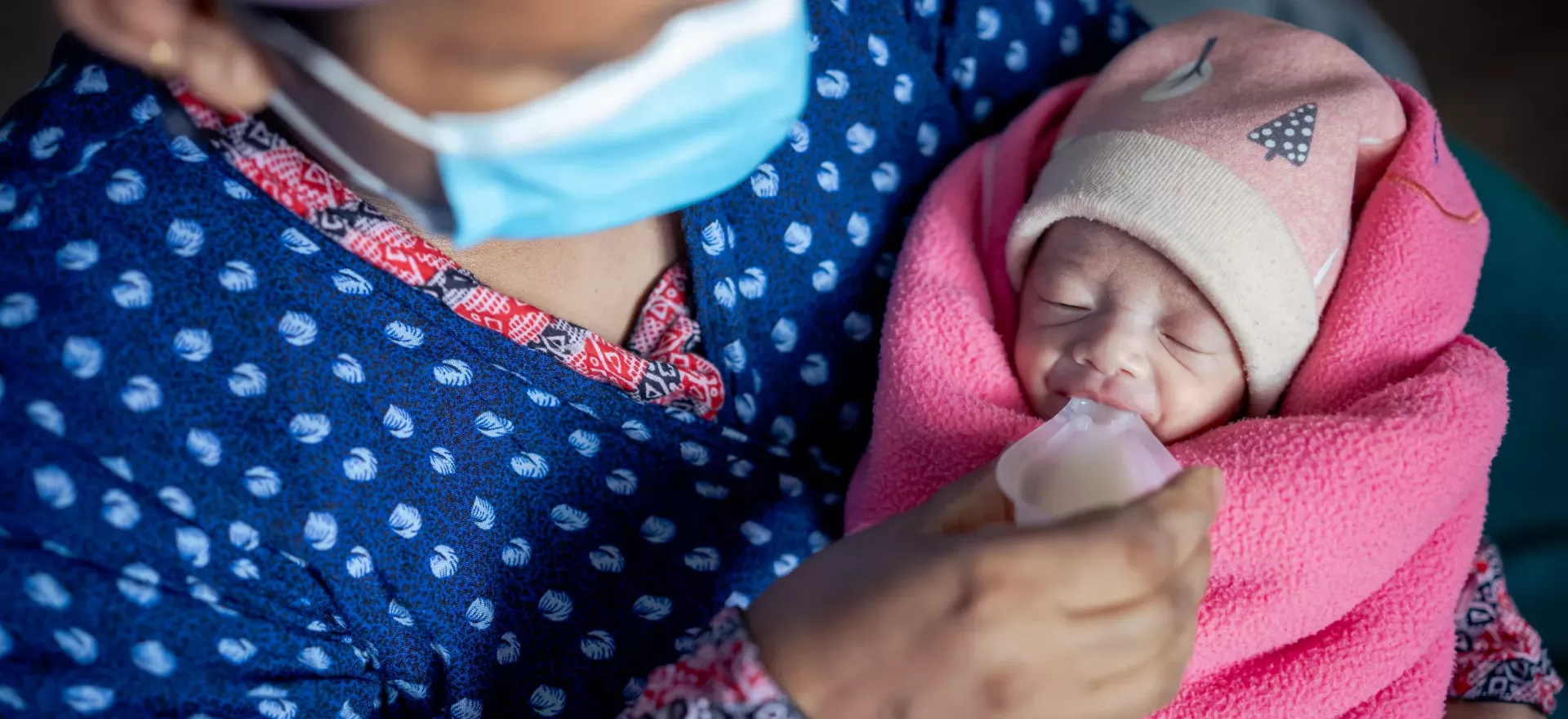
But her daughter wasn’t. She was being nourished with life-saving breastmilk — donated by another mother.
That support came from mothers she will never meet – women who had donated their breastmilk to Nepal’s only human milk bank.
UNICEF Nepal/2025/RUpadhayay
“She got a new life....At a time when I could barely stand up because I was in so much pain, it was such a big support for me.”
Housed inside Paropakar Hospital, Amrit Kosh (“Nectar Bank”) is the country’s first Comprehensive Lactation Management Centre (CLMC). Set up in 2022 by the Ministry of Health and Population with support from UNICEF and the European Union, it was built to ensure that even the tiniest, most vulnerable newborns can receive the nourishment they need when their own mothers cannot provide it.
Sarita’s daughter was one of them.
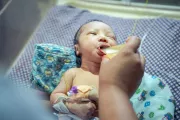
Her baby began with just 2 millilitres of donated milk at a time. Soon, she was taking 25. Her weight began to rise. Her condition stabilised. “I didn’t have any qualms about it, I saw it as a good thing,” Sarita says of the donated milk.
“As long as the child is fed, that's the most important thing, isn't it? A mother's milk is much better than formula milk from a box.”


The milk that helped Sarita’s daughter came from mothers like Sushila Nagarkoti, 27, who had no idea just how much of a difference her donation might make.
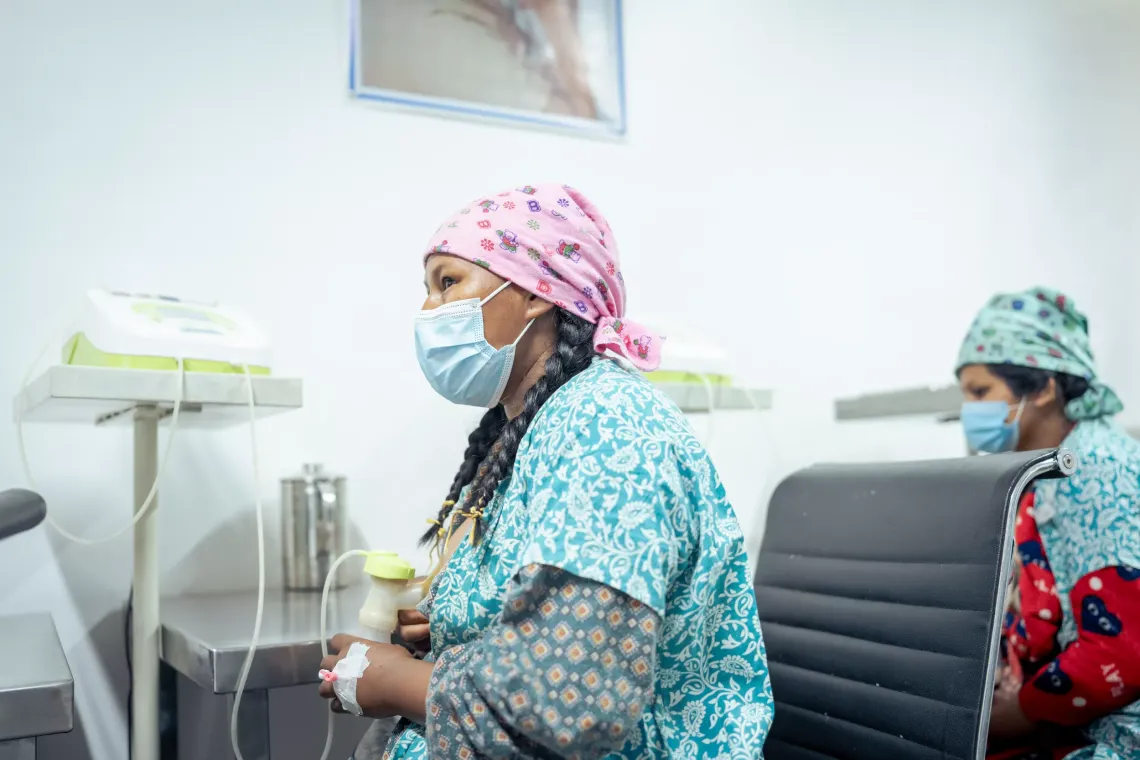
Sushila had delivered a healthy baby girl at Paropakar. When she developed jaundice and was kept in the Special Baby Care Unit for treatment, Sushila stayed nearby, and began stopping by the milk bank’s Expression Room.
“As a mother we wish for our child to be able to eat healthy, and so many mothers cannot do this,” she says. Her baby recovered well. She went home. But the milk she left behind helped another newborn live.
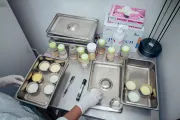
Each bottle is collected, pasteurised, tested, and carefully tracked. Every day, the centre collects between 1,500 and 1,600 ml, just enough to help the sickest infants at Paropakar and ten other referral hospitals across the Kathmandu Valley.
Still, demand is growing. And so are the distances families travel for help.
Mohammed Asif, 33, arrives with a referral slip in one hand and a small blue box in the other. His premature baby needed 12 ml of milk every two hours. The hospital where his child was born didn’t have a milk bank, so he made his way to Amrit Kosh, walking across the city to get what his newborn needed.
“If there was such a service for my first baby then she might have survived too,” he says softly. “Mother's milk, it is like nectar for children, like medicine. If we didn't get the donated milk, we would have had to use formula milk.”


But like many families who travel from far outside the Valley, he knows they can’t stay in Kathmandu for long. “We can't stay here longer just for the milk,” he says.
“It would have been so much easier if there was a facility like this close to home.”
Dr. Kalpana Subedi, Chief Consultant Pediatrician at the hospital, sees the impact every day. “At our hospital, we receive patients from far corners of the country,” she says. “Most of these are preterm deliveries with complications, who come here because this is a referral centre.”
The milk bank helps level the odds for babies who start life on the back foot — especially when they’re too weak to suckle, or when their mothers are ill or recovering from surgery. It’s a service made possible only through quiet generosity and dedicated care.
“Together if we can scale up and take this facility to other hospitals, we can improve the overall neonatal survival in the country,” says Phulgendra Singh, UNICEF’s Nutrition Specialist.

But today, the centre is only able to meet about half the need. The biggest gap isn’t awareness. It’s sustainability. The facility runs on commitment, but it also depends on highly trained staff, rigorous safety protocols, and costly equipment that requires regular maintenance.
“I don’t think there is any other alternative than making this service sustainable,” says Smriti Poudel, CLMC Manager. “It still remains one of the most cost-effective ways to save lives.”
For now, two mothers — Sarita and Sushila — prepare to leave the hospital. They haven’t yet named their daughters; the naming ceremonies will have to wait until they are safely home. The two women have never met, but they are bonded by something deep and unspoken: a shared act of life-giving care.
“Service is the true religion,” Sarita says, holding her baby close, her little one fast asleep after a feeding session.