Learning to earning
How Community Learning Centers are helping Nepal's adolescents build skills for the future

Across Nepal, hundreds of thousands of children and adolescents are out of school, their education interrupted by poverty, family responsibilities, or other hardships. For some girls, this can mean being pushed toward child marriage or taking on unpaid care work at home. For many boys, it means entering low-skilled, low-paid work to help support their families. Whatever the circumstances, the result is the same: they miss out on the knowledge, skills, and confidence needed to shape a brighter future.
For many families, education and survival can feel like competing priorities, as though a child must choose between earning today and learning for tomorrow. But no child should have to make that choice. That's where the government’s Community Learning Centres (CLCs) come in, offering flexible learning opportunities that meet adolescents where they are, so they can continue their education while building skills for the future.
UNICEF is supporting the Government of Nepal and local partners to strengthen CLCs improving their ability to connect out-of-school children and adolescents with learning opportunities, including skills development.
Through the Alternative Learning Programme (ALP), CLCs give these children and adolescents a second chance to gain foundational learning and enrol into formal school. Beyond academics, learners are linked to training opportunities to improve their technical and employability skills, helping equip them with the tools and confidence, to transition into further education, training, or decent work.
Among these learners are two youth, separated by rivers, roads, and hills, living in difference provinces of Nepal, yet sharing a common journey. Through their local Community Learning Centres, both found a second chance to continue their education, build new skills, and reimagine their futures. These are their stories.
Mahendra: Building a foundation, and a trade
In the village of Chaukune, Surkhet, Karnali Province, 18-year-old Mahendra is one of six children in a large joint family of 14.
When Mahendra was in Grade 7, his learning was put on pause after suffering from a severe chest infection that required a year of costly treatment. Building financial pressure at home, along with the draining experience of watching his classmates move ahead while he fell behind, he eventually dropped out of school.
Soon after, Mahendra's family was struck by another blow: his father's health began to decline, and he could no longer work. The small plot of land they owned wasn't enough to feed the family, let alone cover school fees or medical bills. The responsibility shifted to Mahendra and his brothers, whatever they earned went straight to supporting the family. It was a weight no child should have to carry, but for Mahendra, it became daily life.
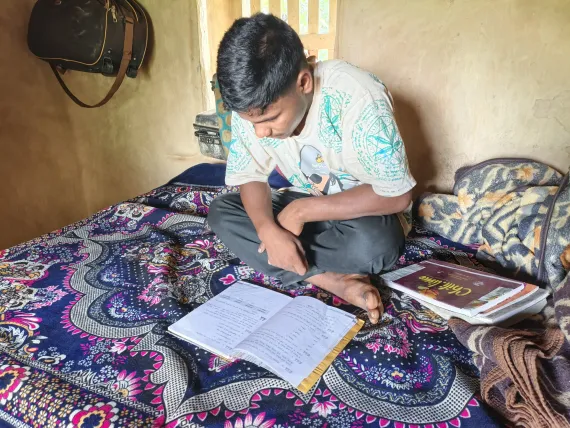
A new opportunity emerged for Mahendra when the local government launched the ALP programme in his community, with support from UNICEF and its partner SAC Nepal.
Mahendra enrolled, and although he initially struggled with basic reading and calculations due to years of missed schooling, supportive teaching helped rebuild his confidence. He became an active participant in class, even helping his peers.
After completing the first phase of ALP, Mahendra kept studying at home while he waited for the next phase to begin, holding onto his plan to one day rejoin formal school. But the pull between his education and his family's needs never fully let up. Every hour spent studying felt like an hour not spent earning, and he knew that without an education, doors to good work would stay closed to him too.
What eased that pull was ALP itself: because the programme is government-accredited, completing it would give him a basic education to build on, while still leaving the door open to return to upper secondary school when he was ready. He didn't have to choose one path over the other, so he began asking his local CLC what more he could do to improve his future employment opportunities.
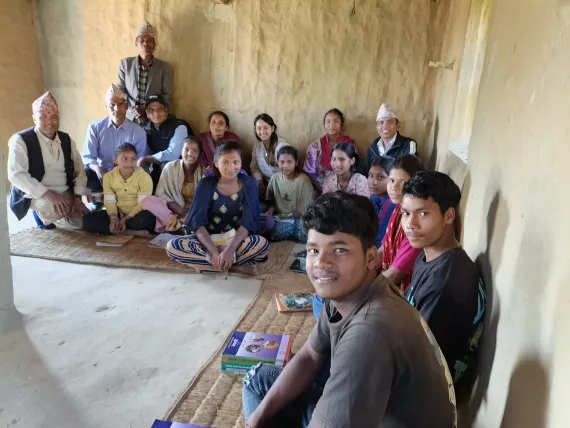
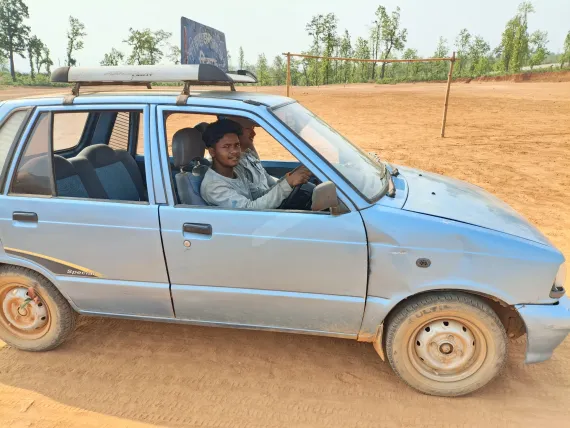
That drive paid off. With help from the local CLC, Mahendra secured a spot in a vehicle driving training programme organized by the Karnali Provincial Government, a first step toward a dream he'd held since childhood.
Looking ahead, Mahendra plans to complete ALP level 3 to finish his basic education while continuing his driving training. Once licensed, he intends to return to school in Grade 9 and work part-time as a driver- a path that lets him support his family without giving up on his own future. For Mahendra, the choice he once feared he'd have to make, between his education and his family, is no longer one he must face.
Ruksana: Giving back and gaining a new future
In a small village in Lumbini Province, almost 300 kilometers from Mahendra's home, where many believed girls should stay home rather than go to school, Ruksana held onto a different dream: the chance to learn.
As a child, Ruksana wasn't sent to school. Her family believed education would only increase her dowry upon marriage. As a low-income farming household, they enrolled her instead in a local madrasa, where she studied Urdu for several years before returning home. Her days were then spent watching others move forward while her own path stood still.
Ruksana was already a teenager when her local CLC introduced the ALP programme to her village. Through ALP classes, she worked to catch up on years of missed schooling. Recognizing her determination, the facilitators engaged her family, encouraging them to send her to school.
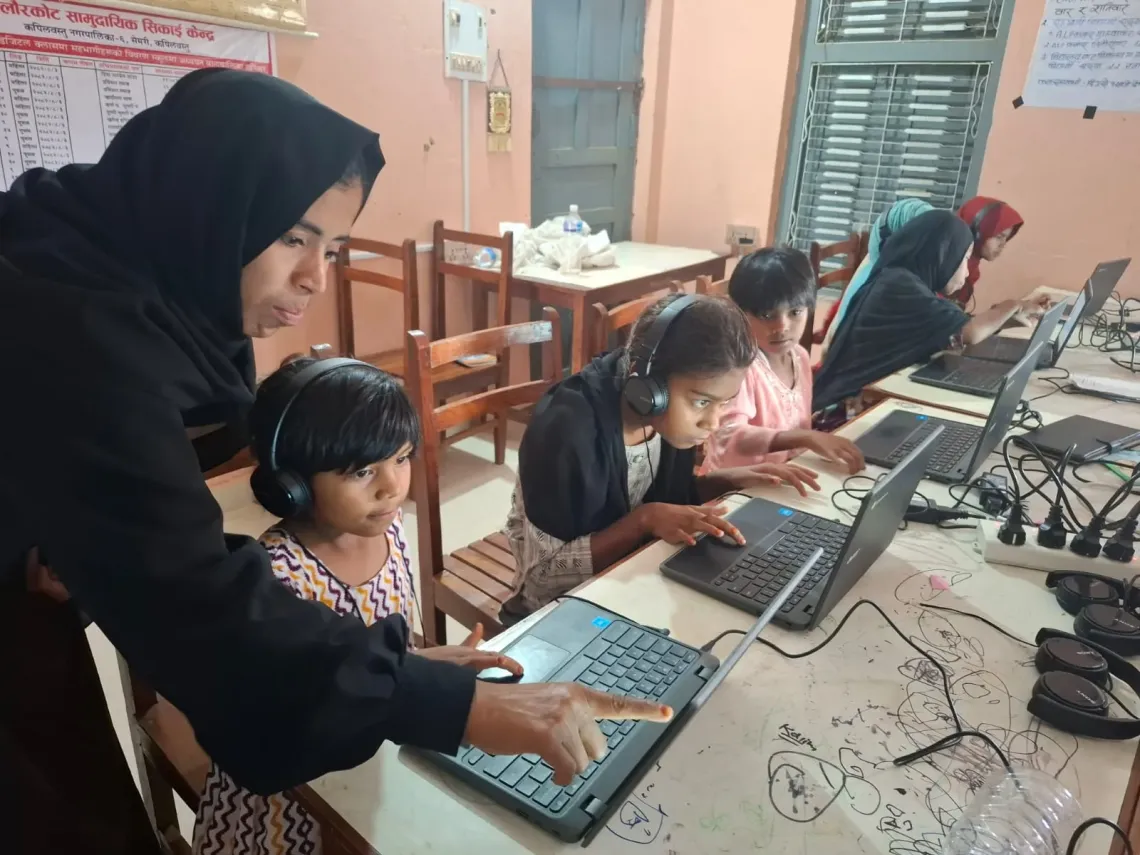
With her mother's backing, Ruksana enrolled in formal school for the first time at age 14 and never looked back.
Years later, Ruksana completed Grade 12 and chose to dedicate herself to helping others learn by becoming an ALP facilitator herself. With support from UNICEF, she now teaches ALP classes and uses Educational Technology (EdTech) to strengthen students’ learning, which also helps them build their digital skills. She is currently guiding 25 girls on their journey back to school, and has supported dozens more over the years, many of whom have successfully reintegrated into formal education.
Her impact reaches beyond young learners, too: adult women in her community, who never had the chance to learn as children, have also gained a foundational education through her classes.
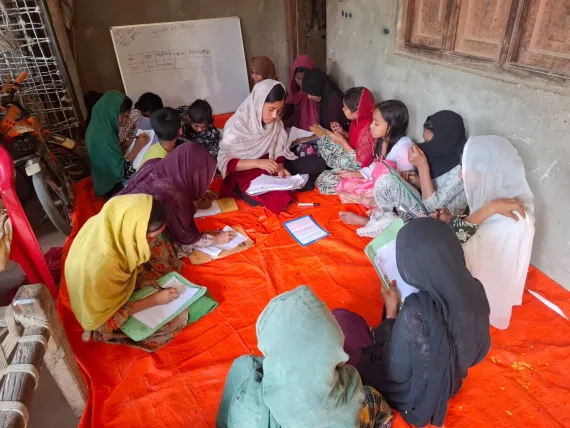
Ruksana's passion for learning didn't stop at academics. She was equally determined to gain practical skills that could support her financially, and through the CLC, she completed a tailoring course, eventually becoming a tailoring instructor herself. It gave her an additional income stream alongside her work as a facilitator, and a level of financial independence that reshaped her future.
Her commitment to academics and her career pushed her parents to change their minds on the arranged marriage they had once considered for their young daughter. Ruksana built a path entirely her own, one where learning led to teaching, and teaching led to independence.
"I feel happy to be a role model," she says. "I am happy to give others the same chance I received."
Scaling learning and skills across Nepal
Mahendra and Ruksana's stories reflect the same message: adolescents don't have to choose between supporting their families and continuing their education. With the right support, they can gain foundational learning and build practical skills that improve their employability at the same time.
In 2025, UNICEF Nepal supported the government in enabling over 18,000 children in gaining a second chance at education through ALP and skills development, including digital skills, helping build confidence, opportunity, and bridge the digital divide.
In partnership with the government, UNICEF continues to expand its support for CLCs across the country, focusing on communities where children and adolescents face the greatest barriers to education. Together, they are advancing a nationwide vision: ensuring every child has access to education, and every young person has the opportunity to build skills for a better future.
A special thanks to UNICEF Nepal's implementing partner in Lumbini Province, Kalika Self-Reliance Social Center, the European Union, the Let us Learn Foundation, Akelius Foundation, and other key partners for their support in driving results for children in Nepal.