Temporary Learning Spaces Keep Children Learning After Cyclone Chido
UNICEF supported Chiúre Primary School with the construction of 12 temporary learning spaces through its Today and Tomorrow Initiative, the world’s first integrated climate and disaster risk finance mechanism designed specifically for children.
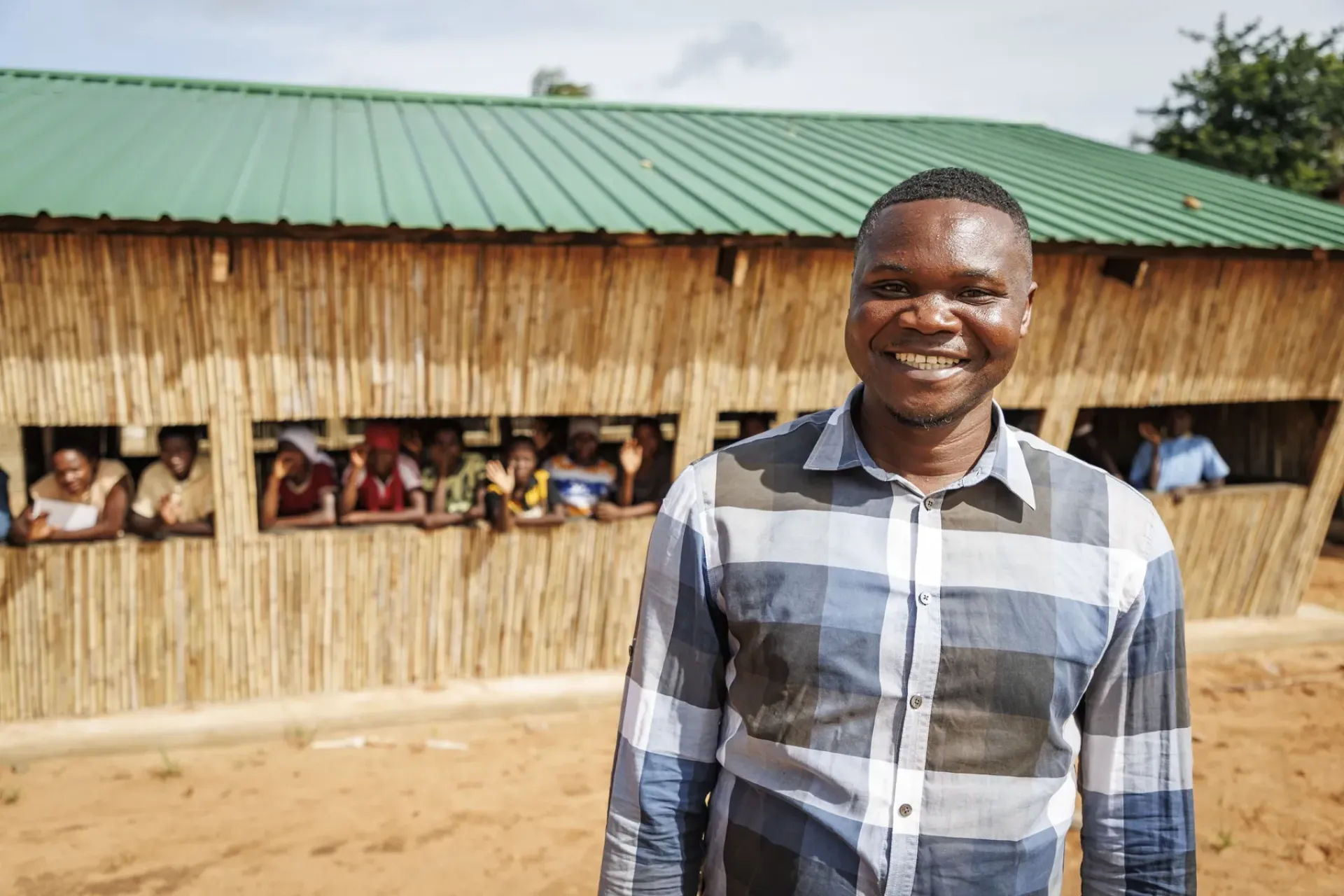
Chiúre, Cabo Delgado - At Chiúre Primary School, students wave from classroom windows while others run across the dusty red earth, chasing a football between lessons.
For Jose Moises, 38, a teacher and pedagogical director at the school, the sound of children learning and playing shows why the temporary learning spaces built after Cyclone Chido have become so important.
Chiúre Primary School has 5,483 students from Grades 1 to 9, supported by 102 teachers. In recent years, the school has been damaged by extreme weather events, including Cyclone Kenneth in 2019 and Cyclone Chido in December 2024.
“During Cyclone Kenneth in 2019, all the roofs were taken off the school buildings,” Jose says. “The roofs and walls were not resilient. But the school did not close after Kenneth because UNICEF quickly provided large tents to use as classrooms.”
In 2023, UNICEF supported the rebuilding of many classrooms with stronger walls and cyclone-resilient roofs. When Cyclone Chido struck Cabo Delgado in December 2024, those classrooms remained standing, even as other buildings were destroyed or badly damaged.
“We could not believe that the roofs were still on the classrooms after Chido,” Jose says. “It was a very strong cyclone. But when we arrived at the school after the storm, they were still there. The teachers and students were amazed. We said that these truly are resilient roofs.”
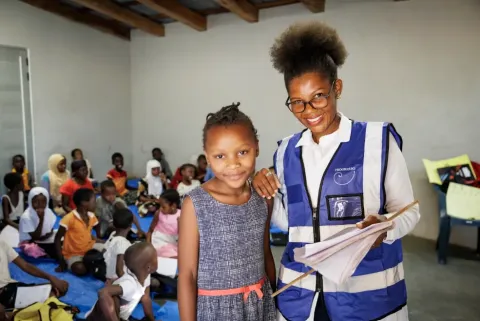
Still, the damage left the school under severe pressure. With several buildings destroyed or unusable, there was not enough classroom space for all students. Teaching time was reduced to just two hours per child, and some teachers held lessons outside under the few scattered trees around the school.
The pressure increased as children from smaller schools damaged by the cyclone began coming to Chiúre Primary School.
“After Chido, many smaller schools in the district were destroyed,” Jose says. “Because of our resilient roofs, our school was mostly still standing, so many new children started to come here. The number of students has increased since Chido, which put further pressure on classroom space.”
In May 2025, UNICEF built 12 temporary learning spaces at the school to help children continue learning in safer and more comfortable conditions.
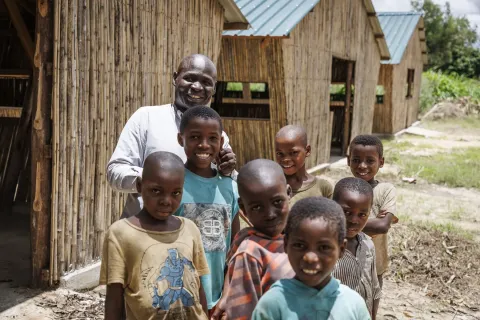
The new classrooms are low-cost and quick to construct. They are built with slanted bamboo walls, hardwood floor planks on a cement base and green corrugated iron roofs. Today, 2,340 students use them every day.
For Jose and the other teachers, the change has been immediate and visible.
“With these new classrooms, we have more space than ever,” he says. “Nobody is teaching under trees anymore.”
The temporary learning spaces have helped ease overcrowding, protect children from the heat and restore more regular learning conditions after the storm. For students who had been studying for only a few hours a day, they have helped bring a greater sense of stability back to school life.
Across the school grounds, children continue to run, play and learn. For Jose, the experience shows how timely support after a disaster can help children return to the classroom and continue their education.
UNICEF supported Chiúre Primary School with the construction of 12 temporary learning spaces through its Today and Tomorrow Initiative, the world’s first integrated climate and disaster risk finance mechanism designed specifically for children and young people, with the generous support of the Governments of Germany and the United Kingdom.