From studying under the trees to learning in a classroom
UNICEF is supporting the construction of temporary learning spaces through its Today and Tomorrow Initiative, the world’s first integrated climate and disaster risk finance mechanism designed specifically for children and young people.
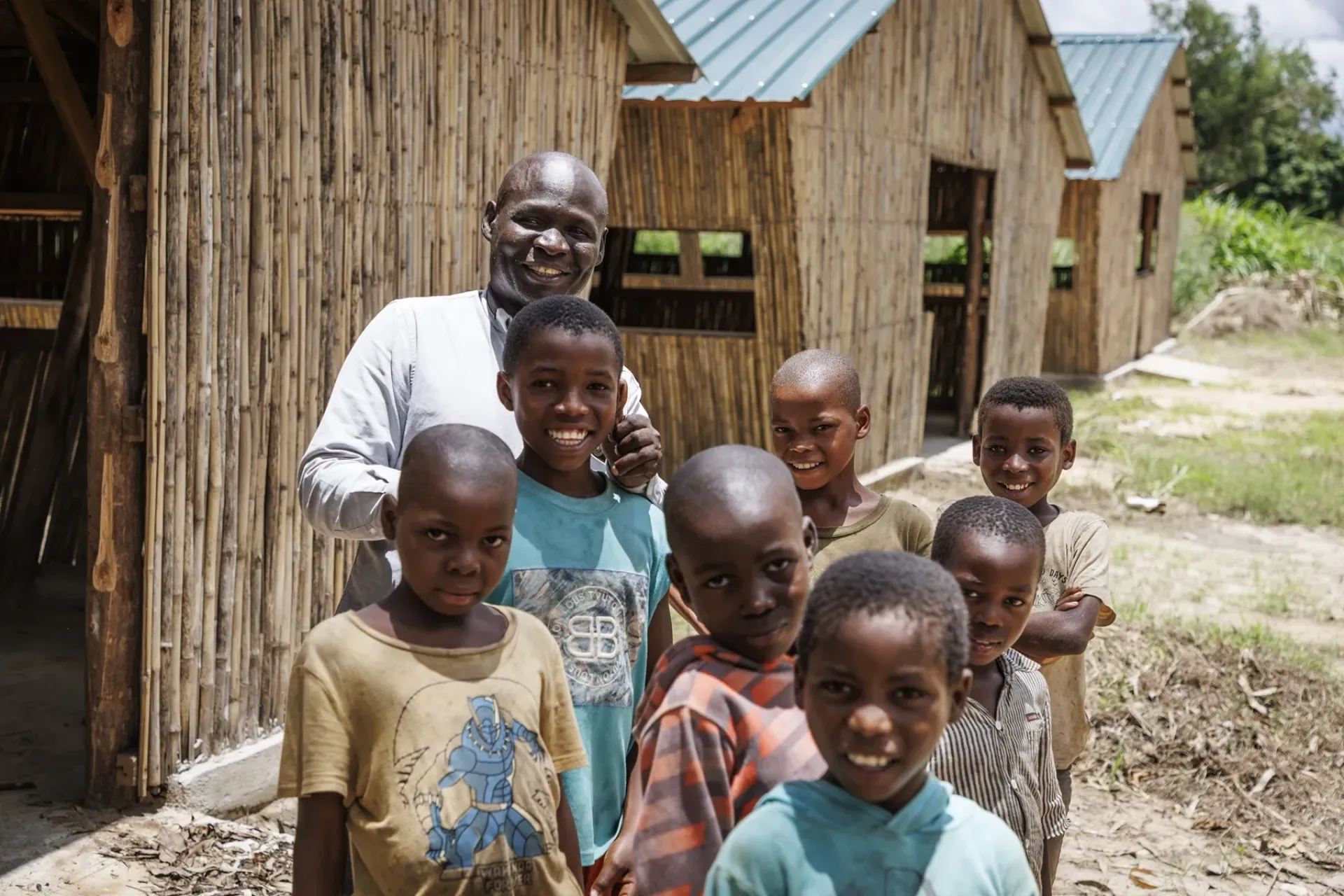
NACALA, Mozambique - Seven-year-old Ussane Laquene, a Grade 3 student at Murrupelane Basic School in Nacala, is happy to be learning in one of the school’s new classrooms.
“I love studying in the new classrooms,” he says. “They are beautiful, and they give us shade from the sun.”
Nearby, a row of roofless, weathered white buildings shows the damage caused by Cyclone Jude in March 2025. Bricks lie scattered around the ruined classrooms, while grass grows through the floors where children once studied.
The cyclone destroyed many of the school’s buildings and classrooms, as well as essential furniture and learning materials.
“Our school desks, chairs and school materials were all destroyed in the cyclone,” says Martins Ambrosio, the school’s Deputy Director and a teacher. “The old classrooms, which were made of bricks and clay, fell down easily.”
Murrupelane Basic School has 3,411 students enrolled across Grades 1 to 9. After the cyclone, the school had few safe places where children could continue learning.
Teachers moved their classes outdoors, arranging different groups of students beneath the trees around the school grounds.
“After the storm, we had to hold classes outside under the trees,” Martins says. “When it rained, we could not have classes at all.”
For Ussane, studying outside meant spending school days exposed to the heat.
“I had class under the mango trees every day, with different classes studying under different trees,” he says. “It was difficult because of the heat from the sun.”
The rainy season brought further disruption. Whenever the rain started, lessons had to stop.
“I didn’t like the rainy season because when it rained, we had no classes,” Ussane says. “Now we will have school even when it rains.”
In December 2025, the school received four temporary learning spaces from UNICEF. Designed to be low-cost and quick to construct, the classrooms have slanted bamboo walls, hardwood floor planks set on cement bases and green corrugated iron roofs.
“The new classrooms provided by UNICEF are a great help to the school,” Martins says. “UNICEF also gave us 200 chairs for the students. They had spent months sitting on the ground during classes.”
For Ussane and other students at Murrupelane Basic School, the classrooms provide protection from both the hot sun and the rain, allowing lessons to continue in a safer and more comfortable environment.
UNICEF supported the construction of the four temporary learning spaces through its Today and Tomorrow Initiative, the world’s first integrated climate and disaster risk finance mechanism designed specifically for children and young people, with the generous support of the Governments of Germany and the United Kingdom.