Uruguay moves towards accessible learning assessments
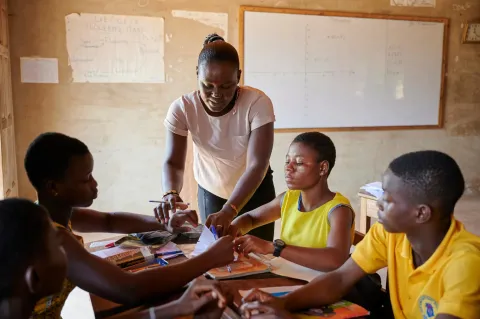
An accessible digital platform is helping children with disabilities and diverse learning needs participate fully in national learning assessments.
How can a learning assessment show what children know if some children cannot access the test in the first place?
Children with disabilities have historically been excluded from national learning assessments. As of 2021, only 61 per cent of 88 countries surveyed had an education data collection system inclusive of children with disabilities, up from 46 per cent in 2016. And when children take tests that are not designed with accessibility in mind, their results may reflect the barriers they face rather than what they actually know.
Uruguay has faced challenges in ensuring that children with disabilities are adequately represented in education data. A 2025 study found that national data on children with disabilities is not systematically compiled or monitored.
In 2026, Uruguay decided to change this. Lectura, Escritura y Oralidad, or LEO, is a national Grade 2 assessment of reading, writing and oral language skills. It was adapted into an accessible digital format so that students with and without disabilities could participate, with accommodations available for those who needed them.
Why make LEO accessible?
The work is part of UNICEF’s Accessible Digital Textbooks For All (ADT) initiative, which aims to make learning materials accessible to all students, including children with disabilities or with different learning needs and those who speak minority or other languages.
UNICEF and its partners are now studying the impact of accessible digital textbooks on foundational learning in Uruguay. Around 1,000 students across 130 special and mainstream schools are taking part in a randomized controlled trial.
But to understand whether the textbooks make a difference, research first needed a way to measure learning that could include children with disabilities.
This is where LEO came in.
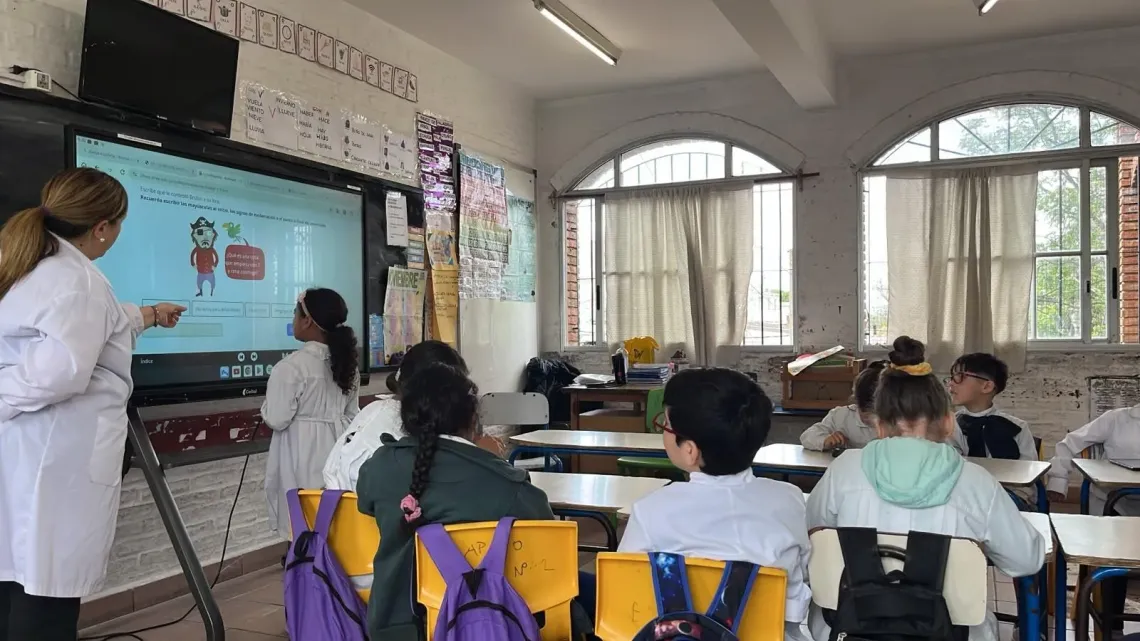
LEO is a national assessment given to Grade 2 students in a one-to-one, 40-minute session with a teacher. It assesses oral reading, construction of meaning, reflections on language, and production of oral and written texts. Children use a printed three-panel booklet, known as a triptych, with texts and images. The teacher asks questions and records their answers.
Making LEO a government-led national assessment more accessible does not only enable this research on ADTs, but it's helping to strengthen the education systems goal of becoming more inclusive.
Making the assessment more accessible
Adapting LEO was not as simple as putting the paper test on a screen.
An inclusive assessment expert first reviewed the test to understand what could be made accessible without changing what each question was designed to measure. This led to four months of discussion and iterations between the people who designed and administered LEO, accessibility and inclusion experts, different teams within Uruguay’s National Administration of Public Education (ANEP in Spanish) and UNICEF.
The team used UNICEF’s ADT Studio, an open-source, AI-powered tool to convert the original assessment material into a first accessible digital version.
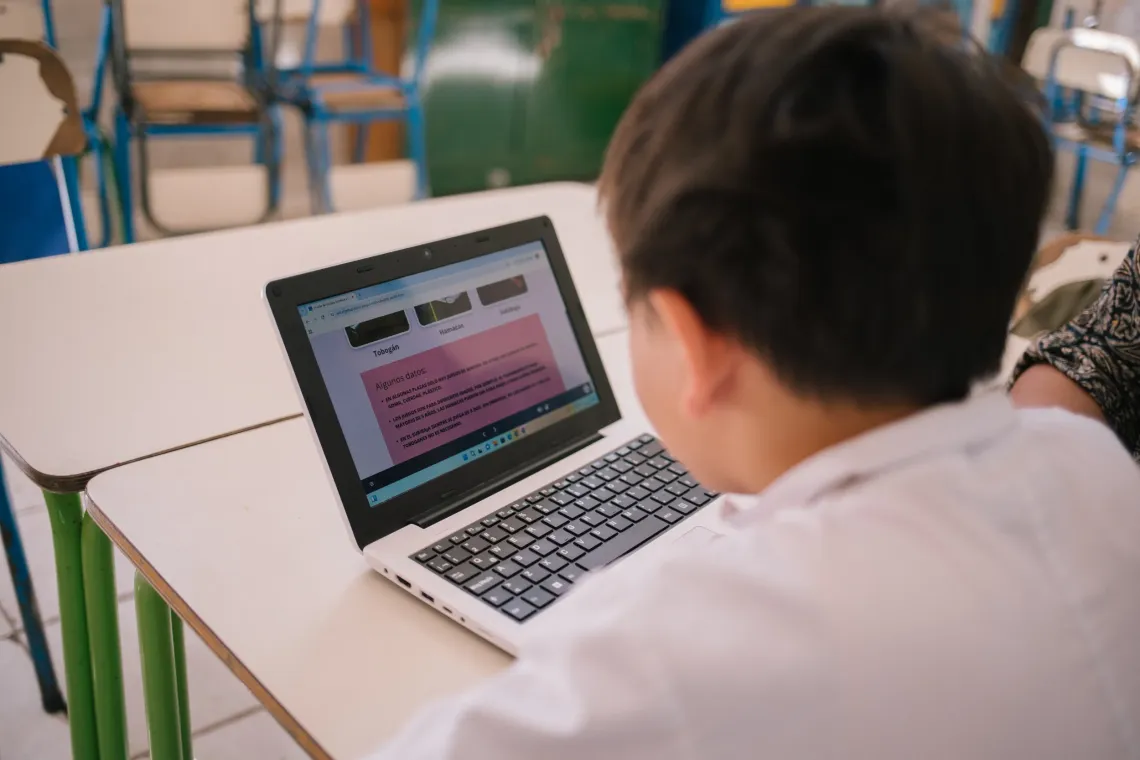
Students can choose different ways to access the assessment. They can enlarge text, change the colour contrast, listen to text being read aloud, use a highlighter to follow along, hear description of images, and access Uruguayan Sign Language videos. They can also see the whole triptych at once or zoom in on one section.
But accessibility went beyond the screen. Teacher guides and scoring materials were revised, assessors were trained, and different accommodations were introduced for students who needed them.
In the adapted LEO, students can see the whole triptych or zoom into one section. Accessibility options and interactive elements are available throughout the platform. See how this accessible assessment platform is removing barriers and giving children with disabilities and diverse learning needs an equal opportunity to show what they know.
Making LEO accessible without changing what it measures
One of the hardest questions was also one of the most important: how do we remove barriers without changing what the test is trying to measure?
Capital letters provide a simple example.
Using fewer words in all capitals can make text easier to read. But some questions on LEO deliberately use a capital letter to test whether children can distinguish between upper- and lower-case forms. To address this, the team kept capitals where they were part of the skill being assessed and changed them elsewhere. A pilot in three schools helped test decisions like these in real classrooms.
It showed that some seemingly small changes mattered. Children benefitted from having a break halfway through the assessment, for example. The pilot also pointed to the need for more natural audio and, in some cases, an accompanying adult for emotional support.
During the assessment, all children could use measures, such as breaks, repeated instructions and one chance to re-read the section. Students who needed additional support then could respond through a scribe, Augmentative Alternative Communication (AAC), pointing or speaking, and assistive technology.
A starting point, not a finished product
Accessible LEO is one step in Uruguay's wider efforts to make education more inclusive. In 2026, ANEP also began introducing a unified student record called Ficha Única del Estudiante that, for the first time, systematically gathers information from families about students’ functional difficulties.
Preliminary results suggest that the adapted assessment works as intended, but there are still limitations. Results from the adapted and standard versions of LEO cannot simply be treated as interchangeable. This being only the first version, future adaptations will need to reach more children and respond to a wider range of needs.
But this experience can also inform what comes next. Adapting existing assessments is important, but the longer-term goal is to design them to be accessible from the outset. The lessons from LEO can help keep accessibility in mind as new assessments are developed, alongside what they are intended to measure.
Accessibility is more than ticking a checkbox
It means looking carefully at each part of a test and asking two questions at the same time: can every child access this, and are we still measuring what we intended to measure?
Accessible LEO shows what becomes possible when technology, assessment and inclusive education expertise come together. Children who might otherwise face barriers to participation have the opportunity to participate and demonstrate what they know, and education systems get a clear picture of learning across the whole population of children, providing a stronger basis for policy and investments that serve every child.