Where are the teachers?
Unpacking Ghana’s teacher deployment challenges through one school’s experience
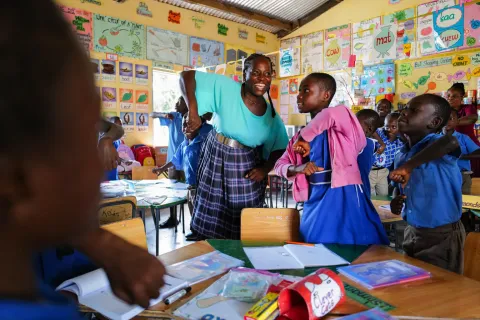
On her daily rounds at the primary school where she works, Head Teacher Thelma steps into each classroom, checking on the ongoing lessons at her school in the rural North Dayi district of Ghana's Volta region. In one room, a single teacher is teaching Grades 1 and 2 together, while in the next classroom, the Grade 3 learners sit without a teacher, waiting for their turn.
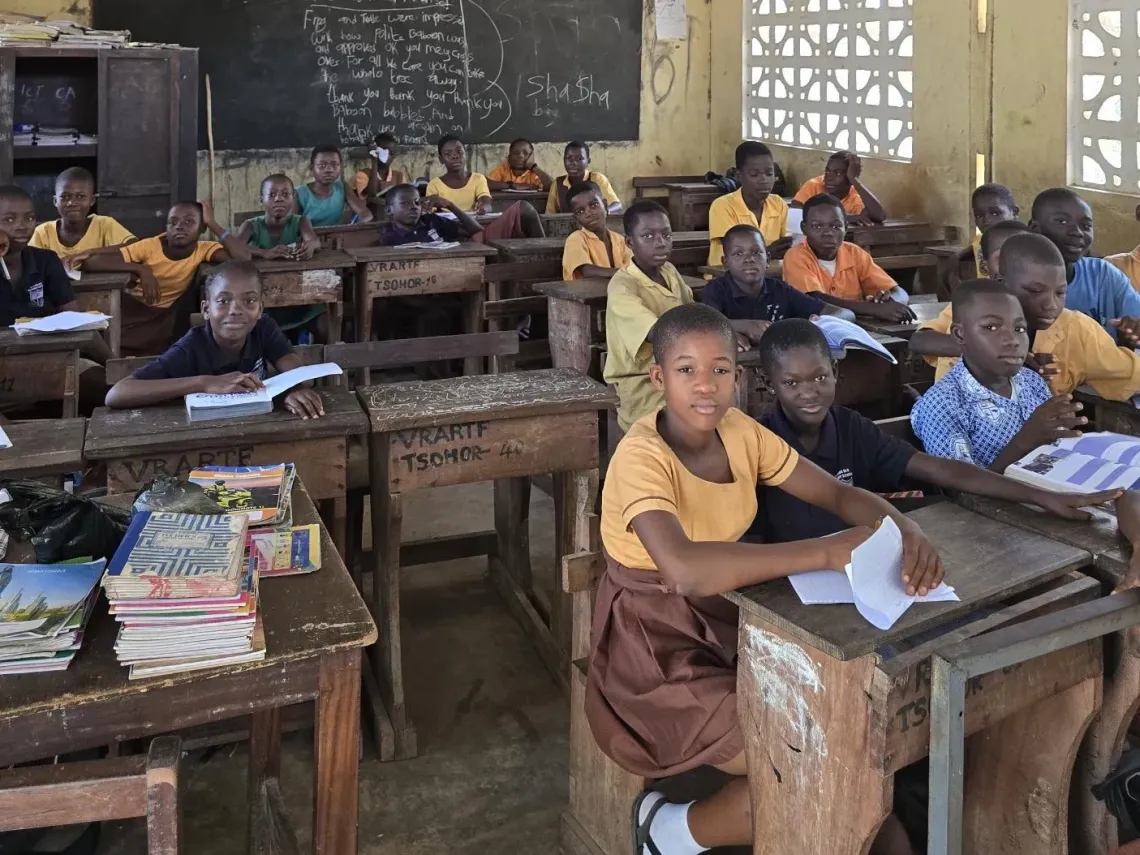
Unfortunately, for Thelma and other head teachers, this has become the norm across schools in Ghana. She worries about the quality of learning happening at her school. Her school continues to face persistent teacher shortages even as other schools have teacher surpluses, reflecting broader challenges in ensuring teachers are deployed where they are needed most.
"We don't have a foundation [for learning]. If we didn't have such a big teacher deficit, it would be much stronger," said Thelma.
Despite the Ministry of Education (MoE) making teachers central to national strategies for improving the education system, Ghana continues to face persistent challenges in recruiting, preparing and supporting its teacher workforce.
At the same time, Ghana has established itself as a regional leader in education reform, advancing ambitious efforts to improve foundational learning, strengthen the use of evidence in decision-making, and ensure every child has access to quality education. As these reforms continue to evolve, ensuring an equitable and well-supported teacher workforce remains fundamental to their success.
New evidence from the Teachers for All research project highlights opportunities to further strengthen Ghana’s teacher deployment system and ensure the education workforce keeps pace with the country’s broader reform agenda.
In 2026, as part of the research activity, a delegation of MoE and UNICEF representatives visited several public schools across Ghana, including Thelma’s, illustrated the wide variation in staffing conditions across the country. Her experience illustrates how national teacher deployment patterns translate into everyday realities for schools and learners.
Persistent teacher shortages
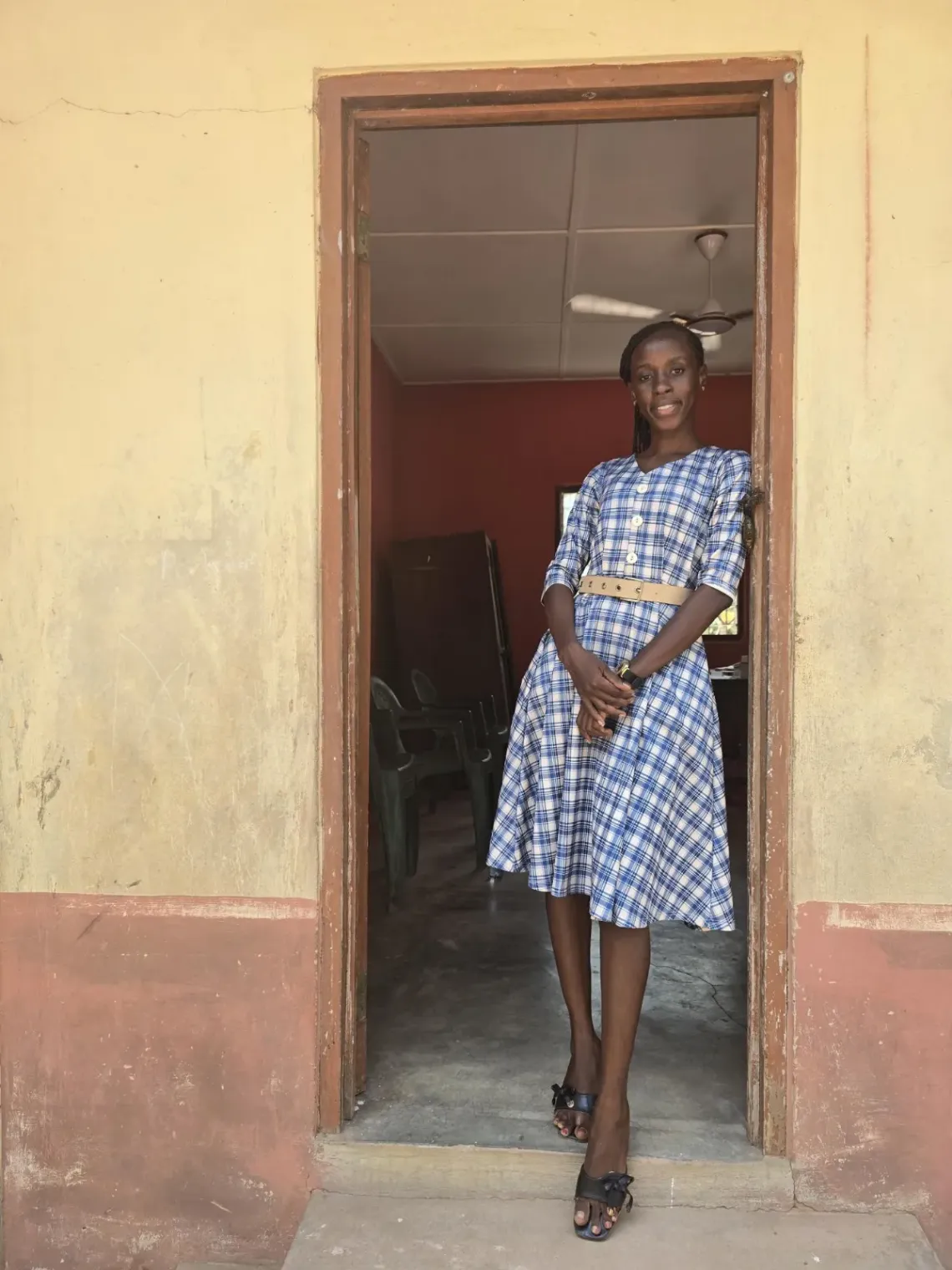
Situated near the banks of Volta Lake, Thelma’s primary school is located about 20 km down an unpaved road from the nearest town. With limited access to electricity, internet, water and housing, this community, like many others across Ghana, has struggled for years to attract and retain teachers.
Despite catering to eight grades, the school has only had two full-time teachers for several years. With 162 students, this results in a pupil-teacher ratio (PTR) of 81:1, more than double the national target of 35:1.
The school has repeatedly declared vacancies, but shortages persist. Recruiting and retaining teachers in remote communities remains a persistent challenge, contributing to significant disparities in teacher distribution across the country. This reflects a broader national pattern: while some (often urban) schools have teacher surpluses, others face severe shortages, with over 14 per cent of districts averaging PTRs above 50:1.
Ineffective coping strategies
In Thelma’s school, where only two teachers serve all primary grades, staff have developed a range of coping strategies to keep learning going despite severe teacher shortages. One teacher, Innocent, teaches Grades 5 and 6 together to prioritize preparing students for end-of-primary examinations.
The other teacher, Wisdom, teaches Grades 1 and 2 together to ensure younger students have a better chance of mastering foundational skills. In both classes, these teachers do not have a specialized multigrade curriculum or set of learning materials: it is up to them to decide what and how to teach.
Students in Grades 3 and 4 spend much of their day unattended. The two grades of kindergarten classes, KG1 and KG2, are grouped together and supervised by a volunteer, a recent secondary school graduate.
“I can't really plan the school day because I have to move between classrooms. There are days a class is not interacted with at all,” said Head Teacher Thelma.
Language mismatch
One might expect Thelma to step in and help teach. But here, another challenge emerges. Originally from the Western region, Thelma doesn’t speak the local language, Ewe, that many of her students rely on as they build proficiency in English during the early grades.
While this school is fortunate to have two teachers fluent in Ewe, Ghana has yet to systematically incorporate language proficiency into teacher deployment decisions. As a result, educators, like Thelma, are often placed in schools where they cannot effectively teach using a local language.
This mismatch also complicates Ghana’s renewed push for mother-tongue instruction in early grades.1 National data from 2017 suggested that nearly half of lower primary classrooms faced some level of language mismatch between teachers and learners.2
Ensuring an adequate and equitable supply of teachers is not just a system challenge, it is central to protecting every child’s right to quality education.
Meaningful and feasible solutions
Against these challenges, Thelma has pursued countless avenues to support her school: leveraging networks, writing letters to local government authorities, and advocating persistently for additional teachers. But she, like many others, is left asking how long this can continue. When other schools offer smaller class sizes, better living conditions, and more career opportunities, it becomes increasingly attractive for teachers in rural postings to move on.
The realities facing Thelma’s school are not isolated but rather illustrate the implementation challenges that arise when teacher deployment does not fully align with the needs of schools and learners. As Ghana continues to advance ambitious education reforms, and its processes for teacher deployment, addressing these challenges will be essential to ensuring every child benefits equally from those reforms.
Encouragingly, evidence from the Teachers for All research points to actionable solutions:
- Strengthening the use of localized data to identify and prioritize areas with the greatest shortages.
- Expanding financial and non-financial incentives for teachers in remote areas.
- Providing structured guidance and materials for multigrade teaching.
- Incorporating data on teacher language proficiency into deployment decisions.
Ensuring an adequate and equitable supply of teachers is not just a system challenge, it is central to protecting every child’s right to quality education. With Ghana’s history of strong leadership in advancing evidence-informed education reforms paired with current reform prioritization on foundational learning, the Teachers for All research builds on this momentum by highlighting practical opportunities to further strengthen the teacher workforce.
The question facing Ghana is not whether teachers matter as they are already recognized as being central to the country’s education vision. Rather, it is how to ensure that every school has the right teachers, in the right places, with the right support. Keeping teachers at the forefront of Ghana’s reform agenda will be essential in translating ambitious policies into improved learning outcomes for every child.
1 Kuzor, A. 2025. GES directed to enforce mother-tongue instruction in schools nationwide. Accra: MyJoyOnline.
2 United States Agency for International Development (USAID). 2019. Teacher Rationalization, Retention, and Language Study: Final Report.USAID.
About Teachers for All research
Teachers for All is a joint research project involving UNICEF Innocenti, UNICEF Ghana, and the MoE. It is financed by the Foreign, Commonwealth and Development Office (FCDO).