Why Ending Corporal Punishment Takes More Than a Ban
Implementation research is helping uncover how schools can move from prohibition to lasting change
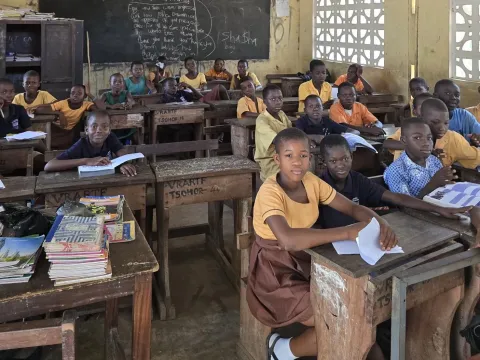
It is 7 a.m. and the school courtyard has been freshly swept. The dust has barely settled as students line up for morning assembly. A few arrive late. For students who are repeatedly late, the consequences may be a trip to the head teacher’s office. Across many schools in Ghana, this is a familiar routine described by students, parents and educators.
"For lateness, I give [pupils] some lashes. I do that myself. I don't allow any teacher to do it. Or we ask them to go clean the toilet", admitted a headteacher. In another district, a member of the local School Management Committee (SMC), which brings together parents, teachers and local leaders, explained: "With late coming, when you give them a stroke [sic], that child comes to school early the next day."
These experiences are not universal, but they reveal a wider challenge. Violence against children extends beyond schools: According to Ghana Statistical Service (2018), 94 per cent of children aged 1–14 years have experienced physical and/or psychological aggression by caregivers.
Evidence shows that violent discipline causes physical and psychological harm and is associated with poorer academic performance, mental health problems and impaired socio-emotional development.
The Ghana Education Service (GES) banned corporal punishment in schools in 2017, yet national laws still allow for "reasonable and justifiable correction" of a child. The gap between policy and practice was raised in national consultations led by GES in July 2026: What will it take to make the ban work?
GES and UNICEF are working together to improve learning environments in high-priority regions of Ghana under the Build Back Better: Gender Responsive Inclusive Education for Girls programme. Implementation research embedded in the programme gives important insights on why corporal punishment persists and how schools can move away from it.
Change is happening, but old norms persist
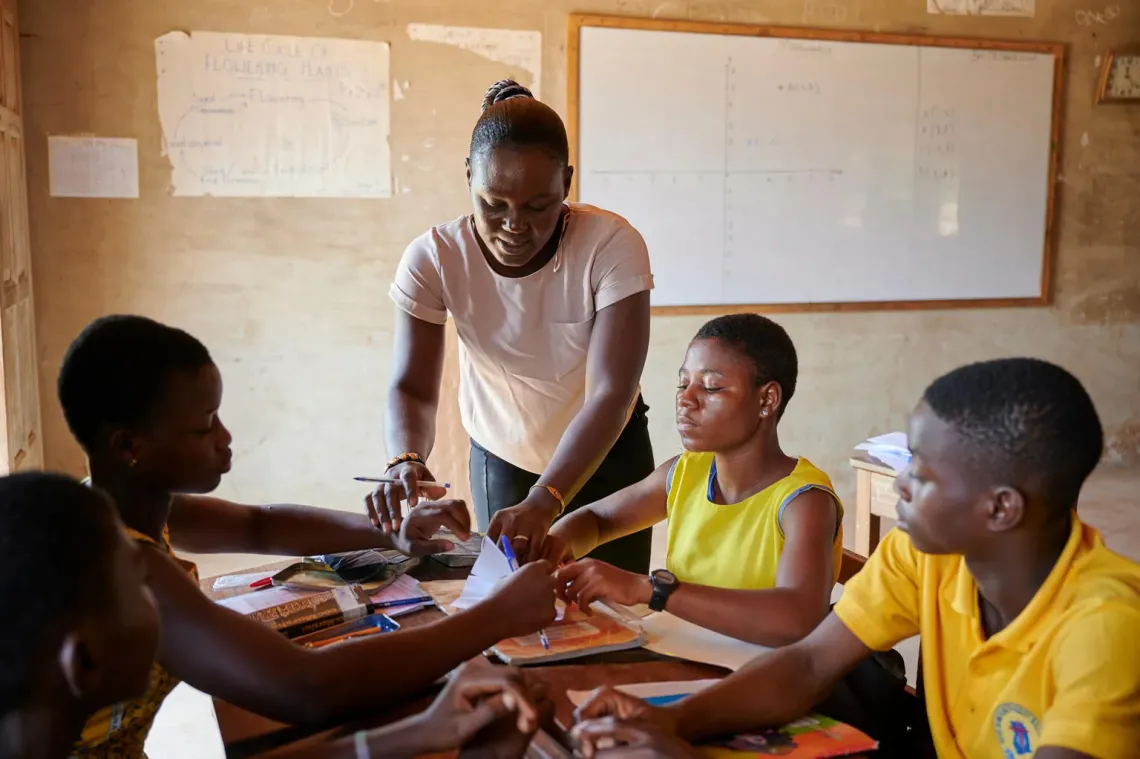
There are encouraging signs. Some headteachers are actively replacing physical punishment with alternatives:
"One of the positive disciplines is that we refer [children] to the guidance and counselling teacher. If the indiscipline is about writing, we make sure they stay at school to complete the work before going home. I monitor that," said a headteacher.
Some parents are also legally pursuing teachers who use corporal punishment on their children.
Other parents, however, continue to demand it.
One SMC reported that "some parents still want the old way," another argued that a maximum of six lashes should remain acceptable. A parent and teacher association agreed that "mild reasonable punishment like kneeling for a few minutes or receiving two to three strokes on the buttocks is still permissible to ensure discipline."
Banning a practice does not change the beliefs that sustain it.
"Teachers are used to the corporal punishment and they feel that is the best way to discipline a child. The new way of doing things makes the teacher powerless," explained one District Guidance and Counselling Coordinator.
Such remarks reflect a common perception among educators that corporal punishment is necessary to maintain authority in the classroom. But evidence points to effective non-violent alternatives. Research has found that positive discipline approaches can improve student behaviour and classroom management without relying on physical punishment.
Despite GES developing a Positive Discipline Toolkit and training teachers on it, gaps remain. Teachers do not always have the practical support they need to put alternatives into practice.
Students too normalize corporal punishment. Although fewer than 5 per cent of girls surveyed indicated personally experiencing physical violence, caning surfaced in nearly all student focus groups. The same normalization surfaces in students' own proposed alternatives: "Advice the first time, warn them the second time and caning will be a last resort."
Listening to students also revealed a broader picture of violence in schools. In the term before the survey, as many as one in six girls experienced verbal abuse, bullying, physical violence or sexual harassment, yet fewer than half told someone about what had happened.
Corporal punishment cannot be tackled in isolation. Prevention efforts need to address the different forms of violence girls experience and identify appropriate responses to each.
Moving beyond the ban
Moving beyond the ban means looking at the wider environment in which violence occurs. It requires teachers, school leaders, families, students, and religious and traditional leaders to be part of the change. Implementation research highlighted three priorities:
- Make communities partners in preventing violence, not simply audiences for awareness campaigns. Parents, students, SMCs, traditional and religious leaders can help identify the beliefs and practices sustaining violence, shape locally relevant solutions, strengthen reporting and build shared expectations around safer schools. Community engagement should create space for people to participate in change, not simply be told why violence is harmful. The Coalition for Good Schools, Safe to Learn, WHO and UNGEI offer diagnostic instruments, reviews of what works and practical toolkits to inform efforts to reduce violence in and around schools.
- Give teachers practical alternatives to replace violent discipline. Training needs to reach every school, but one-off training is unlikely to be enough. Teachers need practical approaches they can use in the classroom, alongside continued coaching and opportunities to learn from role models already using positive discipline successfully.
- Listen to children and communities: Research should engage communities to understand how norms are changing, build a fuller picture of the different forms of violence students experience and ensure children’s voices inform responses through safe and ethical approaches.
The evidence from Ghana shows that ending violence in schools requires more than prohibiting individual practices. Teachers need support to replace harmful discipline practices, while children and communities need a stronger role in understanding and preventing all forms of violence children face in and around schools.
This research has been made possible by generous funding from Hapag Lloyd through the German National Committee and UNICEF Innocenti’s Every Child Learning – Implementation Research Improving Education Initiative (ECL-IRIE) as well as continuous commitment from the UNICEF Ghana Country Office and the Ghana Education Service.
References
Children’s Act, 1998 and the Criminal Offences Act, 1960.
Cuartas, J., et al. (2025). Physical punishment and lifelong outcomes in low- and middle-income countries: A systematic review and multilevel meta-analysis. Nature Human Behaviour.
Quail, K. R., & Ward, C. L. (2022). Nonviolent discipline options for caregivers and teachers: A systematic overview of the evidence. Trauma, Violence, & Abuse.