

Closing the nutrition gaps
Child nutrition in the Europe and Central Asia region is not only about the supply of food. It is also about food policies, systems and practices, and the information and support available to families.
- English
- русский
Child Nutrition in Europe and Central Asia
Our goal: UNICEF is working to build a region where good nutrition is a daily reality for all children, adolescents and women. Our goal is to protect and promote services and practices that support the best possible nutrition for all.
We work with partners in every country across the region to prioritize child nutrition, and to close the nutritional gaps that threaten children’s life-long health and potential.
Data from the region

The Europe and Central Asia region has one of the world’s lowest rates of exclusive breastfeeding: only 42 per cent of children are exclusively breastfed until the age of 6 months.
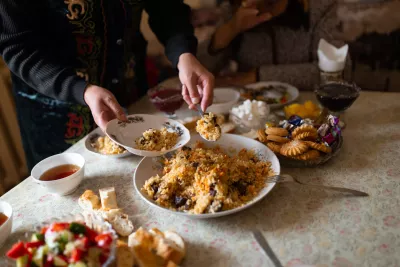
Stunting affects more than 1.8 million children under five in the region.
Between 20 per cent and 40 per cent of the region’s people suffer from anaemia, and millions are deficient in vitamins A and D, iodine or zinc.
Nutrition gaps in the Europe and Central Asia region leave millions of children without the nourishment they need to grow and thrive. The problems often start early, with poor nutrition among pregnant women that can result in stillbirth, low birthweight and developmental delays for children. This region has one of the lowest rates of exclusive breastfeeding in the world, with many children missing out on the best nutritional start in life.
The challenges often persist throughout childhood. More than 1.8 million children under five in the region suffer from stunting, which is linked to poor nutrition. The impact can include a reduced IQ, a weakened immune system and life-long health issues. Some children are more likely to be affected, with a higher prevalence of stunting among children from Roma communities, girls, children in rural areas and the poorest children.
At the other extreme, a growing number of children in the region are overweight: around 10 per cent of children under the age of 5, and around 33 per cent of children aged 7 to 9 – a challenge fueled by a food system that is dominated by unhealthy, ultra-processed foods.
Many families have struggled to put nutritious food on the table in recent years as a result of soaring food prices. For some, however, this struggle is not new: the region’s most disadvantaged children – including those from Roma communities – have always had less access to the good food every child needs.
Despite these challenges, a lack of data on nutrition makes it difficult to identify the children who are missing out and the possible solutions. As a result, this ‘hidden’ problem is not being prioritized.
Key policies
1989 Convention on the Rights of the Child
- Article 24.2(c): combat disease and malnutrition, including through the provision of adequate nutritious foods.
- Article 24.2(e): ensure that everyone has information, support and knowledge on child health and nutrition and the advantages of breastfeeding.
2015 Sustainable Development Goals (SDGs)
- SDG 2: End hunger, achieve food security and improve nutrition by 2030.
- Target 2.1: end hunger and ensure that everyone, including infants, has access to safe, nutritious and sufficient food all year round.
- Target 2.2: end all forms of malnutrition, including internationally agreed targets on stunting and wasting in children under 5, and meet the nutritional needs of adolescent girls, pregnant and lactating women and older people.
What is UNICEF doing?
UNICEF works to prevent malnutrition from the earliest years of life right through to adolescence. But until it is prevented for all children everywhere, we will continue to support all children affected.
We help to tackle all forms of child malnutrition, starting with a strong focus on the first 1,000 days of life. While we prioritize infant and young child feeding across the region, we also support nutrition during childhood and adolescence – an opportunity to break intergenerational cycles of malnutrition.
We work to improve the policies that govern food systems and that can steer children and families towards healthy diets. These include restrictions on the marketing of junk food to children, as well as sugar taxes and support for The Code on the Marketing of Breastmilk. The aim: to embed healthy food preferences from the early years.
We work with the private sector, pushing for business policies, practices and products that support the best possible nutrition for children. These include, for example, upholding The Code on the Marketing of Breastmilk, and support for breastfeeding mothers, such as paid maternity leave and safe spaces to breastfeed at work.
We aim to close the data gaps on nutrition, supporting research to find out exactly what is happening with child nutrition around the region. And we use robust evidence to mobilize governments and other partners.
Child nutrition is a shared responsibility that demands commitments and partnerships that span governments, the private sector, civil society and the general public, including children and families. By working together, we can uphold children’s right to nutrition across the region.