In Focus: Support for child nutrition
Closing the nutrition gaps in Europe and Central Asia

Highlights
The Europe and Central Asia region is comprised of upper-middle- and high-income countries, yet this is a region characterized by nutrition gaps, with some children missing out on the proper nutrition they need to grow and thrive.
Nutrition problems can start in the earliest months of a child’s life, in a region with one of the lowest rates of exclusive breastfeeding in the world. As a result, many children are denied the best nutritional start in life, as well as the close bonding between mother and baby provided by breastfeeding. The problems can continue throughout childhood, with inadequate feeding practices and diets driven by a failing food system, putting children at risk of either stunting or, increasingly, overweight and obesity.
The region has not been exempt from a global cost-of-living food crisis triggered by the ‘three Cs’ of conflict, the COVID-19 pandemic and climate change. Even in its richest countries, many families have been struggling to put nutritious food on the table as a result of long-term price hikes spurred by the aftermath of the COVID-19 pandemic and, since February 2022, war in Ukraine.
For some, however, this daily struggle is nothing new. The region’s most marginalized children – those from Roma communities in particular – have always had less access to the diverse, nutritious diet every child needs to survive and to thrive.
All of these challenges are compounded by the fact that child nutrition is simply not a development priority in many parts of the region. This lack of urgency is reflected in a chronic lack of data, which makes it more difficult to identify the children who are being left behind, the reasons for their nutritional disadvantage, and the potential solutions.
UNICEF works with partners across Europe and Central Asia to prioritize child nutrition in the region, and to close the nutritional gaps that put children at risk of a lifetime of poor health and lost potential.
Files available for download
Key facts



Key policy frameworks
Convention on the Rights of the Child (1989)
- Article 24.2(c): combat disease and malnutrition, including through the provision of adequate nutritious foods.
- Article 24.2(e): ensure that all segments of society, in particular parents and children, are informed, have access to education and are supported in the use of basic knowledge of child health and nutrition and the advantages of breastfeeding.


Challenges
There has been some progress on child nutrition in the Europe and Central Asia region. Yet there are persistent nutrition gaps that can – and must – be addressed to break the age-old cycle of poor nutrition for the most marginalized children and families.
Poor nutrition can start early – before a child is even conceived – and continue during pregnancy to threaten the chances of a safe birth and a healthy baby. During pregnancy, poor diets that lack key nutrients – like iodine, iron, folate, calcium and zinc – can cause anaemia, pre-eclampsia, haemorrhage and death in mothers. They can also lead to stillbirth, low birthweight, wasting and developmental delays for children.
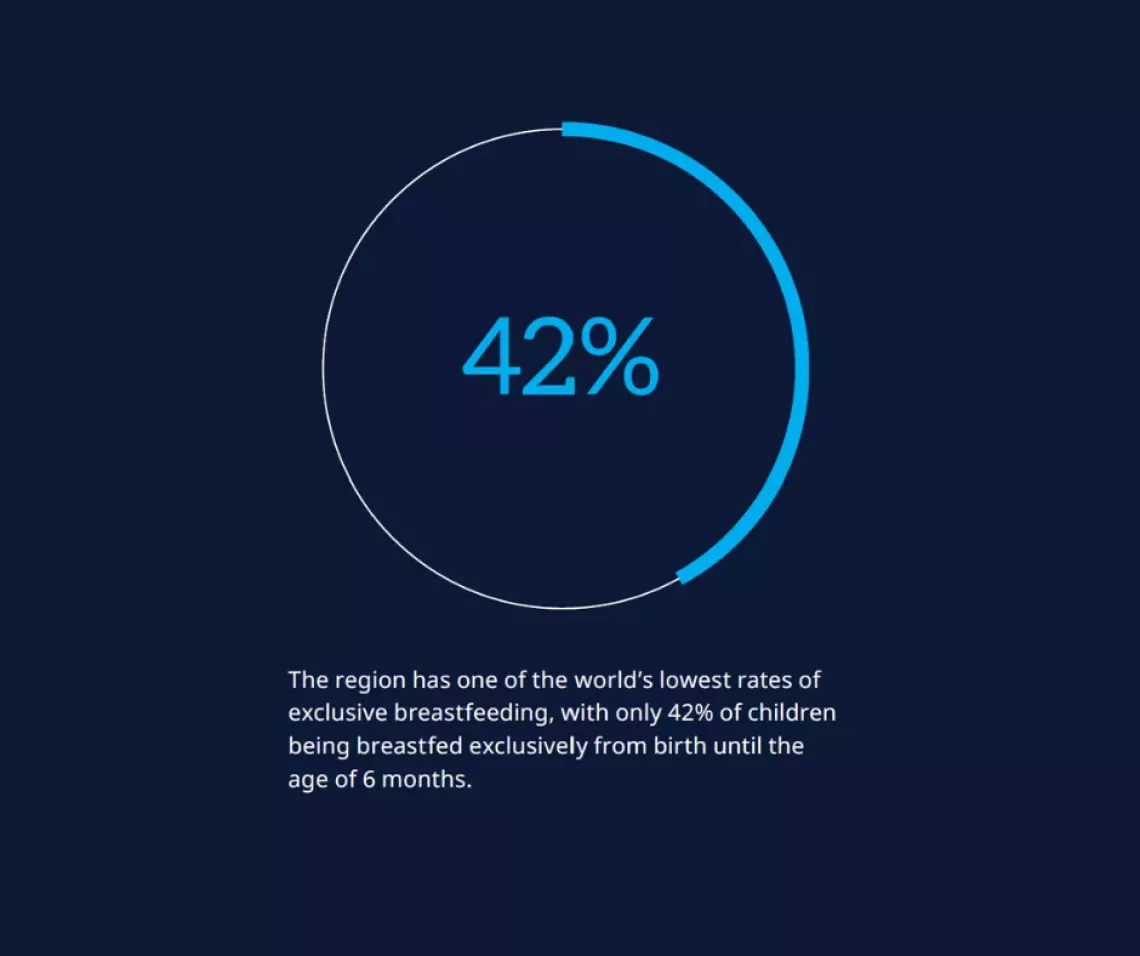
Only 42 per cent of children in the region are exclusively breastfed for the first six months of their life. Persistent industry interference in policy-making has led to the widespread use of breastmilk substitutes (BMS) and the commercialization of ready-to-use baby foods that undermine breastfeeding, posing a threat to children’s long-term nutritional well-being. All countries in the region, with the exception of Belarus, have legal measures in place to implement the International Code of Marketing of Breastmilk Substitutes (known as the Code) and most countries have legislation banning at least some forms of BMS promotion. However, implementation remains patchy, with Armenia the only country that has laws that strongly align with the Code.
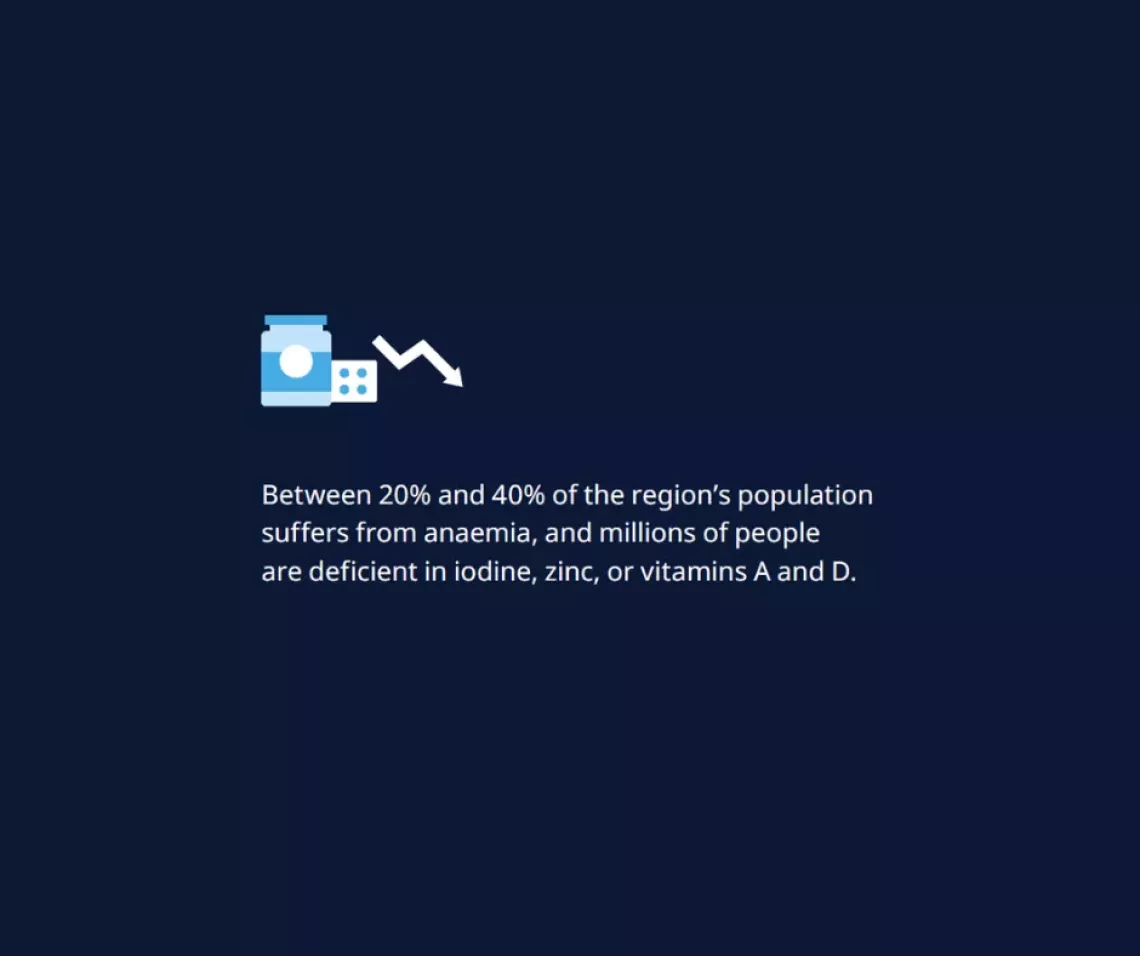
As a result of a lack of iron in their diets, an estimated 20 per cent to 40 per cent of the region’s population suffers from anaemia, and millions of people are deficient
in iodine, zinc, or vitamins A and D.
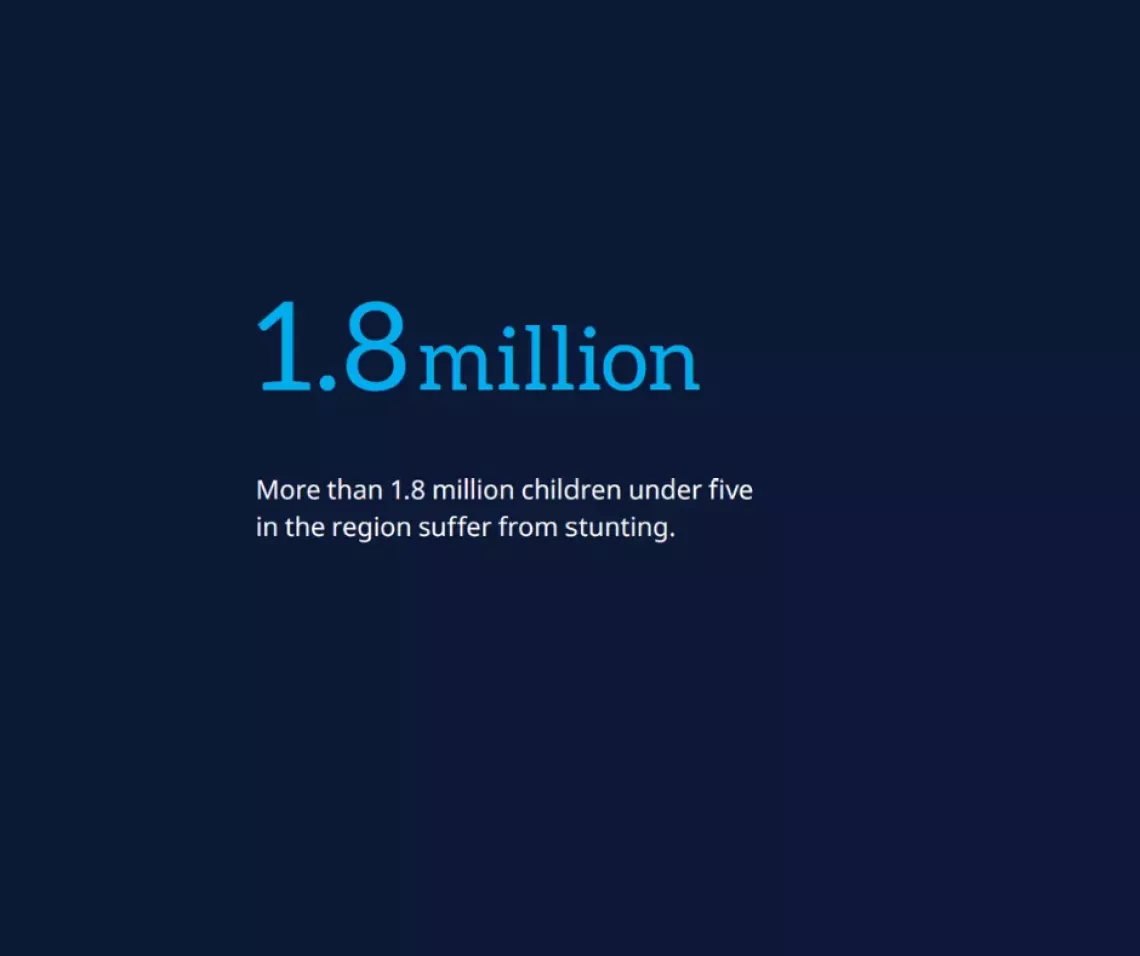
While the region has surpassed global targets for child wasting – the most life-threatening form of malnutrition – stunting remains a risk. It has many causes, including poor breastfeeding practices from birth, and the lack of good quality, nutritious and diverse diets. Stunting is connected to premature births, as well as frequent episodes of acute malnutrition during a child’s first 1,000 days of life. The impact is devastating for their development, and can include a lower IQ and a weakened immune system. Stunting can also increase the risks of serious diseases later in life, including overweight, obesity and non-communicable diseases. It affects more than 1.8 million children under five in the region.
Some children are more likely to be affected, with the prevalence of stunting and underweight far higher among children under the age of five in Roma settlements in some countries. Around 21 per cent of Roma children in Montenegro, for example, are moderately or severely stunted, three times the national average of just 7 per cent. In every country across the region, girls, children in rural areas and the poorest children are more likely to be stunted than others.
There are also concerns about increasing rates of overweight, which has fast become the most prominent form of malnutrition in the region. Around 10 per cent of young children under the age of 5 are overweight in the region, with rates as high as 13 per cent, 17 per cent and 25 per cent in Greece, Bosnia and Herzegovina and Ukraine respectively.
School-aged children and adolescents also face increasing rates of overweight and obesity, with around 1 in 3 children aged 7 to 9 now overweight. This ‘epidemic’ is being driven by a failing food system that is dominated by unhealthy, ultra-processed foods and deliberate marketing aimed at children by the food and beverage industry. The shaping of children’s food preferences often starts in infancy if they are fed with breastmilk substitutes rather than breastmilk itself, followed by a high consumption of unhealthy and ultra-processed foods in early childhood, into middle childhood and adolescence.
Despite these many challenges, there is a lack of understanding of the seriousness of this issue among policy-makers. This, coupled with a lack of data on child and adolescent nutrition, has made this a ‘hidden’ problem that is not being properly monitored or addressed. As a result, child nutrition is not prioritized across the region and is, therefore, under-resourced. This is a lost opportunity to nurture the region’s human capital, given the importance of good nutrition for health, development and for wider economic progress. There is a clear need for governments to invest in scaling up and improving access to nutrition services through support for primary health care and early childhood development.


UNICEF’s work for children
We put children, adolescents and women at the very heart of our nutrition advocacy, programming and research, recognizing that their nutrition is about far more than food itself. If it were as simple and linear as delivering food to each child, no child in the region would be malnourished. However, child nutrition is also shaped by the policy landscape and political will, as well as mindsets and support for families.
UNICEF aims for prevention first. All UNICEF nutrition programmes in the region share a universal premise: prevention always comes first. But if prevention fails, support is a must. Our main aim is to prevent maternal and child malnutrition in all its forms, from the earliest years of the life cycle, through childhood, and into adolescence. Until malnutrition is prevented everywhere, however, our programmes aim to ensure early detection and support for the children affected.
We work to address every kind of child malnutrition. Malnutrition, in all its forms, is a violation of children’s right to nutrition. We aim to help tackle the triple burden of child malnutrition: undernutrition (both stunting and wasting); deficiencies in vitamins and other micronutrients; and overweight and obesity.
Healthy recipes for families in Kazakhstan
In 2023, almost 430,000 people in Kazakhstan accessed the healthy recipe book ‘Menu for
Superheroes’ developed in collaboration with the National Center on Healthy Nutrition and a member of UNICEF’s business Advisory Council. The book contains healthy and affordable family recipes and encourages both fathers and mothers to take responsibility for their children’s nutrition
We use a ‘life cycle’ and ‘double duty’ approach. Maternal and child nutrition during the first 1,000 days of life remains a priority for our programmes. We prioritize infant and young child feeding (IYCF) across the Europe and Central Asia region, aiming to ensure that every child has the best nutritional start in life. This includes support for the full implementation and enforcement of The Code, such as early initiation of breastfeeding, exclusive breastfeeding until the age of six months, continued breastfeeding and the timely introduction of complementary foods and liquids for children aged six months to two years. However, we also focus on nutrition during middle-childhood and during adolescence – a window of nutrition opportunity for girls and boys and a chance to break the intergenerational cycle of malnutrition
Nurturing the bond between mother and child: one feed at a time
Bringing a new life into the world is a remarkable journey, but it has its challenges. From sleepless nights to worrying about a child’s well-being and safety, motherhood is always demanding. For refugee mothers, this journey is even more of a challenge.
Viktoria came from Khmelnytska Oblast in Ukraine to Krakow in Poland when the war escalated in February 2022 and gave birth to her son, Andriy, in a new country. She found it difficult to breastfeed, which added to the stress of a young mother who wanted to give her baby the best possible care. “We had some problems at the beginning,” she says. “Andriy did not want to eat and needed to learn how to do it. That was before I received free lactation consultations.”
UNICEF has worked with the Human Milk Bank Foundation to support mothers like Viktoria and their babies by promoting exclusive breastfeeding, improving care for women in perinatal crisis and expanding services in hospitals. “Mothers who come to Poland because of the war need a lot of support, especially emotional support, language help and even a kind word,” says Olga Stetsiuk, a lactation specialist in Ujastek Maternity and Gynaecology Hospital in Krakow, a hospital participating in the project.
Like Viktoria, Olga is from Ukraine and understood her anxieties. She helped Viktoria establish a successful breastfeeding routine so that Andriy receives the vital nutrients in her breastmilk and mother and baby can enjoy the close bond created by breastfeeding. Olga has been there to offer guidance and reassurance at every step along the way.
“Thanks to this programme,” says Olga, “mothers have ‘wings behind them’ knowing that they can always get help.”

We work to improve nutrition services and practices, as well as diets, to support the best possible nutrition, growth and development for children. Given the triple burden of child malnutrition, we prioritize the importance of nutritious, safe, affordable and sustainable diets – backed by strong nutrition services and practices – as the foundation of good nutrition.
UNICEF aims to transform entire systems to prevent child malnutrition. In particular, we aim to increase the ability of five key systems – food, health, water and sanitation, education and social protection – to deliver nutritious diets, essential nutrition services and positive nutrition practices for children, adolescents and women. We work to improve the policies that govern food systems, for example, and that have a critical role to play in steering children and families towards healthy diets. These include restrictions on the marketing of junk food to children, as well as sugar taxes and support for The Code – the aiming being to embed healthy food preferences from the early years. And we advocate with governments and with region-wide bodies, including the European Commission and Central Asia Commission, for consistent regulations and strong legislation to safeguard child nutrition.
We work with the private sector. National governments have the main responsibility for upholding a child’s right to nutrition, but the private sector has a key role to play. We advocate for business policies, practices and products that support the best possible nutrition for all children, adolescents and women, everywhere. These include, for example, upholding The Code, and support for breastfeeding mothers, such as paid maternity leave, safe spaces to breastfeed at work, and flexible approaches to their return to the workplace.
We aim to close the data gaps on nutrition, supporting reviews, surveys and research to find out exactly what is happening with child nutrition around the region, using robust evidence and youth voices to mobilize governments and other partners.
Evidence drives support for school meals in Kazakhstan
A UNICEF-supported assessment in Kazakhstan has led to a new programme in schools, aiming to ensure that children have balanced, varied and nutritious meals. The assessment of school meals, conducted by the National Center on Healthy Nutrition (NCHN) was endorsed by the Ministry of Health in 2023. Building on this, the municipality of Astana has successfully piloted a new school meals programme in close collaboration with UNICEF and the NCHN, using an inclusive approach that has mobilized and consulted education administrators, teachers, parents and 8,300 pupils at pilot schools. The results of the programme will support the scale-up of this approach countrywide.
UNICEF has also supported the development of an app that estimates the macro- and micronutrient contents of school meals. This makes it possible for everyone to determine whether a school meal is balanced and nutritious or not.
This work has been part of a wider initiative, not only to improve nutrition in schools, but also to mobilize schools to support nutrition more widely. In 2023, more than 9,500 frontline workers in schools enhanced their knowledge and skills on healthy nutrition, including overweight, obesity, and anaemia prevention; nutrition counselling services; and school-meal planning through an online training programme designed and implemented by the NCHN with UNICEF support.

Call to action
We need urgent action for child and adolescent nutrition in the Europe and Central Asia
region – a ‘re-boot’ of policies, programming and partnerships to deliver the promise of good nutrition for all.
At UNICEF, we never lose sight of one key principle: national governments have primary responsibility for upholding children’s right to nutrition. Yet, the path to nutritious diets, essential nutrition services and positive nutrition practices for all children, adolescents and women demands a shared purpose. It requires commitments and investments from wide-ranging partnerships across governments, the private sector, civil society, and the general public, including children and families.
By working together, we can help to end malnutrition among children, adolescents and women across the region. UNICEF stands ready to support national governments and their partners in upholding the right to nutrition for every child as a way to secure a more equitable future for children and their families.