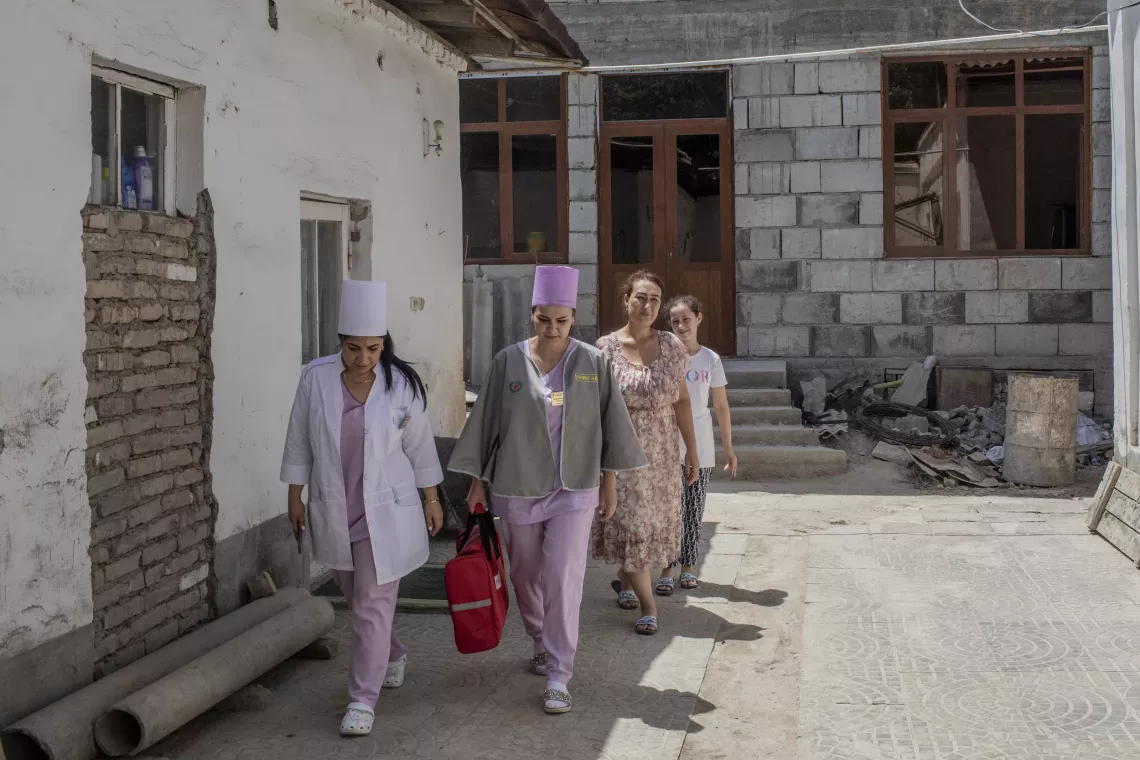
Bringing health to the home
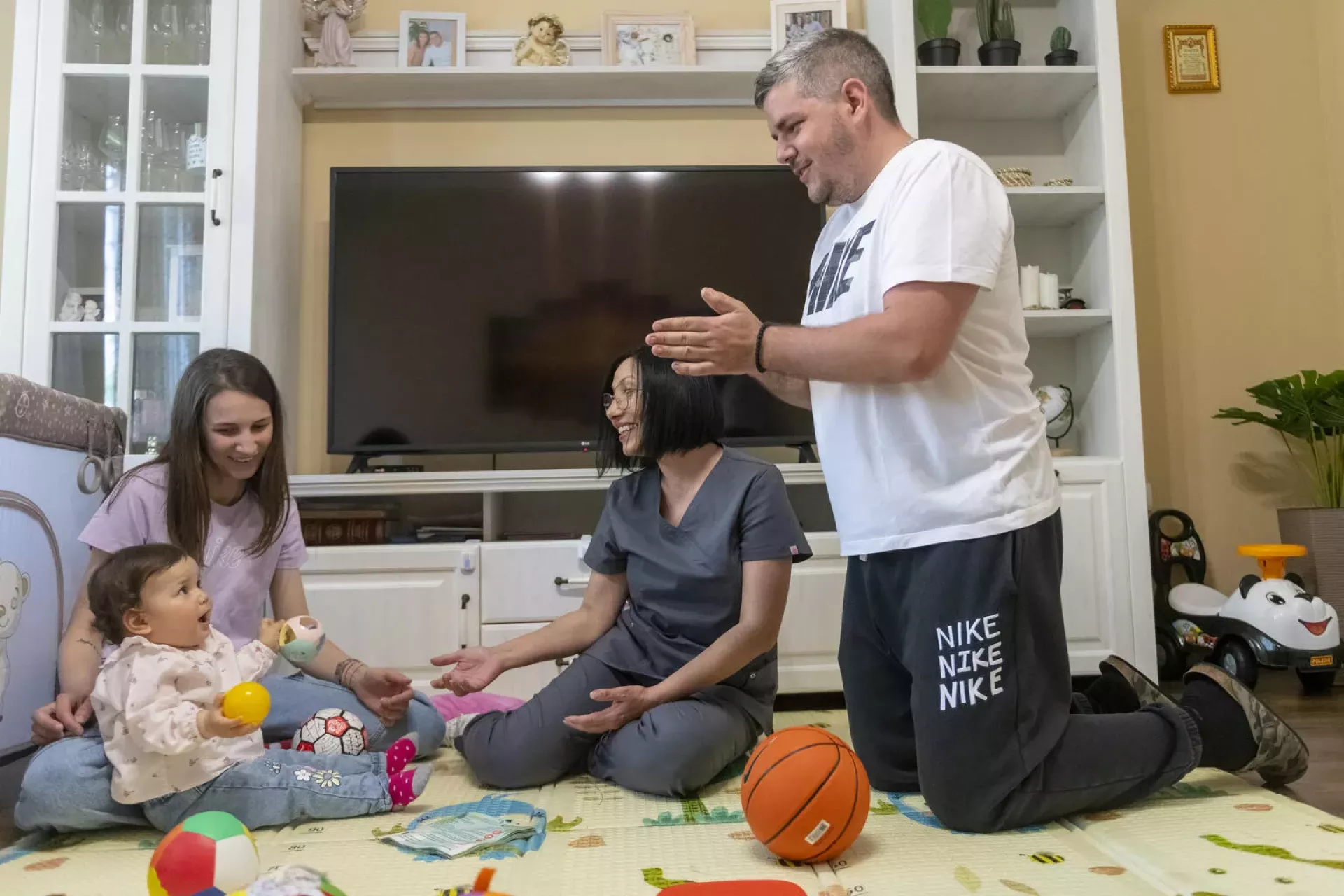
Home-visiting nurses are a crucial source of support, encouragement and information for families with young children in the Europe and Central Asia region. By bringing health services into the home, they build trust and lasting connections.
- English
- русский
Home visiting in Europe and Central Asia
Our goal: We aim to ensure that every child has the healthiest start in life, and that every parent has the knowledge and support they need to help their children grow and thrive. Home visitors support this ambition.
UNICEF supports better health services for children, including home visitor services that bring health care and advice on nutrition and development to families in their own homes. As trusted and well-trained community health workers who have regular contact with the families of young children, home visitors are well-placed to advise parents and to identify any health issues at an early stage.
Universal and Progressive Home Visiting
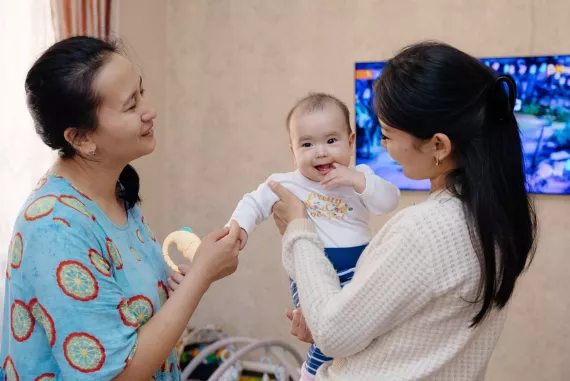
UNICEF is leading the Universal and Progressive Home Visiting (UPHV) approach in 17 countries across the Europe and Central Asia region.
This approach aims to:
- ensure that every child has nurturing and responsive care in a safe and stimulating home environment
- equip their parents with the knowledge they need to ensure the best care, health and development for their young children
- ensure that every child has access to quality health, nutrition and development services by improving early identification and support for children who have health-related problems or disabilities, or who are at risk of developmental difficulties, abuse, neglect and abandonment.
The first weeks and months of life are critical for every child. They are vital for lasting health and well-being – a unique window of opportunity to ensure nurturing care for children. UNICEF is taking advantage of this opportunity through its leadership of the Universal and Progressive Home Visiting (UPHV) approach in the Europe and Central Asia region.
This approach aims to tackle key health issues for children in the region, where child deaths are increasingly concentrated in these earliest stages of life. The region has one of the world’s lowest rates of exclusive breastfeeding, for example, and there are serious concerns about faltering rates of child immunization, as measles cases have risen in recent years. The risks are highest for children from marginalized communities, whose health and well-being are often jeopardized by their poverty, exclusion and lack of access to good quality local health services.
By bringing health services to where the children are, in their homes, home visitors can pinpoint any health and developmental problems at an early stage – as well as signs of neglect – and offer support to children and their parents. They can also act as a bridge to other services, such as child protection, social protection and education.
Key policies
1989 Convention on the Rights of the Child
- Article 6.2: the survival and development of the child.
- Article 24: the right of all children to the best standard of health, including reduced infant and child mortality, pre- and post-natal care for mothers, and information for all on the importance of child health and nutrition.
2015 Sustainable Development Goals (SDGs)
- SDG 3: ensure healthy lives and promote well-being for all ages.
- Target 3.2: end the preventable deaths of newborns and children under five by 2030
- Target 3.8: achieve universal health coverage, including access to basic health services for all.

What is UNICEF doing?
UNICEF works with governments to expand the work of home visitors to reach children with support for their health, nutrition and development. We support the Universal and Progressive Home Visiting (UPHV) model in 17 countries across the Europe and Central Asia region, an approach based on strong partnerships between trained health professionals and families.
The approach recognizes that every interaction they have is a chance to help children thrive, to equip parents with knowledge, skills and support, and to ensure safe and stimulating home environments. Through their regular contact with families, home visitors can identify health or developmental issues that need extra attention or specialized treatment and that could cause long-term health problems or disabilities if left unchecked.
Home visitors help families to ensure that children have the best nutritional start in life by promoting exclusive breastfeeding, and that they have timely vaccinations to protect them from deadly diseases. They also steer parents towards UNICEF’s free Bebbo app, where they can find resources on children's development, growth and nutrition, tools to help them track their child’s development, and advice on their own well-being and mental health
Our support for home visiting is strengthening the links between families and health services, quality of home visiting services as well as the capacities of local health workers.
The approach is setting a global standard for equitable access to essential health care and support for early childhood development by prioritizing children and mothers in remote locations, those living in poverty, those from ethnic minorities and those living with disabilities, as well as single parent households.