"A woman should not feel lonely after giving birth"
Diana and her home visiting nurse, Arailym navigate the journey of maternal mental health together
- English
- русский
Life changes around pregnancy make women more vulnerable to mental illness including depression and anxiety. In Kazakhstan, nearly 60 per cent of mothers experience postpartum depression, among the highest rates recorded globally.
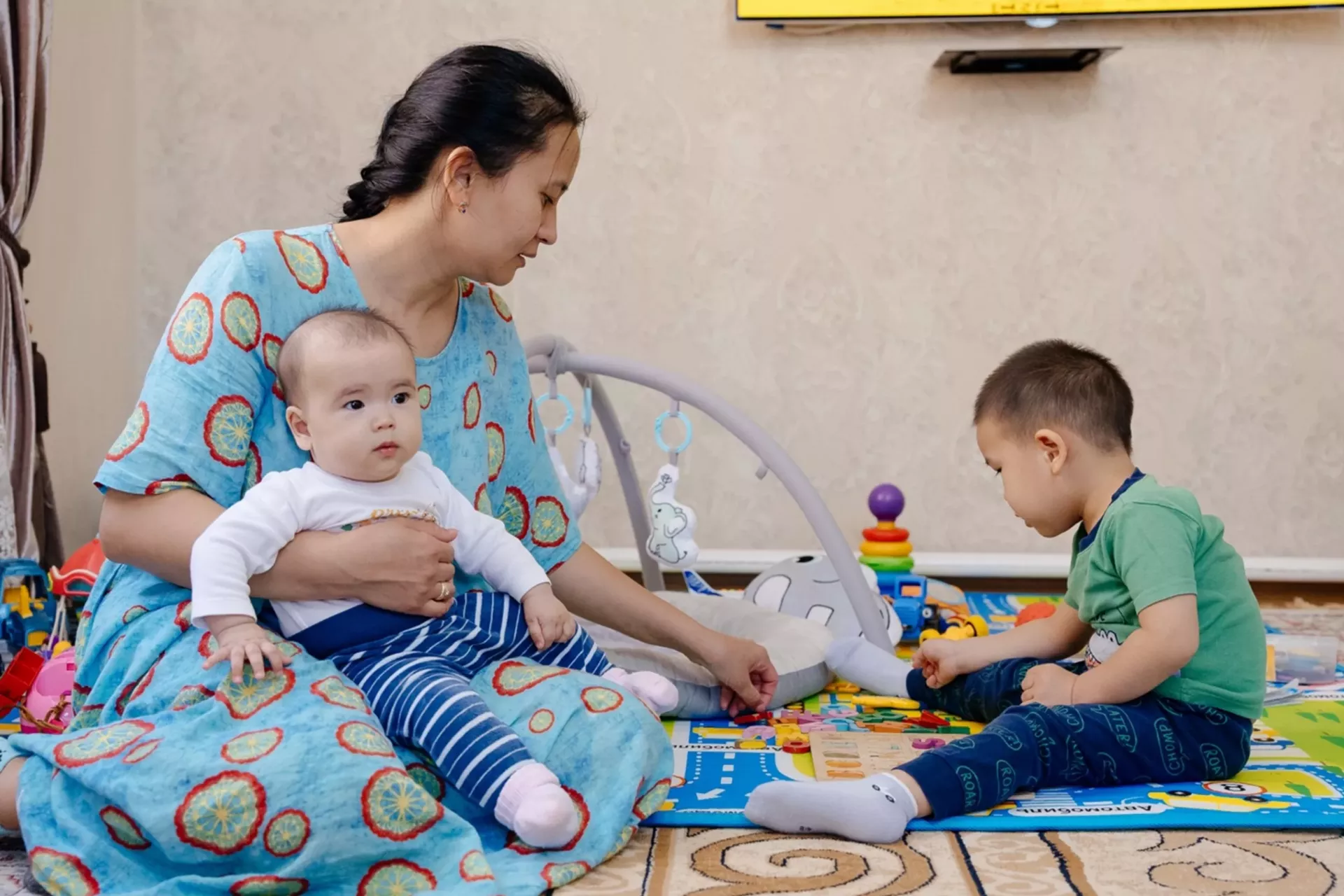
Diana Madyraimova is a 35-year-old mother of three from Taraz, Kazakhstan who experienced postpartum anxiety and depression after giving birth.
"Will I be a good mother? Or not? I was not sure,” Diana reflects. “I needed warm and encouraging words after childbirth. I wanted someone to hold my child so I could rest a bit.”
In reflecting on her experience, Diana, highlights the importance of caring for mothers during the postpartum period. "I had a moment when I was left at home, alone, with my baby and didn't know where to run away. Of course, you love your child but sometimes you just want to rest,” Diana adds. “Frankly, no one understands it."

For Diana, in the early days she did not receive support from her husband; misunderstandings arose between the two. Eventually, Diana bravely decided to open up to him about her feelings, telling him that she was tired and needed extra support and help from her husband to navigate this challenging period.
"When a woman enters the family as a daughter-in-law, her life changes drastically. But a man’s life remains exactly the same. His parents, siblings, friends are always around, but a woman is often alone and that is another reason for stress. A woman should not feel lonely after giving birth,” she says.
The stress of early days with a newborn is exacerbated by constant changes including isolation, the relentless physical demands of a new baby, inadequate support from loved ones and a lack of sleep. Diana noticed that after a frank conversation with her husband, she found much needed support from him which has an immediate impact on her quality of life. Although her husband missed properly understanding Diana's condition after their first baby, he supported her during postpartum period with their second and third children.
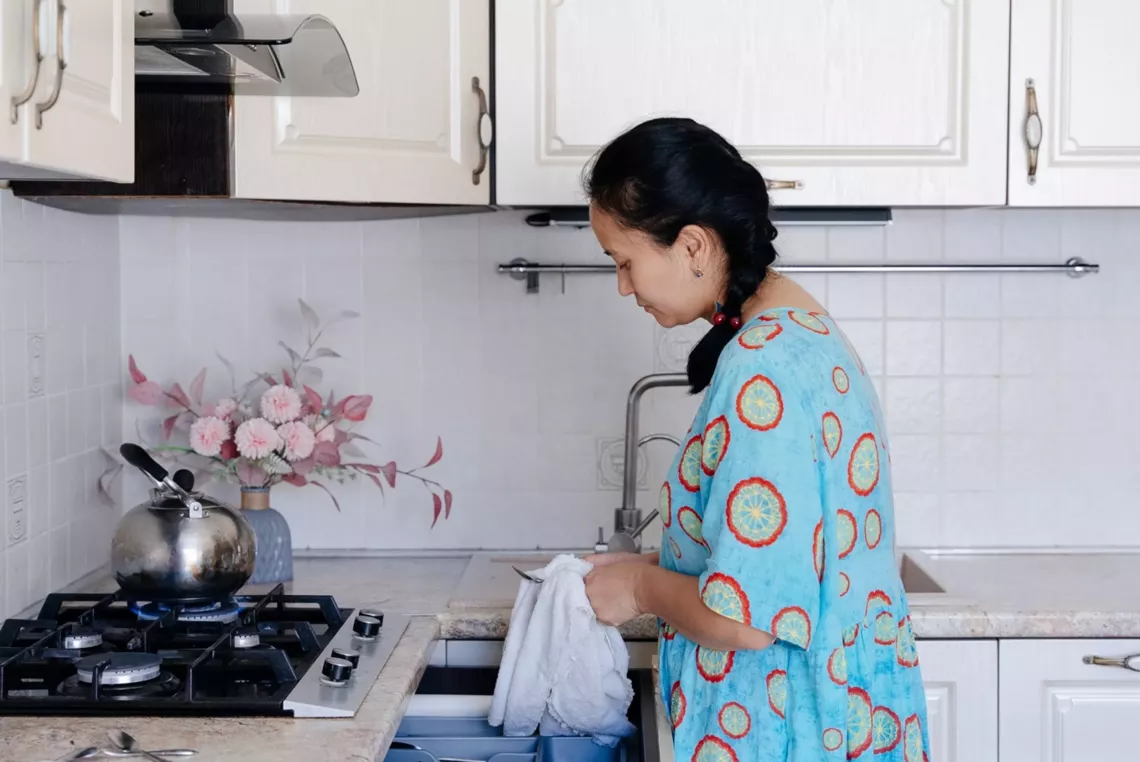
During this challenging period, young mothers in Kazakhstan are provided with extra support at home by patronage (visiting) nurses. The programme involves visit by the nurses during pregnancy and postpartum until the children turn three. They monitor the child’s health and development and provide support to parents and caregivers to build their parenting skills and support their mental health and well-being. These nurses can administer first aid, recognise life-threatening symptoms and work with families to implement a plan of action. They are equipped to identify peri-natal depression in mothers and take action to provide timely support and referral for additional care.
“You don't have to worry if you receive advice from a qualified specialist,” Diana says, urging mothers like her to openly express their experiences and feelings, and ask for help from loved ones. “The home-visiting nurse came to visit me after I gave birth. She comes regularly every month,” she adds.
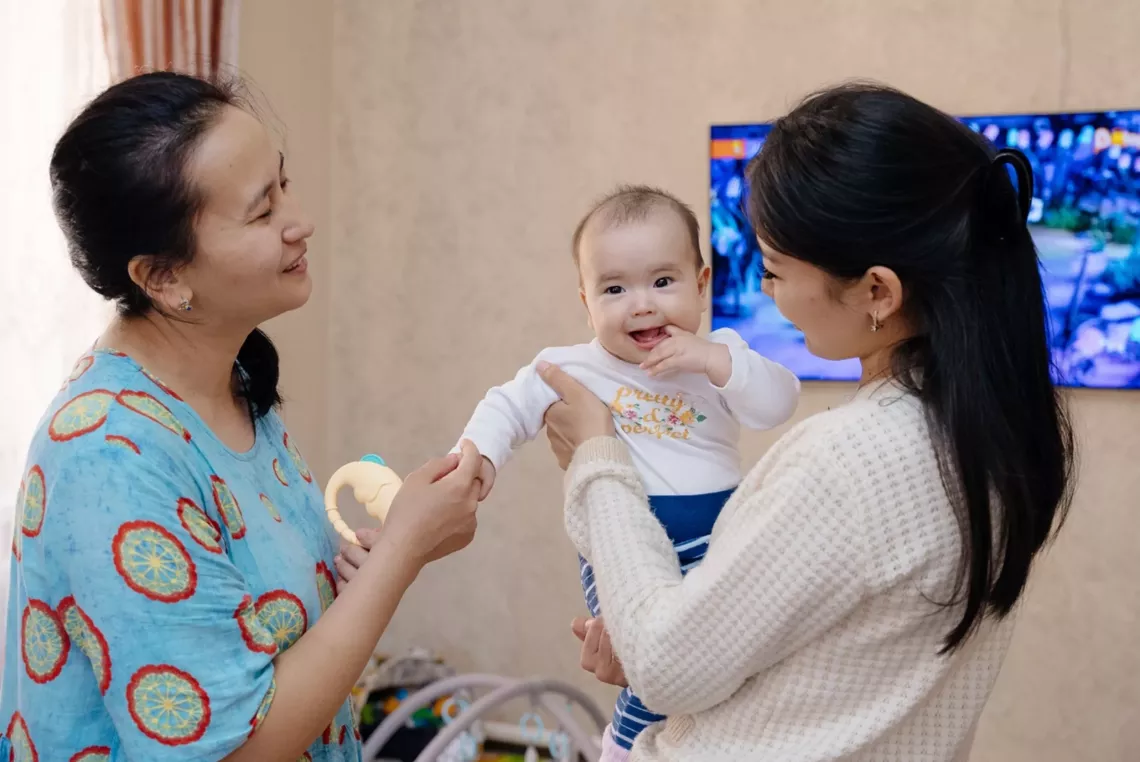
Arailym Kurbanali is a nurse that visits Diana’s family.
“We love Arailym. She has been with us since I had my second child Alizhan, and now she visits me and Dameli.” Diana adds that Arailym visits them every month and is like a family member now.
Arailym is one of 11,200 visiting nurses in Kazakhstan.
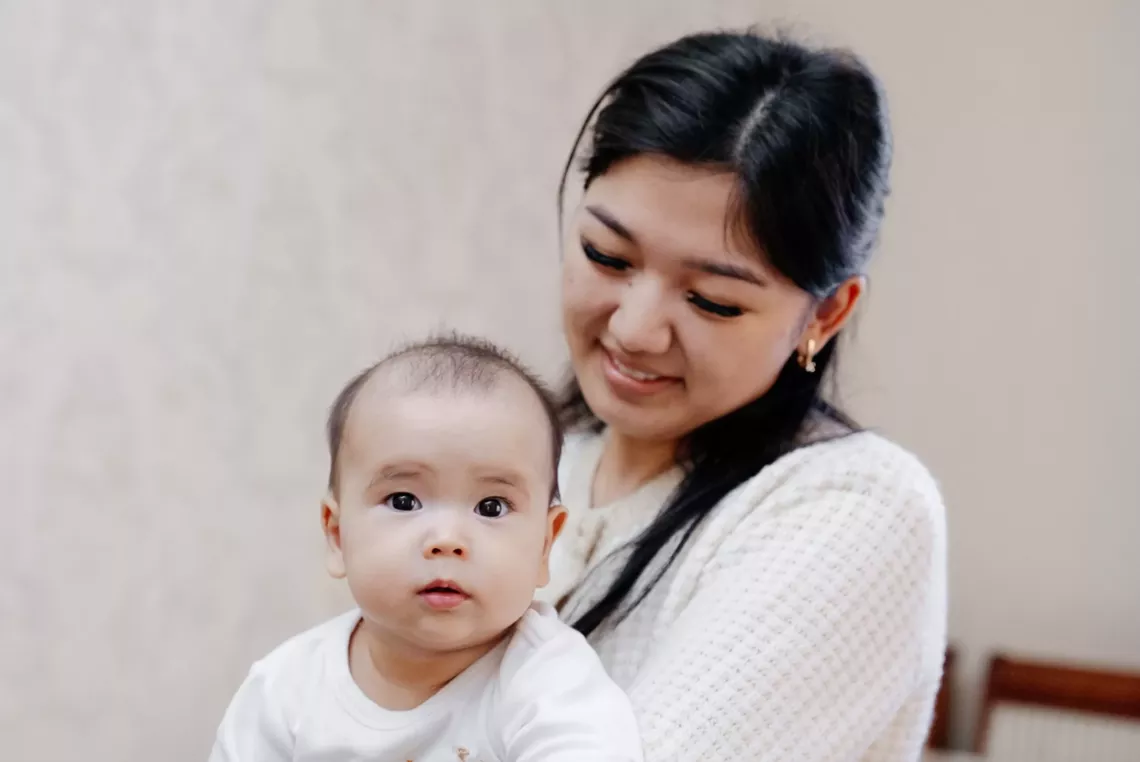
“If there are emotional or mental changes in the mother, we conduct interviews, give advice, and seek the help of a psychologist. Often, it happens because [mothers] are not used to the postpartum experience, they are tired looking after the baby day and night. At the same time, we conduct interviews with family members at home, we explain what the woman goes through, so that they can support her,” says Arailym.
“It is necessary to ask for help. That’s what I understand. You can’t just say: ‘I can do it all by myself.’ If you don’t think about yourself, no one will think about you first,” concludes Diana. “If she helps me, then she helps other mothers too.”