

Immunization: Life-saving and life-enhancing
Immunization prevents the deaths of around 4.4 million children every year and protects millions more from preventable illness and disability. Yet the number of children who are not fully vaccinated is on the rise.

- English
- русский
Immunization in Europe and Central Asia
Our goal: We are working to ensure universal immunization against preventable diseases across the region, with every child protected in every community. While the region’s immunization systems need major investment, the benefits vastly outweigh the costs and make sense for national economies, as well as for children.
The best defence against the spread of vaccine-preventable childhood diseases is a vaccine-protected population and a strong and responsive health system. We know that every child benefits when every country has high vaccine coverage.
Data from the region
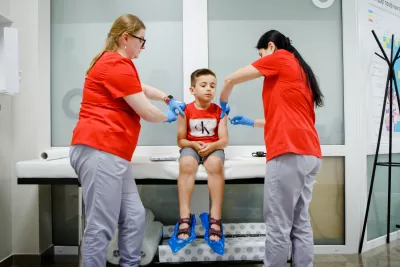
While immunization rates in the region have climbed back to the levels seen before the COVID-19 pandemic, the number of children missing out on vaccination has grown.

There were more than 120,000 ‘zero dose’ children aged 12 months across the region in 2023 – children who have not been vaccinated at all.

There were also more than 190,000 children aged 12 months under-vaccinated and are not fully protected against a range of life-threatening diseases.

The region accounted for more than one-third of the world’s reported cases of measles in 2024.
Relatively high Immunization rates across the Europe and Central Asia region can be deceptive. Most children receive the first dose of the diphtheria-tetanus-pertussis (DTP1) vaccine – a benchmark for immunization coverage – and coverage has recovered to the levels seen before the COVID-19 pandemic. But a closer look reveals the children who are missing out, including more than 120,000 ‘zero dose’ children aged 12 months who have not been immunized at all. There are region-wide disparities, with immunization coverage ranging from at least 90 per cent in most countries to below 80 per cent in some areas, far below safe levels. The region is also seeing a surge in measles outbreaks – a sign of a breakdown in immunization coverage – and now accounts for half of the world’s reported cases.
Roma communities have lower immunization rates than non-Roma communities – a reflection of their greater difficulties in accessing essential health services. Meanwhile, the war in Ukraine has heightened the risk of outbreaks of vaccine-preventable disease.
There are also concerns about vaccine hesitancy. A growing mistrust of immunization among some parents is fueled by myths and misinformation, but also by a lack of clear information for parents on the importance of immunization and its safety.
And there are emerging pressures on immunization services. The introduction of new vaccines to protect children against pneumococcal disease and rotavirus and cervical cancer is very welcome. But it demands a shift from the vaccination of infants alone to vaccinations during infancy, childhood and adolescence, as well as support for immunization services.
Key policies
1989 Convention on the Rights of the Child
- Article 6.2: the survival and development of the child.
- Article 24: the right of all children to the best standard of health, including reduced infant and child mortality, pre- and post-natal care for mothers, and information for all on the importance of child health and nutrition.
2015 Sustainable Development Goals (SDGs)
- SDG 3: ensure healthy lives and promote well-being for all ages.
- Target 3.2: end the preventable deaths of newborns and children under five by 2030
- Target 3.8: achieve universal health coverage, including basic health services and vaccines for all.
Immunization Agenda 2030 (2020)
This global strategy, endorsed by the World Health Assembly in 2020, aims for a world where everyone, everywhere, at every age, fully benefits from vaccines for good health and well-being.

What is UNICEF doing?
UNICEF supports Immunization Agenda 2030, a global strategy that aims to make vaccination available to everyone, everywhere, by the end of this decade. This demands urgent action to close coverage gaps, as well as constant vigilance to maintain immunization rates.
We work with governments, international agencies, non-governmental organizations and vaccine manufacturers to strengthen health systems and ensure supplies of life-saving vaccines for all children. UNICEF supports countries to introduce new vaccines, such as those for rotavirus, and the pneumococcal conjugate vaccine (PCV) and human papillomavirus vaccine (HPV) to protect children from a wider range of preventable diseases. We also help to strengthen the capacity of national and sub-national partners to create demand for immunization, aiming to address vaccine hesitancy, build public trust, tackle dangerous myths and combat misinformation.
We also aim to increase demand for immunization, educating the public on its importance, and equipping parents and communities with the knowledge they need to protect their children.
We help governments and other partners gather vital data and other evidence, aiming to understand vaccine hesitancy by tracking public attitudes towards immunization – essential for tackling misinformation.
Protecting children from preventable diseases during war: As the war in Ukraine continues, UNICEF is working with its partners to keep vaccination going and maintain the country’s routine coverage – with a strong focus on polio and measles prevention. This includes support for the procurement of vaccines and syringes, for cold chain infrastructure so that vaccines are transported and stored at the right temperature, and catch-up vaccinations for children who have missed appointments. UNICEF and its partners aim to strengthen polio immunization systems – both in Ukraine and in refugee-hosting countries.
UNICEF has a long history of bringing people together to support immunization, both globally and in the Europe and Central Asia region. We know that everyone has a role to play in protecting all children from preventable diseases, and immunization is a shared responsibility for governments, health services, communities, parents, caregivers, the pharmaceutical industry and many others.
Faltering immunization rates and increasing cases of measles demand urgent action to improve routine immunization to protect all children. We support strategies to reach all ‘zero dose’ and under-vaccinated children, including those in communities where current services are inadequate; those who are not reached by them; and those caught up in conflict and insecurity.
We are working with countries across the region to:
- find and reach all children with immunization, particularly those who are missing out on vaccinations
- create more demand for vaccines, including by building trust and tackling misinformation
- prioritize funding for immunization services and primary health care
- build stronger health systems by investing in local action to reach everyone, everywhere with vaccines.
The task ahead is to ensure sustainable and robust immunization services that guarantee vaccinations for every single child – no exceptions.