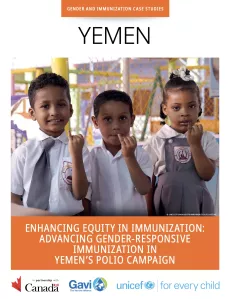
Enhancing Equity in Immunization
Gender and immunization case studies: Yemen

About
Yemen faces critical immunization challenges, with nearly one in five children missing out on routine vaccines and recurrent outbreaks of vaccine-preventable diseases, including polio, measles and rubella. This case study explores how gender-responsive strategies were integrated into a polio immunization campaign to improve equity and reach zero-dose and under-immunized children, especially in conflict-affected and marginalized communities.
Drawing on qualitative research and firsthand accounts, the study highlights how gender roles, mobility restrictions, unpaid care burdens and social norms affect caregivers’ access to vaccination services. Promising approaches, including women-led outreach, mother-to-mother clubs, religious leader engagement and mobile teams, which have each improved vaccine acceptance and coverage in high-risk areas are identified. The study also outlines challenges faced by community health workers and recommends strategies to tackle them, making immunization more equitable, safe and effective for everyone.