Using AI to protect children before disaster strikes
UNICEF is developing a platform to help decision makers understand how climate hazards could disrupt children’s lives and essential services before disasters strike.

Climate hazards can have far-reaching consequences for children and communities. Forecasts can show where a storm or hurricane might make landfall, but they do not immediately tell authorities how many children could be affected, which communities face the greatest risk or how essential services could be disrupted.
Ahead of the Storm is designed to help close that gap.
The UNICEF initiative brings together staff and external partners to develop, test and pilot AI-driven approaches for emergency response.
One area of exploration focuses on hurricanes. By combining artificial intelligence and machine learning with climate, geographic and population data, the Ahead of the Storm platform can estimate how many children could be affected before a hurricane makes landfall. It can help identify towns, schools and health centres likely to fall within a storm’s path, giving authorities a clearer picture of where support may be needed most.
For emergency teams, earlier insights could support faster, more targeted preparedness.
“In Nicaragua, under the leadership of the national institutions, every hour of warning matters,” says Fernando Jambrina, Monitoring and Evaluation Specialist, UNICEF Nicaragua. “Knowing which communities, schools and health centres could be affected by a hurricane gives teams a clearer picture of where support could be needed most. This changes how we prepare and who we reach first.”
From forecasts to action
Ahead of the Storm reflects a broader opportunity for AI in climate emergencies. AI can analyze large volumes of climate and geospatial data, but analysis alone is not enough. The information must reach the right people in a form they can use.
“Ahead of the Storm will only work if children are part of the data from the very start,” says Henrietta Ridley, UNICEF Chief of AI.
This is particularly important because data on how disasters affect children remains limited. Information such as damage to schools, disruption to health services and the number of children affected is essential for developing and testing tools that respond to children’s needs.
The next step is to validate the platform’s estimates against what happens on the ground and continue improving their accuracy. The Ahead of the Storm team plans to conduct further testing in the Caribbean and gather feedback from local teams on how the platform could best support disaster preparedness.
Building a new kind of collaboration
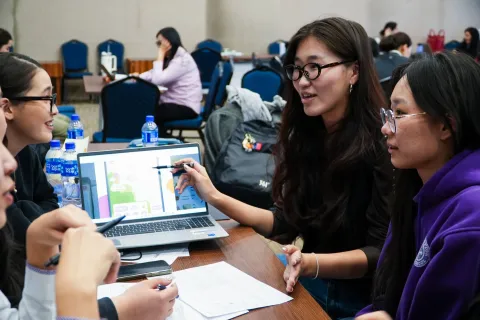
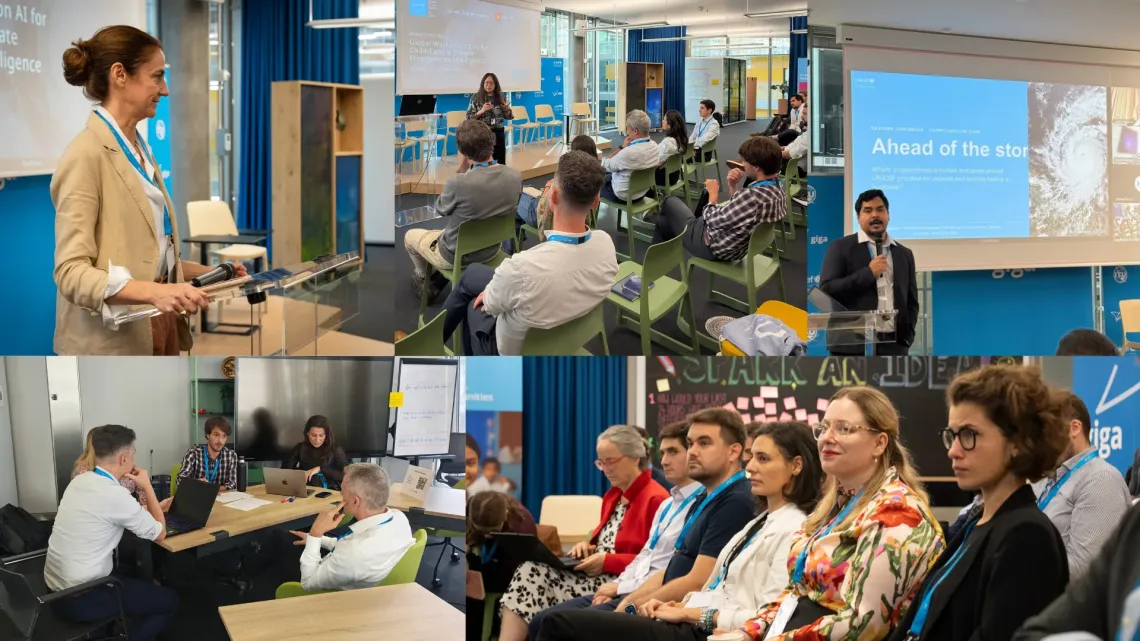
To inform this work, UNICEF Digital Impact Division and the Spanish Agency for International Development Cooperation brought together around 50 experts and practitioners in AI, climate science, data analysis and emergency preparedness in Geneva in October this year.
The discussions focused on three connected priorities:
- improving the analysis of climate, geographic and population data;
- translating technical information into insights that different users can understand and act on; and
- strengthening child-centred datasets and benchmarks.
“Grabbing these opportunities requires strong collaboration between experts in weather forecasting, demography, data science and beyond, being guided by decision-makers and local experts,"
Participants included representatives from academia, UN agencies, the Red Cross, the World Meteorological Organization, the European Centre for Medium-Range Weather Forecasts, the European Space Agency, Microsoft, Google and others.
“Grabbing these opportunities requires strong collaboration between experts in weather forecasting, demography, data science and beyond, being guided by decision-makers and local experts," says Andy Tatem, professor at the University of Southampton and Director of WorldPop. "This is exactly what Ahead of the Storm is doing.”
The collaboration is already opening up new possibilities.
“Seeing how UNICEF is combining ECMWF’s weather forecasts with AI to better understand storm risks and help protect children and communities before disaster strikes is truly inspiring,” says Mariana Clare from the European Centre for Medium-Range Weather Forecasts (ECMWF).
By bringing experts together who have not traditionally worked side by side on these issues before, Ahead of the Storm is helping ensure that, as AI and emerging technologies open new possibilities, children are not left behind.