The Gambia puts its health facilities on the map
How connectivity and digitalization are set to transform health and education services for children in The Gambia

Much of The Gambia's fibre backbone follows the River Gambia corridor. That concentration leaves the network dependent on a limited number of routes, and it increases the challenge of extending reliable and affordable connectivity in the last mile to the health facilities, schools and social service locations where public services are delivered to children across the country.
The Government of The Gambia is investing to digitally transform the essential public services that support health workers, teachers and social welfare staff in delivering better outcomes for children. To help realize the return on those investments, the Government invited the UNICEF Digital Inclusion team to collaborate on exploring how affordable and sustainable internet connectivity can help strengthen these services.
As in many other parts of the world, the price of a gigabyte in The Gambia is high. That places internet access in the country among the higher-cost environments globally, for public institutions and households alike, and it remains a major barrier to digital inclusion. This affordability gap risks deepening existing inequalities and limiting the potential of digital technologies to expand access to education, health information, public services, civic participation and economic opportunities.
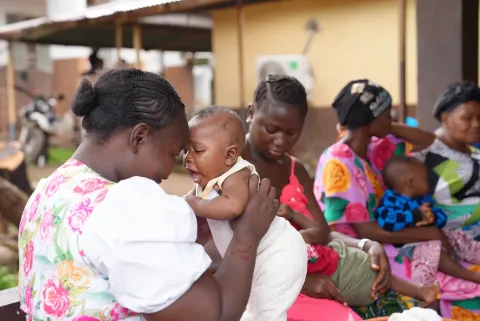
In the West Coast Region, the Farato Health Centre is central to the life of the surrounding communities. Mothers come for antenatal care and childbirth, children come for routine check-ups and immunization, and community members come for treatment and other essential health services. The facility also provides digital birth registration services, making it an important access point for parents seeking to register the births of their children. It is a location where connectivity could make a life-changing difference.
"We did have an internet connection here before, but it's no longer functional. It's dormant at the moment. And it was very essential for the operation of the day-to-day activities of the facility," says Lamin Wally, a health care worker at Farato. "We're using it especially for digital birth registration that we are doing at the facility here. When we have these connections, it is going to pay dividends as well."
When our details are written on a paper and transferred to a computer, that will be helpful and will provide evidence. But if you are given only the paper, without transferring that data into a computer, one may step out and get drenched in the rain, and on your return to the hospital you will not have any document to present. If this information were in a computer, we would not need to come with this file,
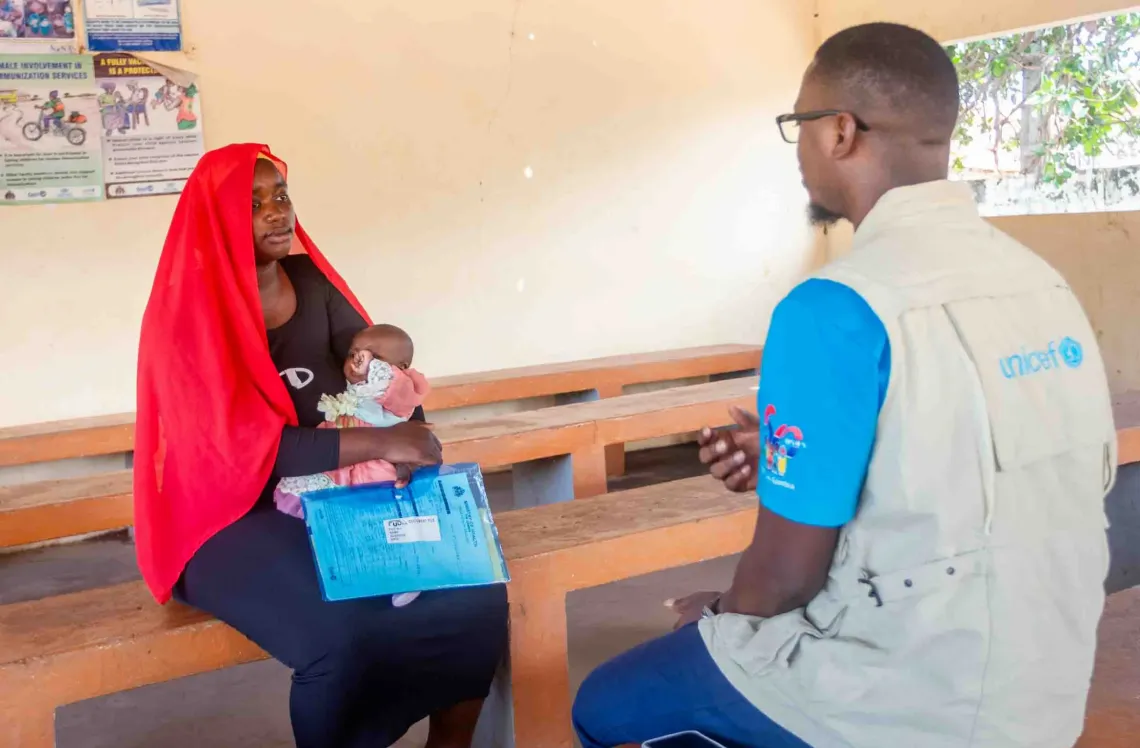
Connectivity would also change what happens to patients such as Adama Camara, a nursing mother who relies on the clinic's services for herself and her baby.
"When our details are written on a paper and transferred to a computer, that will be helpful and will provide evidence. But if you are given only the paper, without transferring that data into a computer, one may step out and get drenched in the rain, and on your return to the hospital you will not have any document to present. If this information were in a computer, we would not need to come with this file," she says - an everyday illustration of how a single computer in a facility could change what patients experience.
Fatou Touray, a data entry clerk who handles a large volume of paperwork in her daily routine, expects digitalization to make a visible difference at her facility.
"We are going into the malaria season, and in the malaria season we used to record many patients. And each patient will come with a paper, and each of them should be recorded in the register. We have a lot of work to do, but when you have the electronic system, that will make the work easier for us," she says.
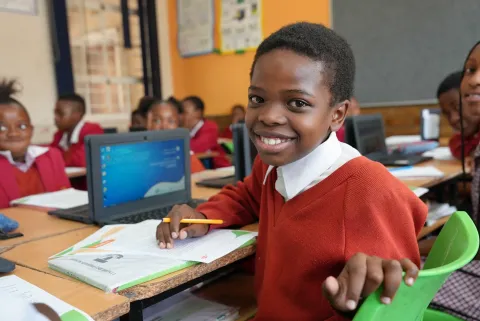
Further east in the village of Kafuta, the community's basic and secondary schools - which together serve approximately 1,165 children - stand next to the village health post. The proximity creates an opportunity for cost-effective and sustainable connectivity, yet these children have limited experience of what the internet could mean for their learning and their futures.
The appetite for digitalization runs from decision-makers to frontline workers, students, parents, children and young people, and the UNICEF Country Office in The Gambia has been working closely with the Government to meet it.
"Across health, education, protection, governance and community engagement, digital infrastructure is increasingly seen not as a luxury, but as essential to better, faster and more accountable services," says Nafisa Binte Shafique, UNICEF Representative in The Gambia, after a recent mission with President Adama Barrow and the Minister of Health, Dr Ahmadou Lamin Samateh. Nafisa underlined the need for stronger primary health infrastructure closer to communities.
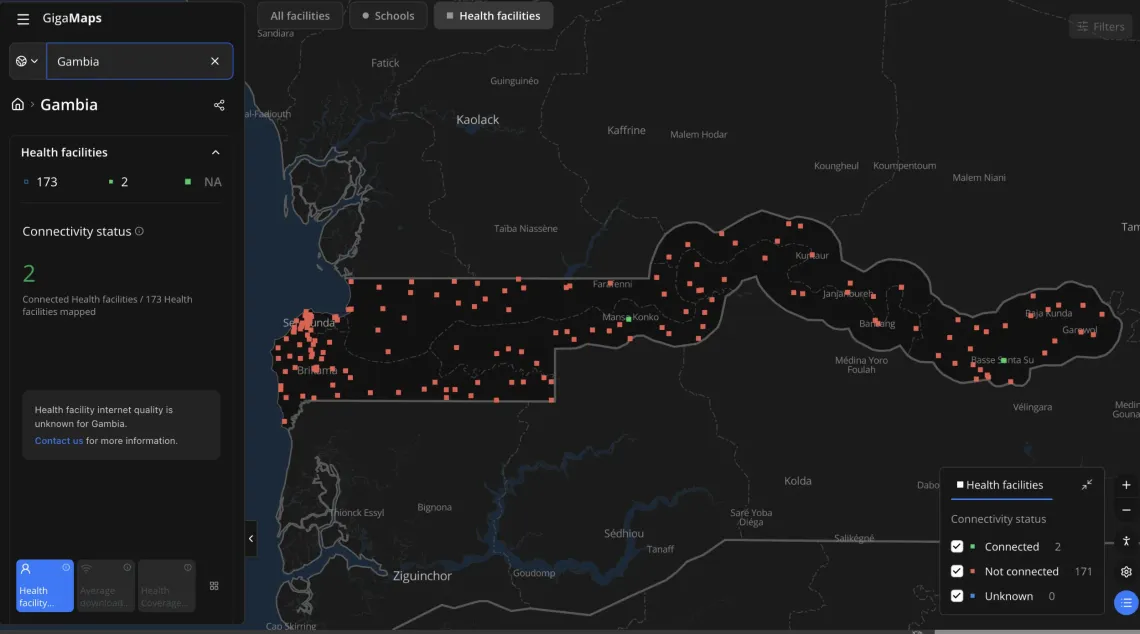
To accelerate that collaboration, Tanya Accone, UNICEF Digital Inclusion Senior Programme Manager, visited health facilities and schools in the country twice over the past year with her team. The Gambia is the first country to share its health facility location data with UNICEF, and the data will be available on the Global Connectivity Map from 16 September 2026.
"Children and families rely every day on health and education locations. These are the places where families seek care, where children learn and where vital support is delivered," says Accone. "Making internet connectivity more affordable and sustainable is central to the delivery of inclusive, digitally enabled services that support children throughout their lives."