Connecting the places where children learn and receive care
UNICEF invites 96 companies to help expand internet access across all 54 African countries

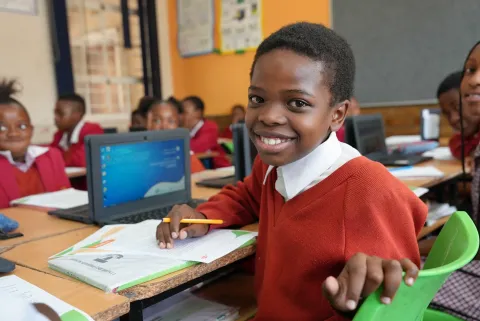
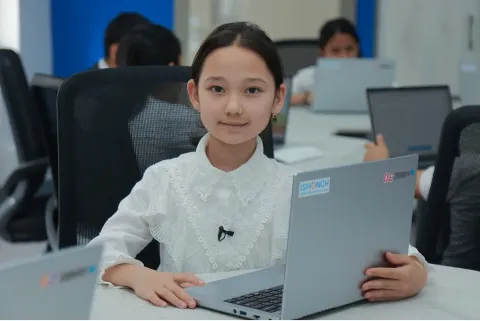
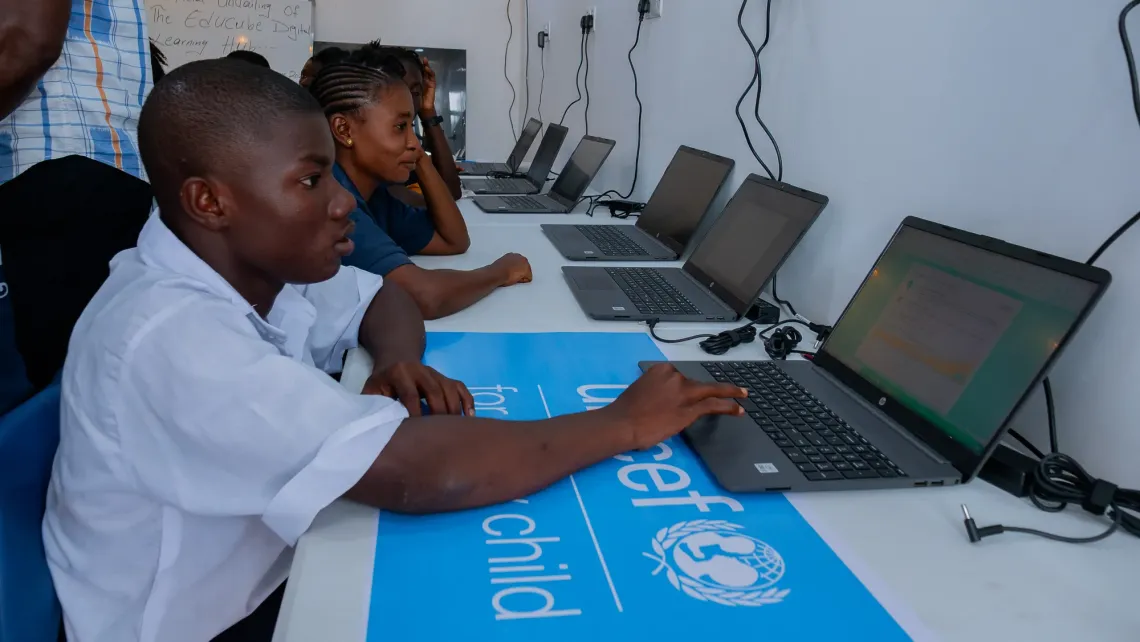
A reliable internet connection can transform an ordinary day in a school. It can give a teacher access to new learning materials, help a student explore a world beyond the classroom, and link an isolated school to services and opportunities that many others take for granted. In a health facility, the same connection can help health workers find vital information and provide better care for children and families.
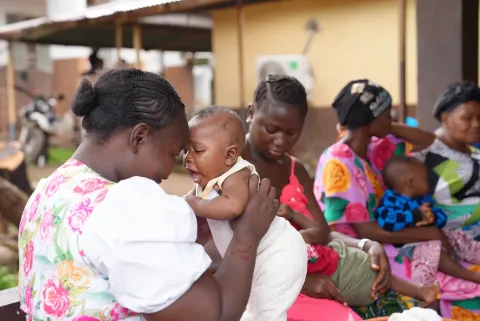
Yet many schools and health facilities across the world remain offline, and children in rural and low-income communities are the most excluded.
UNICEF is working with African governments and the private sector to change this. As part of a continent-wide procurement initiative, UNICEF has invited 96 companies to bid for long-term agreements to provide reliable, affordable internet connectivity to schools, health facilities and other places serving children, across all 54 African countries.
“A rising generation of more than 700 million children and young people in Africa is ready to shape the connected world, but only if they can reach it. Closing that gap is how we turn connectivity into information, opportunity and choice for every child, wherever they are born.” said Kaan Çetintürk, Chief Information Officer at UNICEF.
The invited companies include global satellite providers, pan-African telecommunications operators, national internet service providers and research and education networks. They were prequalified through a public Request for Expressions of Interest and an in-depth market analysis. Together, they can serve every country in scope, a potential universe of more than 860,000 schools and 260,000 health facilities.
The Request for Proposals, launched by UNICEF’s Supply Division and Digital Impact Division, is the competitive phase of the initiative announced earlier this year. Selected suppliers will deliver end-to-end connectivity services that meet clear standards for quality, child safeguarding and accountability.
“A rising generation of more than 700 million children and young people in Africa is ready to shape the connected world, but only if they can reach it. Closing that gap is how we turn connectivity into information, opportunity and choice for every child, wherever they are born.”
The tender covers three areas, so that companies of every profile can compete for what they do best:
Internet connectivity: reliable internet delivered to each facility;
On-site networks: Wi-Fi, cabling and equipment that make connectivity usable in classrooms and consultation rooms;
Solar power: clean energy for facilities without reliable electricity, because in much of the continent the connectivity gap is also an energy gap.
Every contract will include enforceable commitments on speed, uptime and repair times, along with child-appropriate online protection and cybersecurity requirements. Performance will be monitored in real time and shared through open data, building on Giga Maps, the open platform that has already mapped the location and connectivity status of more than 500,000 schools across Africa.
Once suppliers are selected, governments will be able to contract connectivity through UNICEF’s procurement services via fast, competitive bidding among the selected companies. This will help countries move from planning to connected classrooms and clinics in months rather than years, with solutions adapted to different national and local realities, from densely populated cities to remote communities.
Proposals are due by 6 November 2026, and the first agreements are expected in 2027.
Countries covered by the tender
Algeria, Angola, Benin, Botswana, Burkina Faso, Burundi, Cabo Verde, Cameroon, Central African Republic, Chad, Comoros, Congo, Côte d’Ivoire, Democratic Republic of the Congo, Djibouti, Egypt, Equatorial Guinea, Eritrea, Eswatini, Ethiopia, Gabon, Gambia, Ghana, Guinea, Guinea-Bissau, Kenya, Lesotho, Liberia, Libya, Madagascar, Malawi, Mali, Mauritania, Mauritius, Morocco, Mozambique, Namibia, Niger, Nigeria, Rwanda, Sao Tome and Principe, Senegal, Seychelles, Sierra Leone, Somalia, South Africa, South Sudan, Sudan, Togo, Tunisia, Uganda, United Republic of Tanzania, Zambia, Zimbabwe.