Waste pickers' cooperatives in Angola trained in environmental education and recycling.
Workshop strengthens waste management strategies and increases the knowledge of waste pickers about Environmental Practices and Policies.

- Portuguese
- English
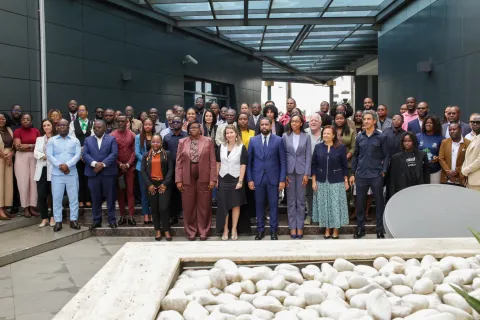
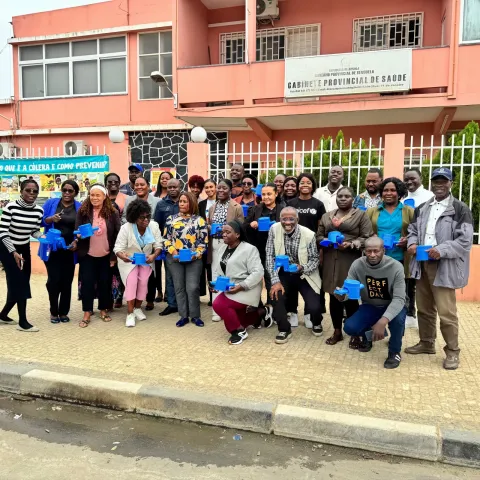
On July 16, UNICEF in collaboration with several entities of the Government of Angola, INGA, ANR, DNEA, INEFOP, INAPEM, IAJ, and AMV, within the scope of the simplified sanitation project financed by the IBSA Fund, organized a training workshop for cooperatives of solid waste collectors at the Youth House in Viana. Focusing on environmental education, recycling, and circular economy, the event was attended by more than 45 participants, including presidents of waste pickers' cooperatives in Luanda, including Maria Senise, a waste picker from the environmental cooperative Young People United CAJU.
Maria Senise, a dedicated and resilient waste picker, as she calls herself, was born in Huíla, Lubango, and currently resides in Cacuaco. At the age of 32, Maria leads the Jovens Unidos cooperative, made up of 33 members, with 10 women in leadership. Before becoming a waste picker, Maria was a merchant and English translator, in 2022 she decided to dedicate herself to solid waste collection. Mother of four children, she promotes environmental education both at home and in the community.
"The training not only increased my knowledge, but also reinforced my determination to continue to promote environmental education together with my cooperative and improve waste management practices in our community," said Maria.

For Maria, actively participating in the capacity building workshop organized by UNICEF and partners, was an incredible experience "I learned about the laws that involve waste pickers and how to apply the circular economy in my work". The circular economy was one of the main focuses of the workshop, elucidating its importance as a viable alternative to the traditional linear model of consumption and disposal. Maria has fully embraced this concept: "The circular economy shows us that waste can be a valuable resource. By collecting and recycling, we are cleaning up our environment, creating jobs, and creating a sustainable cycle."
The facilitators sought to offer a comprehensive overview of national and sectoral policies, emerging techniques in recycling and waste management, national environmental education, and sanitation strategy, to provide waste pickers with a solid foundation to improve their operations, to make cooperatives more equipped to address sector-specific challenges and implement sustainable solutions in their communities.
The training represented an important milestone in the professionalization and strengthening of waste pickers' cooperatives in Angola. Maria Senise, says that with the experience acquired, she plans to develop door-to-door environmental education projects and organize more community recycling campaigns : "My goal is to see basic sanitation improved, with the support of my cooperative and after the training, I feel that we are more prepared to face the challenges," concluded Maria.