Nutritional supplements save children from malnutrition in the province of Huíla.
As part of the integrated response in health facilities, important nutritional supplements are made available for children's recovery.

- Portuguese
- English
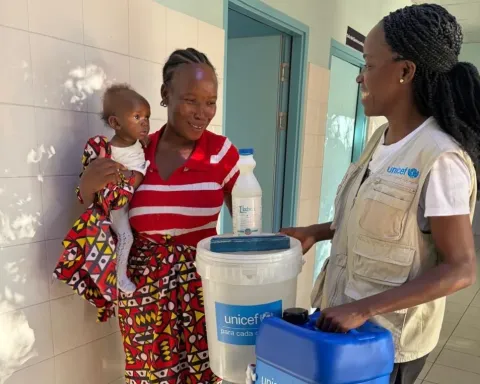
Maria Fernanda went to the Mitcha Special Nutrition Unit in the municipality of Lubango because her 11-month-old son was having difficulty feeding and was very weak. Little did the mother know that it was malnutrition. "The child did not eat well for a few days, so I came to the hospital for an appointment," she says.
Due to the weight and nutritional status of Maria's son, she was recommended to introduce supplementary porridge (RUTF) in the diet of her 11-month-old son Anthony.
"Normally I would give the baby porridge in the morning and funge during the day, but after the appointment I learned that I can give vegetables, fruits, the quitaba (food supplement) that I received in the hospital and treated water to improve the baby's diet," says the mother satisfied.
Maria's son is one of the 22,000 children assisted by the program to combat malnutrition in the provinces of Huíla and Benguela. Most of these children were treated at the outpatient clinic where they were observed and started receiving nutritional supplementation.

The implementation of the program, which has the technical support of UNICEF and funding from partners such as the Government of Austria and the Government of Japan, allowed the acquisition of nutritional supplements and other materials to contribute to the prevention and treatment of malnutrition in the municipality of Lubango, in the province of Huíla.
"Supplements are of great importance. The number of mothers who seek consultations increases when there is a food supplement, these supplements help mothers to maintain a good diet for their children." Says Juliana Nangolo, a Nursing Technician in the area of nutrition at the Special Nutrition Unit of Mitcha in the municipality of Lubango.
In total, about 15,000 boxes of ready-to-use food were purchased and delivered to municipal authorities in the provinces of Huila and Benguela, who subsequently supported the treatment of about 200,000 children with malnutrition.
"As a nursing technician, I advise mothers to make appointments regularly, even when there are no food supplements available. Because we would like to encourage mothers and children to also consume local foods to improve their diet." Explains the technique.

At the Maxiqueira Special Nutrition Unit in the municipality of Lubango, Dr. Lizângela Constantino, Head of the Special Nutrition Unit explains that they receive around 6 patients per day from other hospital units. Still, the cases that require more attention are those where the patient has shown positive signs of recovery and a few months later returns to the special nutrition unit.
Angelina Neto, mother of 1-year-old Adriano Jamba says that her son has been in the health unit for 4 weeks and during that time he really liked Adriano's recovery. "He already smiles and plays, the follow-up of the Dr. helped a lot in the baby's health. "

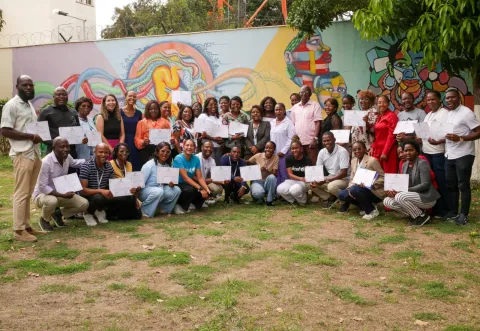
"The support we receive from UNICEF is what allows the normal functioning of our Unit and we appreciate the support we receive. I have already had the opportunity to receive 4 training courses in the area of nutrition, which increased my ability to intervene in my work" highlights Dr. Lizângela Constantino, Head of the Special Nutrition Unit.
Thanks to the work of Lizângela and the health technicians of the province of Huila, several children with malnutrition can be identified in the communities and referred in time to the nearest Health Unit.

The support of the Government of Austria, The Government of Japan, and UNICEF has been important for more nutritional supplements to be made available, more health workers to be trained, and more mothers to be trained to identify cases of malnutrition.