November 19th: World Toilet Day.
Improvement of sanitary conditions and quality of life of populations and their communities.

- Portuguese
- English
Stop for a second and imagine what life would be like without a bathroom. World Toilet Day is celebrated every year on 19 November and raises awareness of the 3.5 billion people living without access to safely managed sanitation. It is an action to address the global sanitation crisis and achieve Sustainable Development Goal 6: water and sanitation for all by 2030.
UNICEF and its partners have been supporting the implementation of the "Community-Led Total Sanitation" or CLTS model for more than 10 years, which puts an end to open defecation in rural communities.
It is an approach that empowers local communities by identifying sanitation problems and promoting change with self-construction of toilets without external support, systematic use of toilets as well as the safe practice of handwashing with soap and water.
In Angola, the "Community-Led Total Sanitation" program led by the Ministry of Environment with technical support from UNICEF, not only looks at open defecation, but could reach other social fields in the communities in which it works.
The STLC arrived in the village of Loengue, in the municipality of Ombandja in the province of Cunene through the support of World Vision, which started an awareness program on the importance of hygiene and sanitation. At first, people were skeptical. However, the CLTS approach, which encouraged the community to take responsibility for changing and transforming their own habits, made all the difference.
Filomena Ndipanda Ndipowenene is 48 years old, a mother of 9 children, and lives in the village of Loengue, in the municipality of Ombandja in Cunene province, one of the regions most affected by the lack of access to basic sanitation services and drinking water in Angola.
The village of Filomena faced serious problems related to sanitation, which resulted in frequent diseases such as diarrhea, cholera, and other intestinal infections. Many families, including Filomena's, defecated in the open, a common practice in the region due to a lack of alternatives and education about the impact of this on health.

Through the intervention of UNICEF with the support of World Vision and based on the guidelines and promotion of behavior change in communities, Filomena committed to changing the reality of her family and her community.
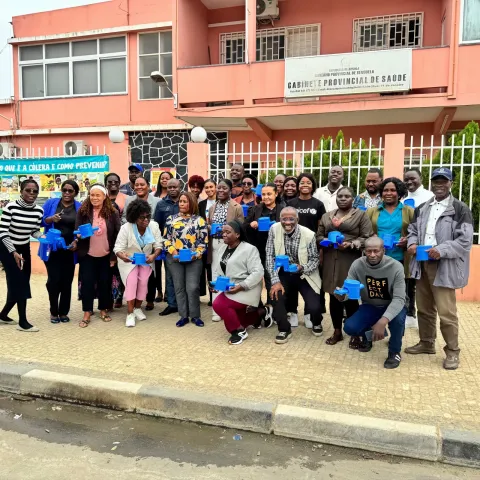
She started the construction of a latrine with simple and local materials (used sheets and sticks) but followed the guidelines to ensure that the installation was safe and hygienic. With the help of her children and neighbors, Filomena also began implementing basic hygiene practices, such as handwashing (with Tippy Tap uses) before meals and after using the bathroom, as well as teaching children how to take care of water properly.

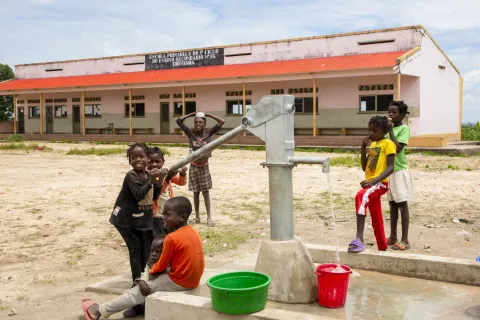
The Project also works with public schools throughout the municipality of Ombadja that lack basic infrastructure such as clean water, separate toilets for boys and girls, and perimeter walls.
Through this program, school-age children will have a conducive learning environment and will be protected against water, sanitation and hygiene-related infections and diseases, leading to better educational outcomes in primary school, more than 3,800 children, 60 teachers and 18,505 people from the respective neighboring communities will be targeted by the project's actions who, especially in CLTS and behavior change campaigns.
The Community-Led Total Sanitation approach has already been implemented in four provinces (Bié, Cunene, Huíla and Moxico) and has the support of the Ministry of Environment, funding from BFA, and support from various social organizations such as World Vision and People In Need.
Community-Led Total Sanitation was an important tool to achieve the improvement of sanitary and environmental conditions in the country and, consequently, the quality of life of populations and their communities.