A movement for girls' health.
With the launch of the campaign against cervical cancer, Angola takes a historic step for the health of girls.

- Portuguese
- English
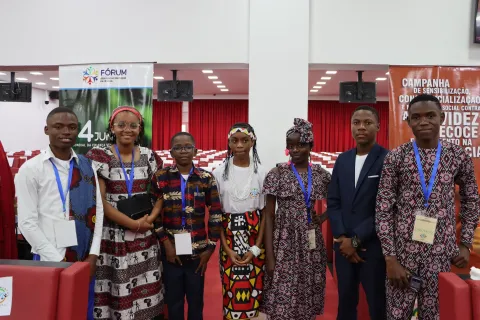
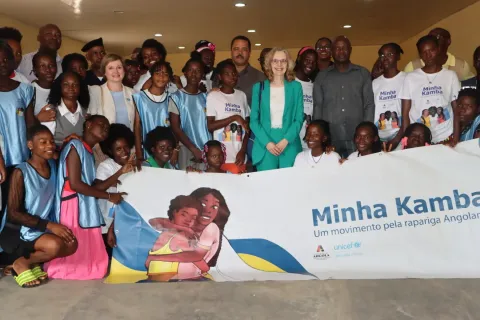
Luanda, October 16, 2025 - Lélia Bartolomeu, 12 years old, represents girls her age in a high-level event. Serena, with a smile on her face, faces the task with high responsibility, as she takes the message of girls her age to political decision-makers; she wants to make sure that she is heard. In the audience, the First Lady of the Republic, Ana Dias Lourenço, five Ministers, Secretaries of State, several social partners, members of the diplomatic corps accredited in Angola, and representatives of United Nations Agencies.
Lélia was speaking at the launch of the communication and mobilization campaign for vaccination against cervical cancer, launched by the Government of Angola, two days after the world celebrated the Day of the Girl.

The Government of Angola plans to vaccinate more than 1.9 million girls aged 9 to 12 against cervical cancer, one of the most common types of cancer affecting women worldwide.
According to WHO statistics, African women are disproportionately affected, with five times more likely to catch the disease and seven times more likely to die from the disease compared to women in developed countries.
Angola takes a historic step for the health of girls.
With the launch of the campaign against cervical cancer, Angola takes a historic step for the health of girls and begins a movement that has the first lady of the Republic of Angola, Ana Dias Lourenço, as ambassador and has the Ministers of Health and Education as faces of the campaign.

Statistics from the Angolan Institute for Cancer Control (IACC) show that cervical cancer has consequently occupied the first or second place among malignant tumors diagnosed in the last five years.
In 2022, 285 cases of cervical cancer were treated at the IACC, which corresponds to 17% of all cancers treated, making it the second most frequent tumor. In 2023, 235 cases were diagnosed.
During the launch of the campaign, the First Lady of the Republic, Ana Dias Lourenço, highlights the importance of "vaccination against cervical cancer is one of those keys to the future. A future where our girls grow up healthy, our families thrive, and our country is strengthened. Therefore, this campaign is also an investment for the future of Angola".
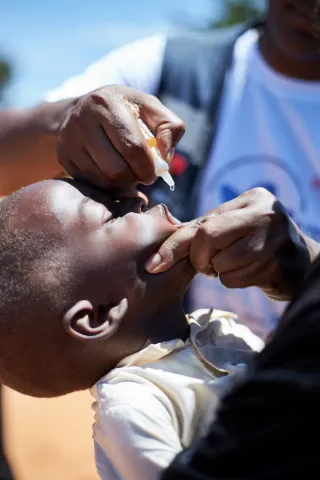
The free vaccination against cervical cancer, aimed at girls aged 9 to 12, will start on October 27 and run until November 7, in a first phase in schools and health units.

Luísa Grilo, Minister of Education, pointed out that, "since the schools will be one of the main vaccination sites, teachers will also have the responsibility to support the registration process of vaccinated girls, in close coordination with health teams, to ensure the control and effectiveness of the campaign in all schools covered".
The Minister called for the involvement of principals, teachers, and education technicians, in active collaboration with health professionals and local authorities, is necessary to ensure that no eligible girl is left out of the process, the minister reinforced.
Collective action that brings together the government, partners, and communities
The initiative is the result of a partnership between the Government of Angola, through the Ministries of Health and Education, and organizations such as UNICEF, WHO, UNDP, Gavi – The Vaccine Alliance, the European Union, the World Bank, among other development partners.
Onome Dibosa-Osadolor, UNICEF's senior immunization specialist for the Eastern and Southern region, said that "after sixteen years of unwavering collaboration and collective determination across sectors, Angola takes a bold step with the introduction of the vaccine against cervical cancer or HPV".

The expert added that "this milestone is a testament to what is possible to achieve through partnership and determination", stressing that "UNICEF is honored to have been part of this journey and remains committed to supporting Angola and all partner countries in the common mission to save lives and ensure that no one is left behind".
In turn, the WHO representative in Angola, Indrajit Hazarika, said that "the National Cervical Cancer Vaccination Campaign represents the country's firm commitment to women's health, in full line with the Global Strategy for the Elimination of Cervical Cancer and the Sustainable Development Goals.

The movement to vaccinate girls, in addition to members of the government, plans to involve digital influencers, religious leaders, community leaders, journalists, and other actors committed to girls' health.
A new vaccine for the national calendar
Angola's national vaccination schedule includes several vaccines applied at different ages from birth. The doses are distributed from birth to 15 months and include boosters for diseases such as polio, measles, and rubella. This range of vaccines includes those that protect against rabies and tetanus.
To reinforce the commitment to preventive health and to the new generations, the First Lady announced that, "as of January 2026, the cervical cancer vaccine will be part of the National Routine Vaccination Plan for 9-year-old girls".
To this end, the government of Angola has invested in all the necessary equipment to ensure the successful introduction of the vaccine. Of note is the investment in cold chain equipment, vaccination technicians, and cold chain managers.
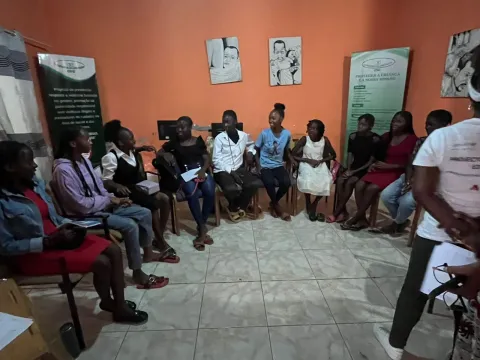
Angolan society is being mobilized. Health professionals, local leaders, teachers, journalists, influencers, fathers, and mothers are called to become protagonists of this collective mission to ensure more health for girls and future women.