Within a circle, we learn to protect our future.
Investing in girls, changing the future.
- Portuguese
- English
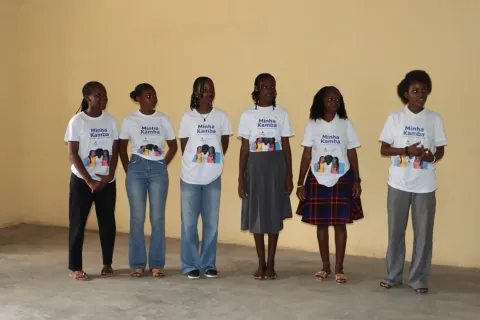
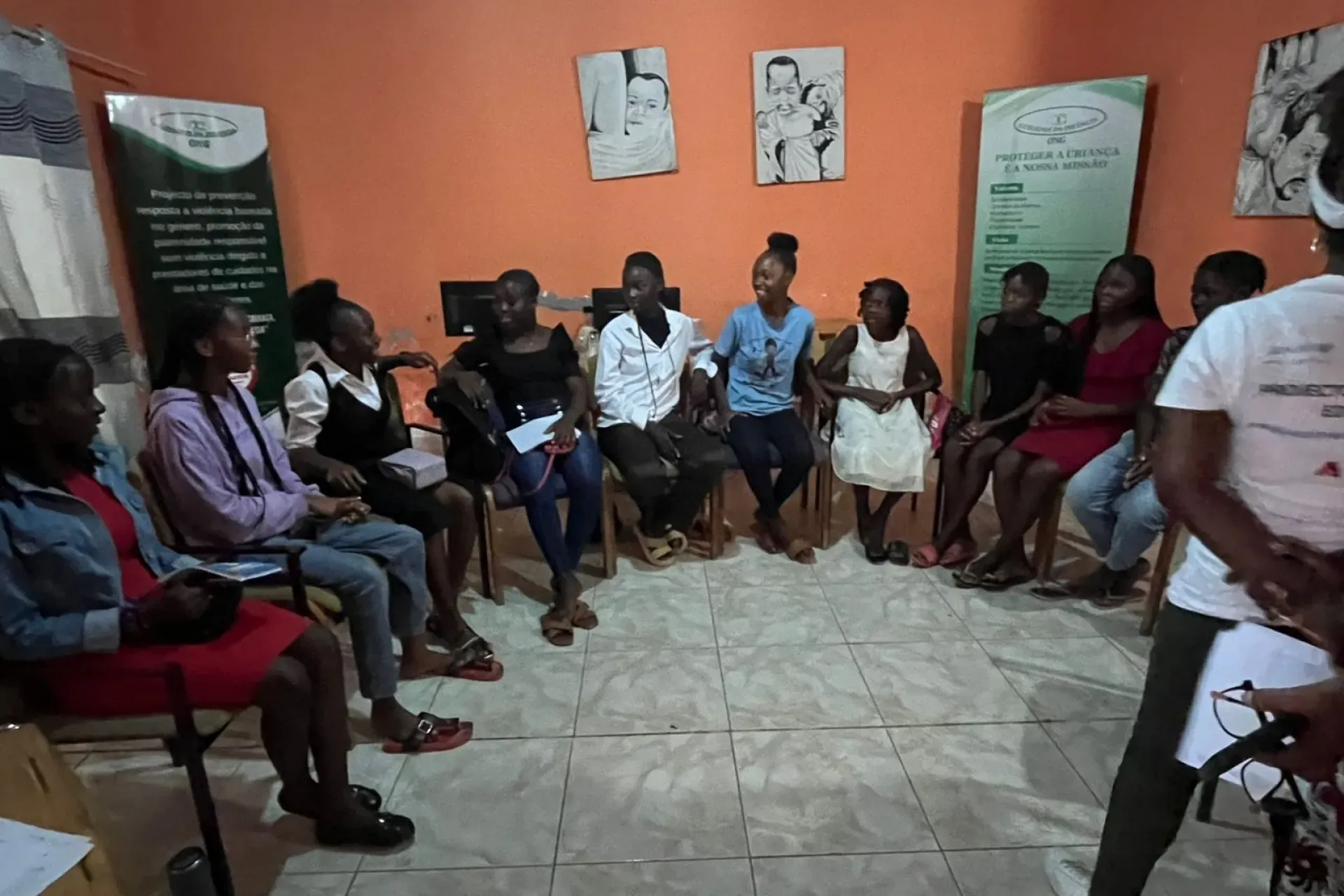
Inside a circle of a densely populated neighborhood in the municipality of Viana in Angola, a small group of girls sits down to discuss their lives. There is no classroom, no uniforms, no notebooks. Yet, here, some of the most important lessons of their lives are shared. They talk about their bodies, menstruation, relationships, pregnancy, and their dreams.
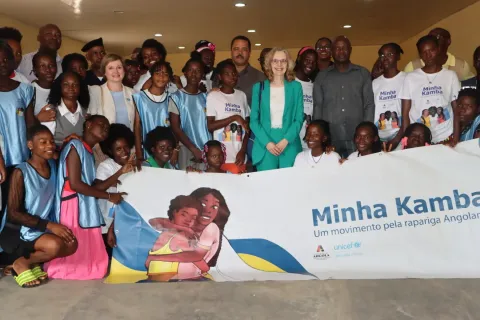
This is Minha Kamba, a UNICEF community initiative supported by partnerships with the Ministry of Social Action, Family and Women's Promotion (MASFAMU), and civil society, which works to prevent teenage pregnancy through knowledge about sexual and reproductive health and rights and strengthen the protection of girls in Angola.
Learning where it matters most.
In Angola, teenage pregnancy remains a critical challenge. More than one in three girls already has at least one child before the age of 18, often leading to school dropout, early marriage, and long-term economic vulnerability.
These are not just numbers, they are stories of silence, limited access to accurate information, a lack of dialogue within families, few safe spaces where adolescents can ask questions without fear or judgment, and limited access to protection services. For many girls, Minha Kamba is the first time these conversations have taken place openly.
"We meet under a tree, we gather girls, boys, children, everyone and we share what we learn," explains Graciete, a teenage peer educator.
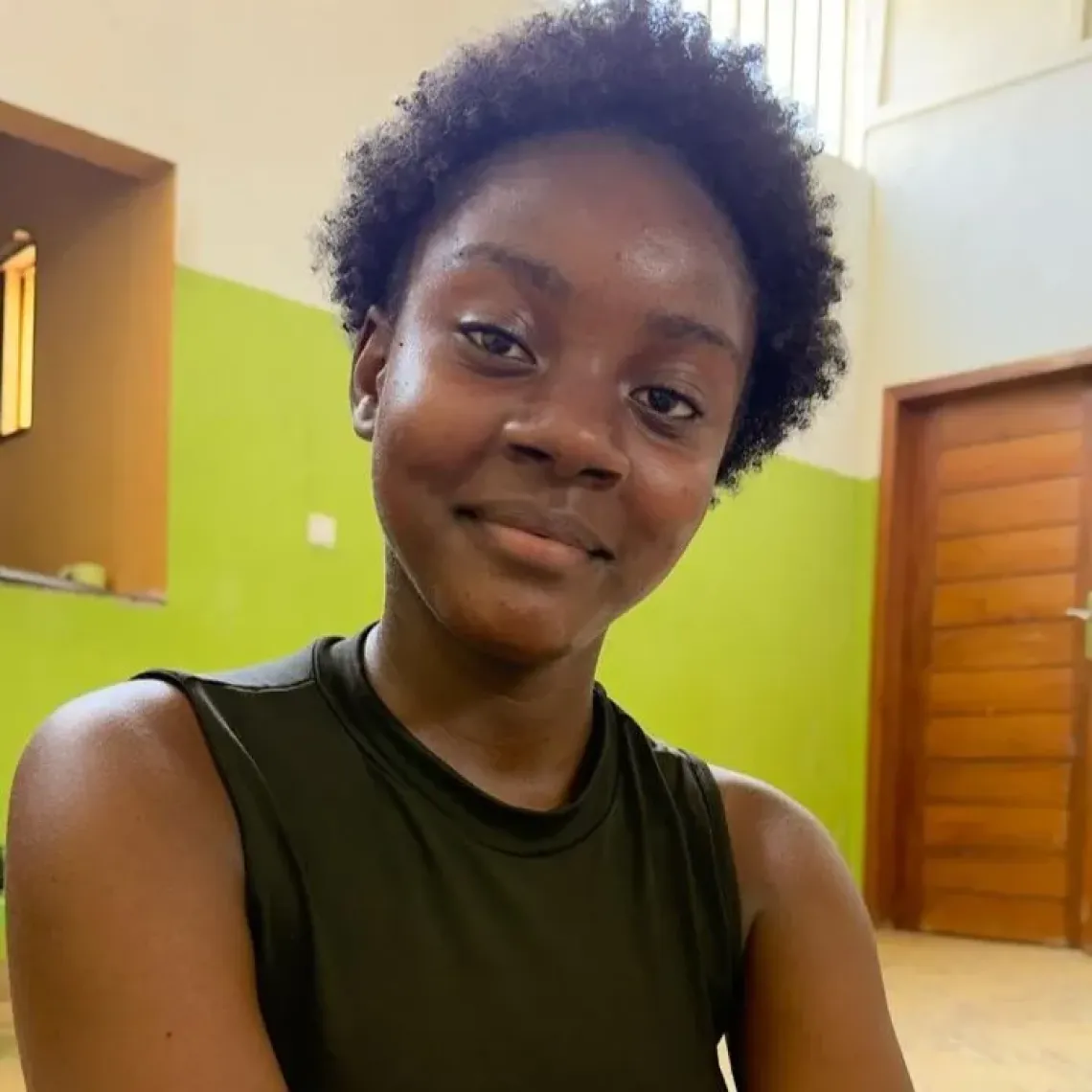
"We use games and discussions. It's beautiful because we're sharing our own experience." Said Emanuela.

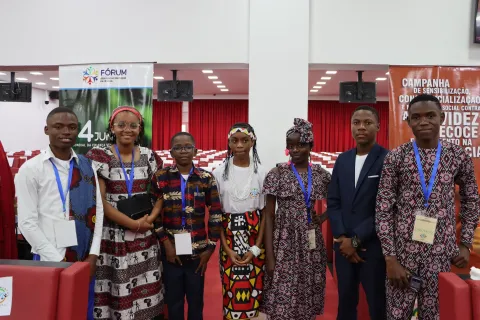
Girls ages 8 to 17 are trained as peer educators and return to their neighborhood to lead discussions about sexual and reproductive health, puberty, consent, and healthy relationships. By using familiar spaces and trusted voices, Minha Kamba reaches adolescents who might otherwise be excluded from formal services.
Breaking the Silence.
For many participants, the program fills a gap left by the absence of open communication at home.
"Many parents don't talk to their children about these things," says Graciete. "That's why many girls get pregnant due to a lack of information."
Emanuela highlighted how the engagement of parents can make a difference. "My parents talk to me a lot." "They explain and guide me. It helped me not to make mistakes."
Through Minha Kamba, girls not only gain knowledge but also gain confidence. They learn to understand their bodies, recognize risks, and make informed decisions. Several say the program has helped them set goals, plan for their future, and teach them about safeguarding issues.
From Knowledge to Opportunity.
For some girls, Minha Kamba has also opened doors to economic independence. Courses to develop professional skills, such as manicures and pedicures, allowed small groups of girls to start modest, income-generating activities in their homes.
"Now I can buy sanitary pads and pay for transportation," Graciete explains. "I don't always ask my parents."
Although profits are still small, the impact is significant. Economic empowerment reduces vulnerability and strengthens girls' ability to stay in school.
A Community-Led Solution linked to national programmes.
What makes My Kamba unique is its reach. Girls take information beyond classrooms to streets, homes, and informal gathering places, ensuring that even the most marginalized adolescents are included.
They also recognize what is still lacking: more youth-friendly centers, affordable training opportunities, and school-integrated programs. "Lectures in schools are essential," insists one participant. "The information must come first, and then projects that support young people."
This approach was co-created within the MASFAMU-led National Program on Adolescent Pregnancy and Child Marriage and will continue to strengthen government-led ties with private partnerships as the program evolves.
Investing in Girls, Changing the Future.
My Kamba demonstrates that when girls are equipped with knowledge, skills, and confidence, they become powerful agents of change. Each trained girl reaches dozens, creating a domino effect that strengthens entire communities.
For UNICEF, investing in initiatives like My Kamba means investing in prevention before pregnancy ends in childhood and before silence becomes a risk.
Within a circle, in a neighborhood with few resources, the girls protect their futures and those of the next generation, one conversation at a time.