Rising living costs push families and youth to cut back on food and education, UNICEF surveys find
- English
- ไทย
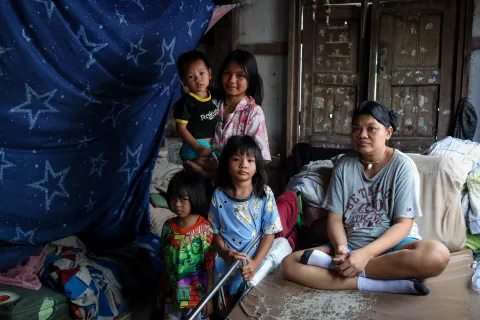
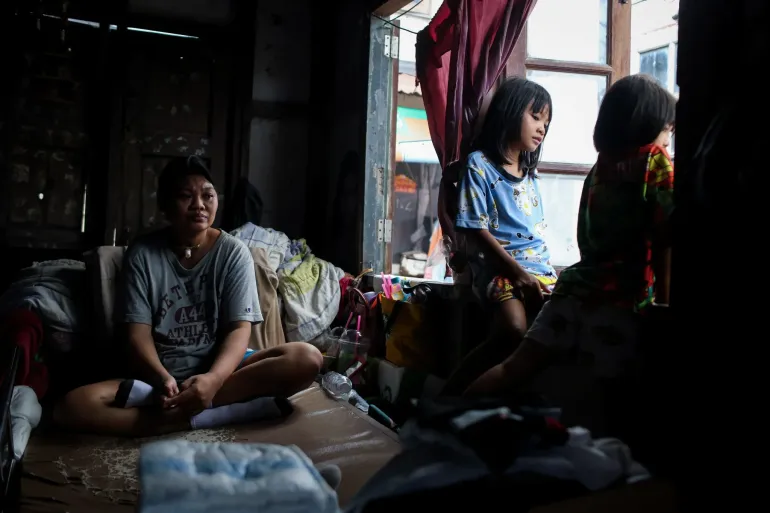
BANGKOK, 25 August 2026 – Families across Thailand are being pushed to make difficult choices as rising living costs squeeze household budgets. Two UNICEF surveys point toward growing pressures on families with children and young people who are cutting back on food, education and other essentials as prices continue to remain high.
A rapid household survey conducted by the NIDA Poll Center for UNICEF in June, involving 1,227 households with children across Thailand, found that more than 6 in 10 households with children (61 per cent) experienced a great or very severe impact from rising living costs. Young people surveyed told a similar story. A separate UNICEF online poll of 435 adolescents and young people in Thailand found a similar trend, with 43 per cent of young people surveyed saying rising fuel prices had affected their household “a lot” or pushed their family into crisis.
The findings come as Thailand’s economy growth slows, from 2.8 per cent in the first quarter of 2026 to 1.9 per cent in the second quarter, according to the National Economic and Social Development Council. The slowdown is putting additional strain on household budgets, placing families under continued “double pressure” from weaker earning power and rising financial strain.
The surveys also show that the burden is not shared equally across the country. Families in the North reported some of the greatest pressures, yet only 17 per cent of households surveyed there reported receiving assistance, compared with almost all households surveyed in Bangkok.
Young people with disabilities were reportedly having more severe impacts. Nearly two-thirds (63 per cent) said their household had been severely affected, compared with 39 per cent of those without a disability or health limitation.
“Behind every number is a family doing the math and realizing that something has to give,” said Ken Legins, UNICEF Representative for Thailand. “For some, it is the quality of food they put on the table. For others, it is school transport, learning materials or opportunities their children should not have to miss. And for many children and young people, it is the stress and worry that comes with knowing their family is struggling. Fuel prices may have stabilized, but they have not come down. We need to make sure support reaches those who need it most, so that no child’s basic needs, mental well-being or future are compromised."
Food is one of the clearest ways children are feeling the impact. More than 4 in 5 households with children reported that rising costs had affected the quality or quantity of food their children eat. Many families are responding by cutting back on food spending or switching to cheaper food.
Transport is another major pressure for families. Nearly 9 in 10 households reported higher transport costs, making it harder for families to manage everyday expenses, including the cost of getting children to school. Among adolescents and young people surveyed, transport was also the most commonly reported area affected by rising fuel prices.
Families also reported pressures on education-related spending. Nearly three-quarters of households reported higher education-related costs. Among adolescents, more than half (52 per cent) said their household had reduced spending on education-related items such as school transport, internet or devices, tutoring, activities or learning materials.
The impact is not only financial. It is also taking a toll on children’s and young people’s mental well-being. More than half of households reported increased stress or anxiety among their children, while 64 per cent of adolescents and young people surveyed said they were experiencing greater stress or worry because of financial pressure. For many, the strain of rising costs is becoming part of everyday life, affecting how they feel, cope and look to the future.
“Children and young people are not just watching these challenges happen, we are living through them and we worry about what that means for our future,” said Palathip Pimsuwan, a member of UNICEF Thailand’s Young People’s Advisory Board who recently submitted a petition to Parliament, calling on the Government to address problems affecting students’ access to the Student Loan Fund. “Young people should not just be asked how the crisis affects us. We should have a say in finding solutions.”
Young people also have clear views on what would help. Half of those surveyed selected cash assistance as the most helpful form of government support. Their responses also called for action to address the underlying costs putting pressure on families, including fuel, public transport, food and utilities.
While the Government has taken recent measures to cope with the crisis, more support is needed to help families with children cope with its impacts. UNICEF calls for additional support to help families with children and young people including through extended top-up cash assistance for State Welfare Card holders or additional support through the Child Support Grant. UNICEF stands ready to support the Government in ensuring families get the support they need, so that today’s financial pressures do not limit children’s wellbeing and opportunities or compromise their future.
Media contacts
About UNICEF
UNICEF promotes the rights and wellbeing of every child, in everything we do. Together with our partners, we work in 190 countries and territories to translate that commitment into practical action, focusing special effort on reaching the most vulnerable and excluded children, to the benefit of all children, everywhere.
For more information about UNICEF and its work for children, visit www.unicef.org/thailand.
For general inquiries, please contact: [email protected].
Follow UNICEF on and Facebook, Instagram, TikTok, and X (Formerly Twitter)