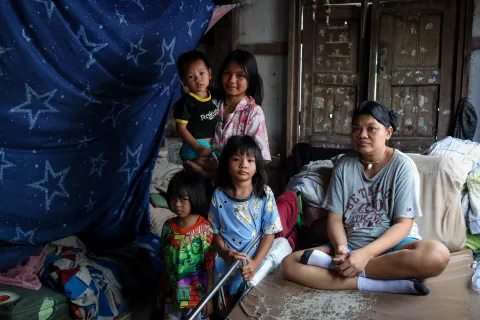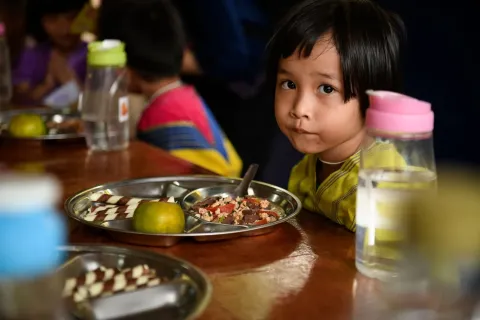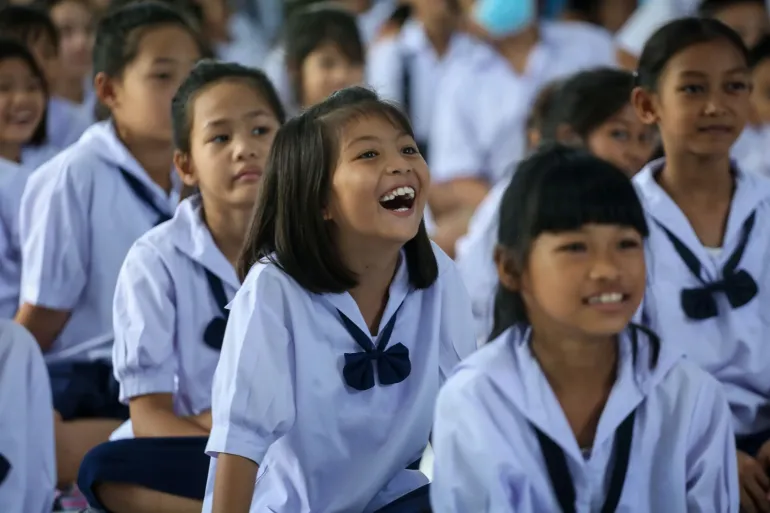
Every family knows the chaos of a weekday morning, from the rush to get children out of bed to the hurried breakfast before school time. There is an excitement to this daily scramble, knowing your children are embarking on another day of learning and growth, one step closer to an exciting future.
On 7th August, that future was shattered for thousands of children in an outbreak of violence that has shocked the nation. Not just the children at Debsirin Nonthaburi School where a student opened fire, but children and young people across Thailand whose sense of security was stripped away. Young lives were lost and many more children were injured or left reeling from an event that will haunt them for the rest of their lives.
This tragedy was also devastating for the hundreds of thousands of educators who go to work each day striving to give children the learning they need. Five school staff died, including teachers and a guidance counsellor, a woman whose very job was to listen to children and help them.
To the bereaved families, the family mourning two grandparents who died, the many injured and traumatised students, and every teacher at that school who is now expected to grieve, recover and reassure thousands of children - we would like to express our deepest sorrow. You are carrying weight that should not be yours to carry.
Over the last week, we’ve all witnessed frightening reports across the media. Not just from the shooting incident - although these were the most distressing - but from around the country. Bags inspected in Phitsanulok, police searching children at school gates in Chiang Mai. Many will also have seen a distressed student from Debsirin Nonthaburi School plead on social media for people not to blame his school for what happened, a deeply compassionate message he shouldn’t have needed to make.
One voice has not been prominent in media reports; that of children and young people who know better than anyone about school life in Thailand. Not students in Nonthaburi - who need and deserve space to recover - but the voices of students from across the country who have found the news frightening and have valuable insights based on lived experience.
The future will never look the same again. It must be remade. And it is our job as a society to ensure it is remade so that it is better for everyone. For families, teachers, and, above all, children.
The Government must be commended for moving with urgency and commitment, taking actions other nations have not when faced with similar tragedies. Within days, the Ministry of Education had issued nine urgent measures, and the Cabinet declared school safety a national priority. Every campus will be designated a School Safety Zone with enhanced security, and there will be increased mental health support for students and staff. A framework law is being drafted and gun restrictions being re-evaluated, while five ministries are collaborating on a National School Safety Standard to be delivered within ninety days.
UNICEF listens to children. That’s how we know these measures are the right ones to take. In late 2024, we spoke with students from every region, asking them what would make schools safer, and shared these findings. They asked for emergency drills, stricter checks to stop weapons and drugs coming through school gates, and more security staff. They also asked for more mental health support in schools.
Children also asked to be involved in future plans and the designing of new school rules. As new measures are implemented, children and young people must participate. They have the greatest insight into schools and the risks they are exposed to. Violence has been too common in Thailand’s schools for too long. 7th August was devastating but it didn’t come out of the blue.
Students asked for one more thing, to go alongside security measures: khun khru thi di tor jai — teachers who are good for the heart. That means teachers who have all the support they need to focus on children’s education and well-being, increasing their sense of safety and security. Because schools are not just places of education, they’re also places where children learn about empathy and compassion, where bonds are formed with other students and teachers. They are where we learn how to be humans together in a shared society. When schools become places to fear, society has failed children.
The new measures must be a committed and long-term effort, one that doesn't lose momentum as the news cycle moves on. The new mental health support for schools must be resourced and staffed by people trained to listen with empathy. They should be accessible and welcoming enough that students feel able to raise not only major concerns, but smaller worries too. And all of this must reach every school in Thailand: not only the larger ones in cities, but the smallest in the most remote regions.
Most importantly, the Government, local authorities, and schools should offer students opportunities to express their views now, as new rules and policies are developed and implemented. Children have the knowledge needed to create better, safer schools - compassionate environments in which learning can flourish.
And when we say children, we mean all of them. Not just the confident students who sit on youth councils and already speak in front of ministers. We must reach the quiet children at the back of classrooms and the ones who skip classes, who may have perspectives that are as valuable or even more so on the problems in their schools. The only qualification needed for children to take part in the coming reforms is being of school age.
A safe school is a compassionate school. That means one where teachers, staff and especially children and young people are encouraged to speak up and truly listened to. As a society we cannot rest until every school in Thailand lives up to that promise.