UNICEF at 80: Childhood is at a crossroads
Choose a future for children
For 80 years, UNICEF has worked to advance the rights, safety and protection of every child. Alongside governments and partners, we have made incredible progress.
Today, these gains are at risk. Conflict, deepening inequalities, shrinking resources and new and emerging threats are putting children in danger and leaving too many behind. The promise world leaders made eighty years ago – to protect every child – is being broken.
Childhood is at a crossroads. The choices we make today will shape the future for every child.
It’s time to recommit.

Collective will, action and investment
In 1946, in the rubble of the Second World War, the world was at a crossroads, reckoning with the consequences of conflict and unprecedented human devastation. Yet leaders agreed that cooperation was not negotiable when it came to one thing: the life of a child. They made a radical choice – to protect every child, regardless of nationality, faith, politics or circumstance, simply because they were children.
That choice gave birth to UNICEF, and to the principles later enshrined in the Convention on the Rights of the Child, the most widely ratified treaty in history. It bent the arc of history. Together, government and partners halved child mortality and reached hundreds of millions of children with vaccines, education and opportunity. This was no accident. It was the result of deliberate choices – political will, collective action and investment, made by people who decided that children come first.
What working together can achieve for children
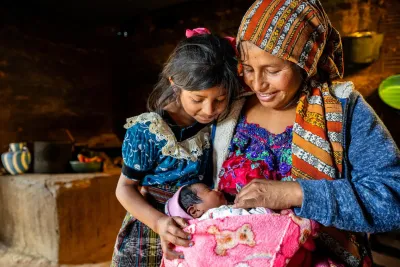
More children survive
In 1990, 1 child in 11 died before the age of 5. By 2024, the figure had fallen to 1 in 27.
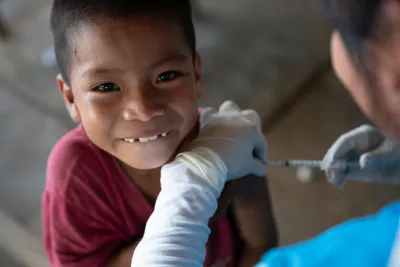
Immunization expands
The share of children fully immunized against diphtheria, tetanus and pertussis soared from 20 per cent in 1980 to 85 per cent in 2024.
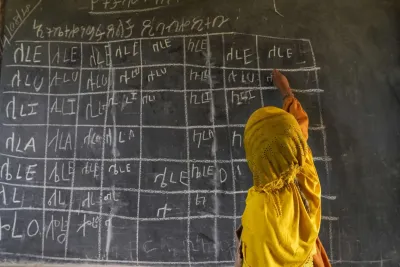
Girls catch up
The percentage of girls enrolled in secondary education more than doubled, from 32 per cent in the early 1970s to 77 per cent in 2024, matching the percentage for boys.
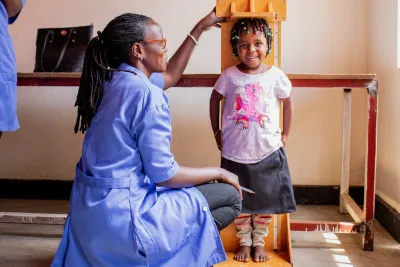
Healthier development
Access to iodized salt rose from under 20 per cent of households in the developing world in the early 1990s to 89 per cent of the entire global population by 2020, preventing avoidable brain damage and transforming child development.
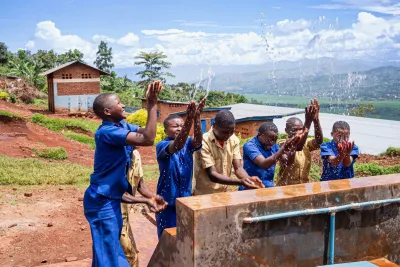
Safer water and sanitation
Between 2000 and 2024, a quarter of the world’s population (2.2 billion people) gained access to safely managed drinking water and one third (2.8 billion people) gained safely managed sanitation.
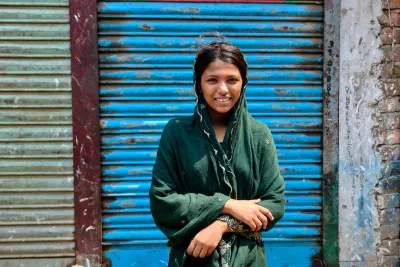
Child labour declines
The percentage of children in child labour and hazardous work halved from 16 per cent in 2020 to 7.8 per cent in 2024.
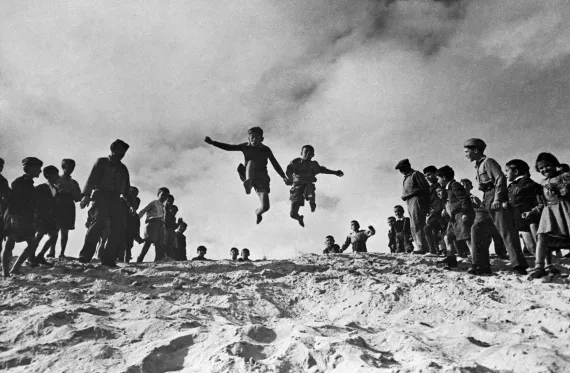
UNICEF through the decades
For 80 years, UNICEF's mission has evolved with the needs of children around the world.
Childhood is at a crossroads
For the first time in this century, the number of children who will die before their fifth birthday may not fall but rise. Nearly one in five children live in conflict-affected areas. Attacks on schools and hospitals are at record highs. Investment in saving young lives is shrinking. And children in rich and poor countries alike are facing threats the world could not have imagined in 1946: AI and algorithms without guardrails, a mental health crisis and climate hazards that strike the youngest hardest.
For too many children, the promise made eighty years ago is being broken. The world has the science, the technology and the money to keep that promise. What is missing is not capability, it is will. This is a choice. A choice to let historic progress unravel, or a choice to reaffirm that the rights, safety and protection of every child are non-negotiable – in peace and in war, in time of plenty and of want, online and offline.
What children face today

Progress on child mortality has slowed, and nearly 5 million children under the age of 5 still die each year, mostly from preventable causes.

Some 45.3 million children were forcibly displaced by conflict and violence in 2025 – nearly three times the number recorded in 2010.
Almost every child in the world is now exposed to at least one climate hazard, such as coastal floods, drought and heatwaves
Choose a future for children
On our 80th anniversary, UNICEF calls on every leader – in government and community, in faith and in business – to seize this moment.
Commit to something that outlasts you.