Rohingya children face an emergency within an emergency
Seven years into the Rohingya refugee crisis, record numbers of children are experiencing a nutrition emergency.

“She can’t sit or walk. And she hasn’t started talking,” Anowara says of 14-month-old Rifa. “I want my baby to smile, walk, and talk.”
Rifa is one of thousands of young children who are dangerously malnourished in the world’s largest refugee settlement, in Cox’s Bazar, southern Bangladesh.
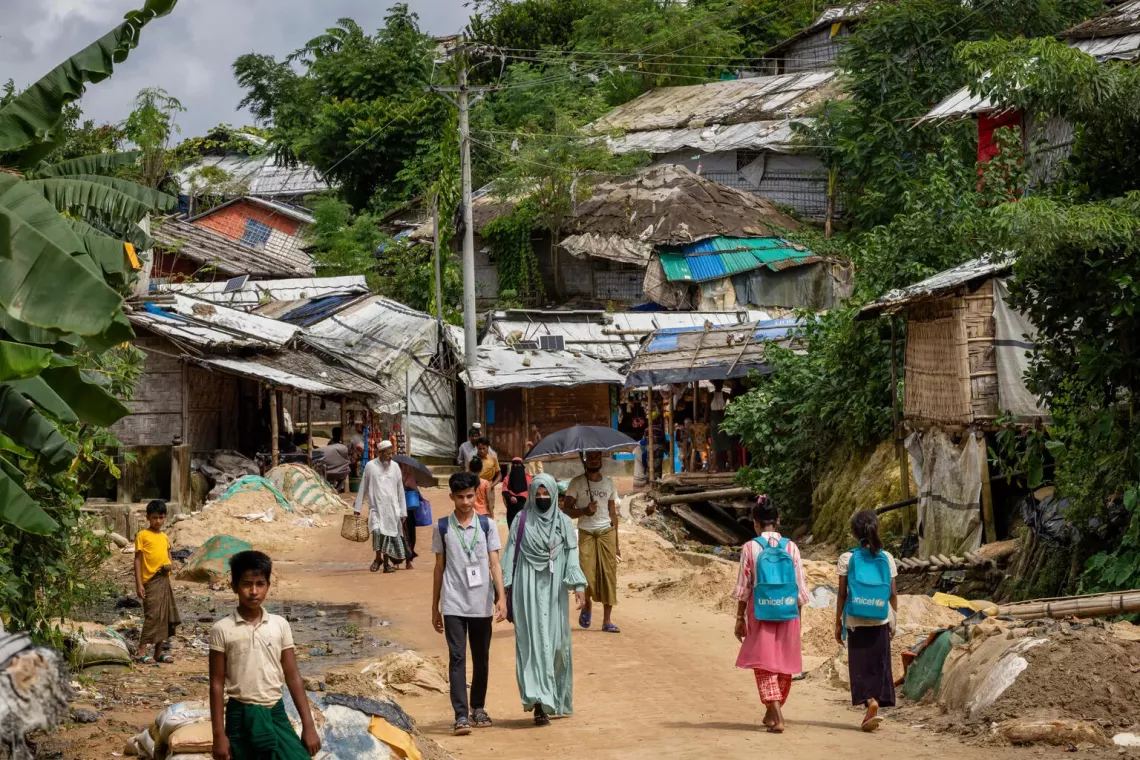
Seven years after hundreds of thousands of Rohingya fled horrific violence and persecution in Myanmar, refugee children and their families are still living in the sprawling, overcrowded camps.
With little to no opportunity to earn a livelihood, families living in the camps rely almost entirely on humanitarian assistance.


UNICEF/UNI622243/Njiokiktjien
As a result, and despite the continued support of the host community, Rohingya living in the camps have limited access to diverse and nutrient-rich foods.
A combination of an unusually long monsoon season in 2024, further displacement, intermittent reductions in food rations, and now a global aid funding crisis have contributed to a deepening malnutrition crisis that saw a 27 per cent spike in severe acute malnutrition cases in February 2025 compared with a year earlier.

UNICEF/UN0842328/Mukut
Poor water and sanitation conditions in the camps only compound the nutrition crisis facing many Rohingya children.
Rubeda recalls how stressful it was when her daughter, Sofiba, began losing weight after developing a fever and diarrhoea days after being born.


UNICEF/UNI622149/Njiokiktjien
“I felt helpless and worried for my daughter,” Rubeda says. “We took Sofiba to the hospital every time she got sick…It would be good if I could provide her with the medication and treatment that she needs.”
Sofiba, now 2, was identified as suffering from severe wasting – the most lethal form of undernutrition, and one of the top threats to child survival. Across the globe, around 1 in 5 deaths among children under 5 are attributable to severe acute malnutrition, also known as severe wasting, which is caused by a lack of nutritious food and repeated bouts of diseases such as diarrhoea, cholera and dengue, which compromise a child’s immunity.
Yet despite the scale of the problem, relatively small additional investments in treatment could lead to an exponential reduction in child deaths.
At UNICEF-supported integrated nutrition facilities in the camps, children, caregivers, and pregnant and lactating women can access a range of life-saving nutrition services.
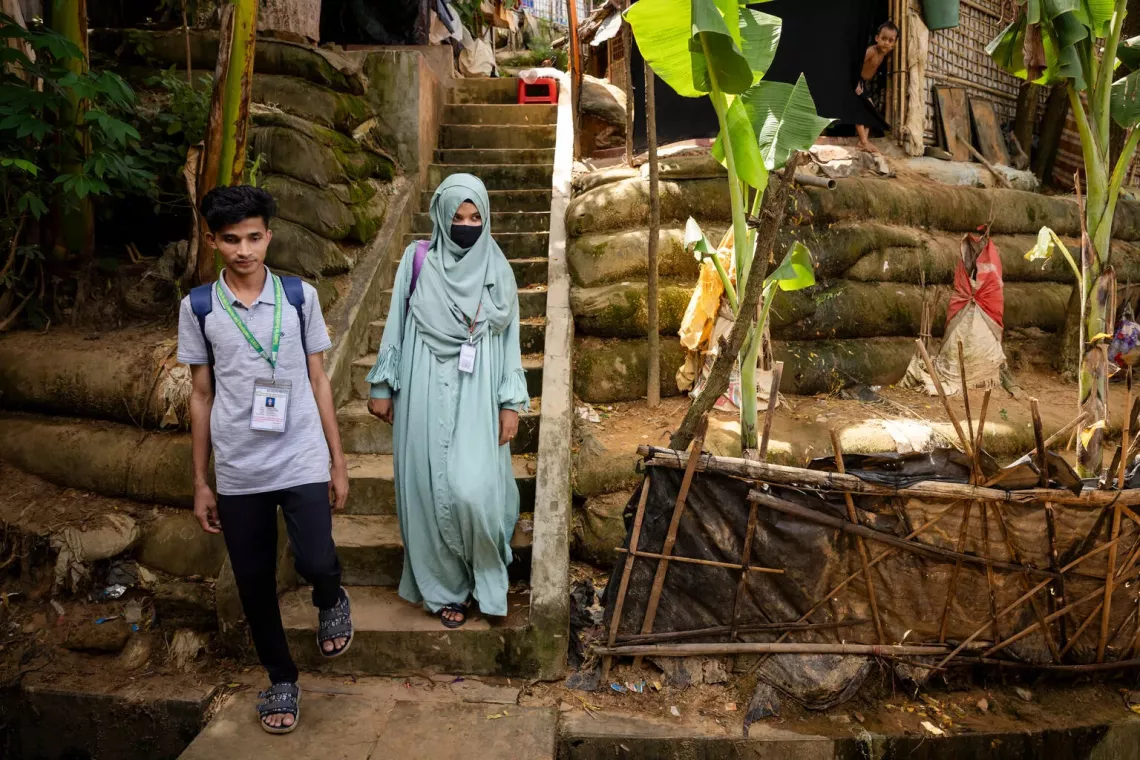
UNICEF also works with Rohingya volunteers like Taslima and Kefayetullah, who go from shelter to shelter to identify children suspected of being malnourished. These children are then referred to nutrition facilities for treatment.



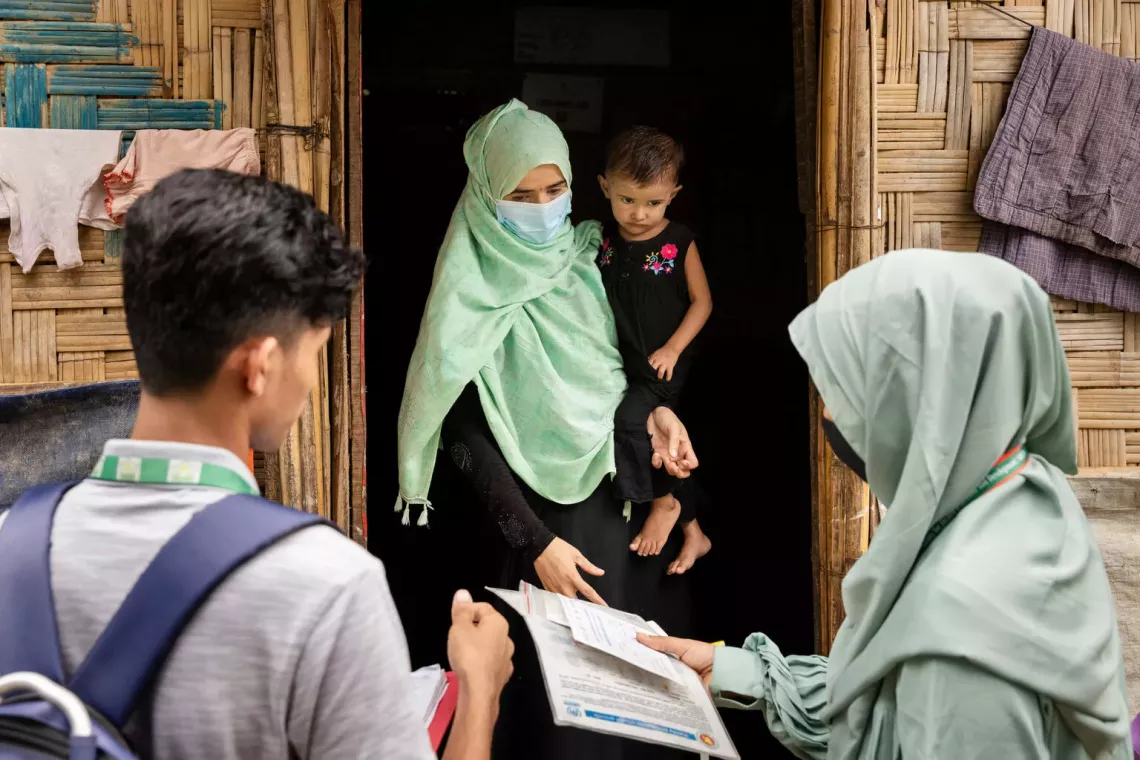
Rashida’s daughter Noor was one of the children identified by the volunteers as potentially suffering from severe wasting.


UNICEF/UNI622304/Njiokiktjien
Noor was referred to an integrated nutrition facility, one of 34 supported by UNICEF in the camps, and receives regular check-ups.


UNICEF/UNI622301/Njiokiktjien
Her height and weight were measured at the facility.


UNICEF/UNI622300/Njiokiktjien
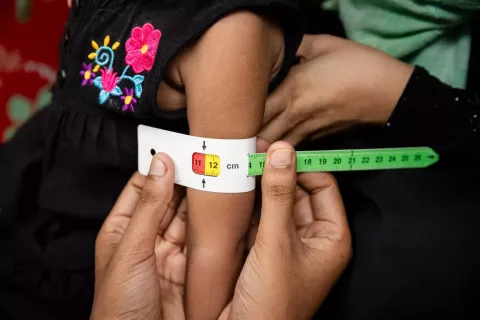
Her mid-upper arm circumference was also recorded as part of the screening for malnutrition.
Nutrition workers also provide Rashida and other mothers with advice on how to prepare diverse meals for her children.
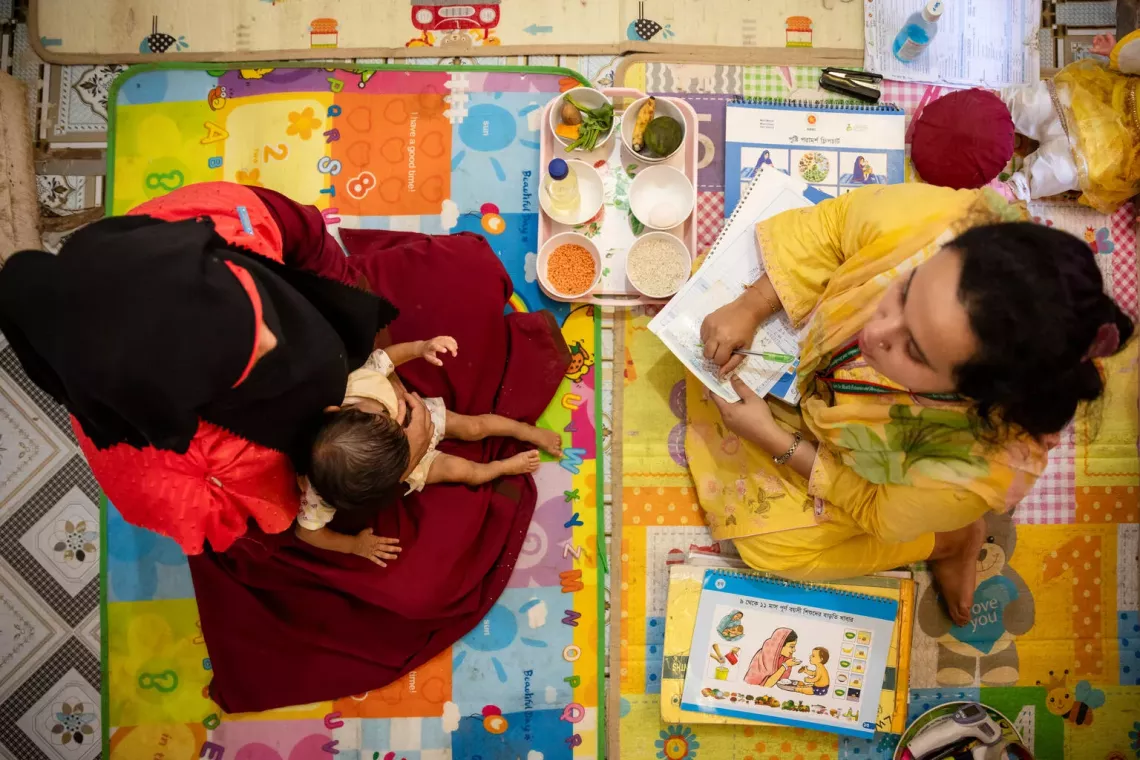
This includes demonstrations on using local ingredients to prepare nutritious dishes made with rice, lentils, vegetables, and eggs.

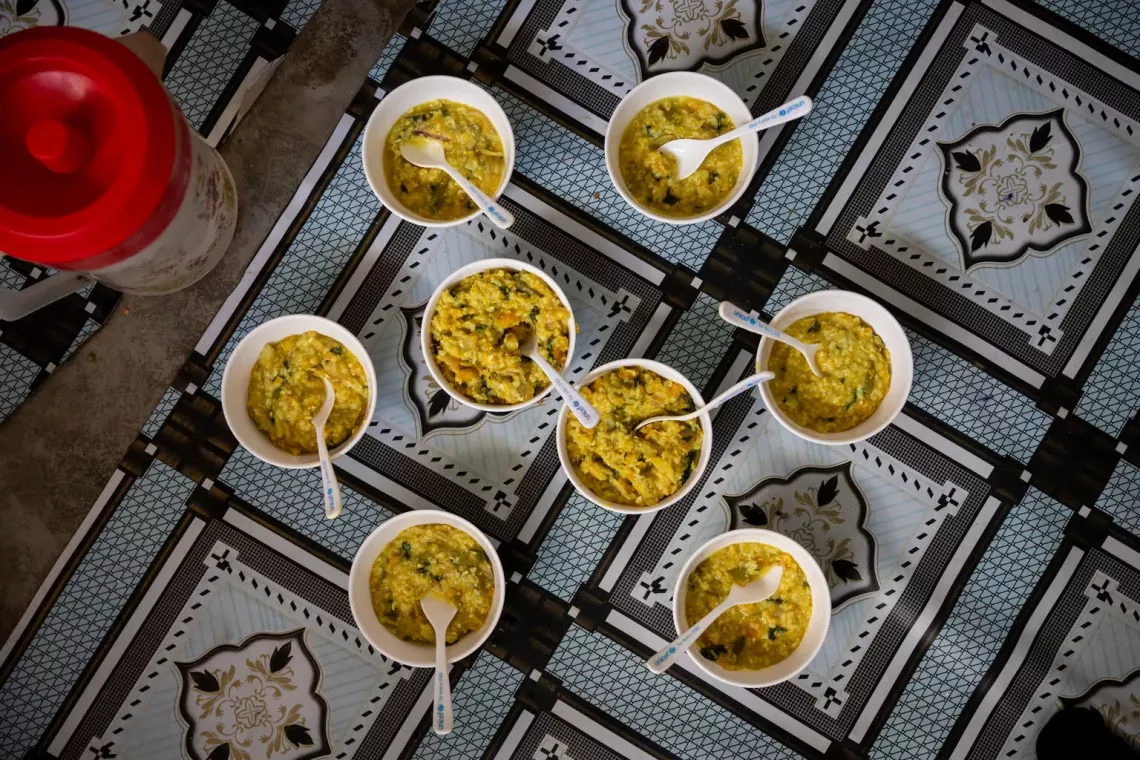

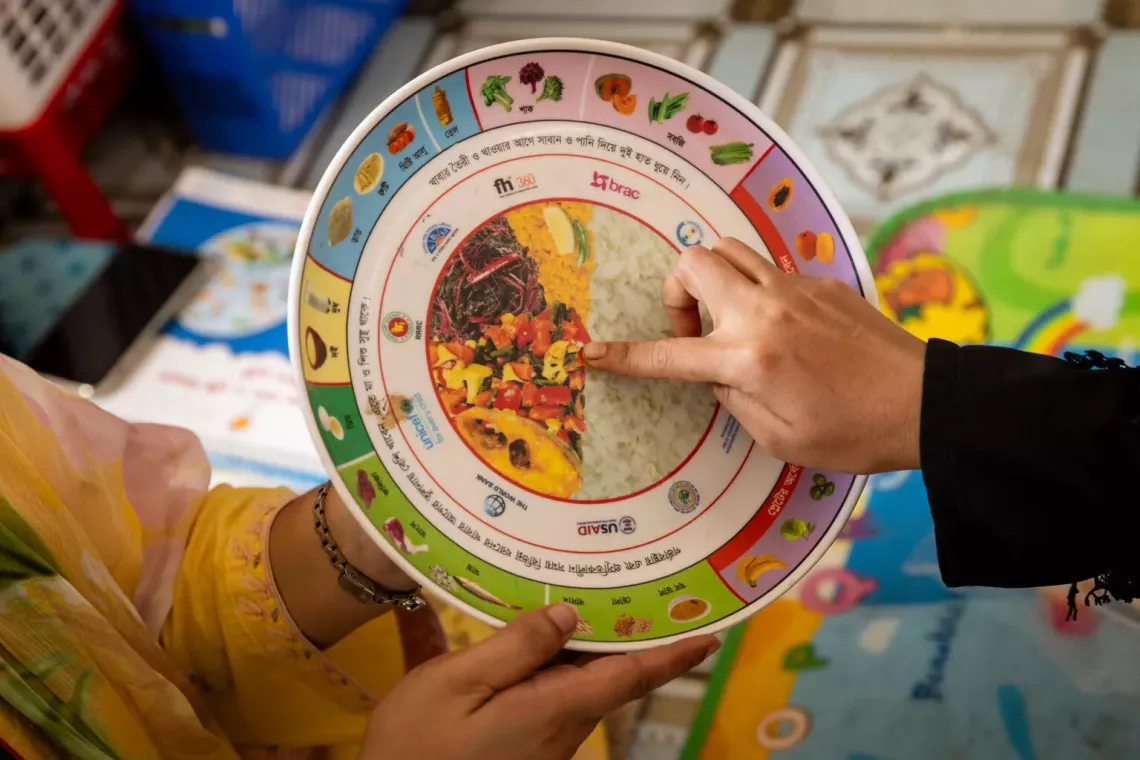

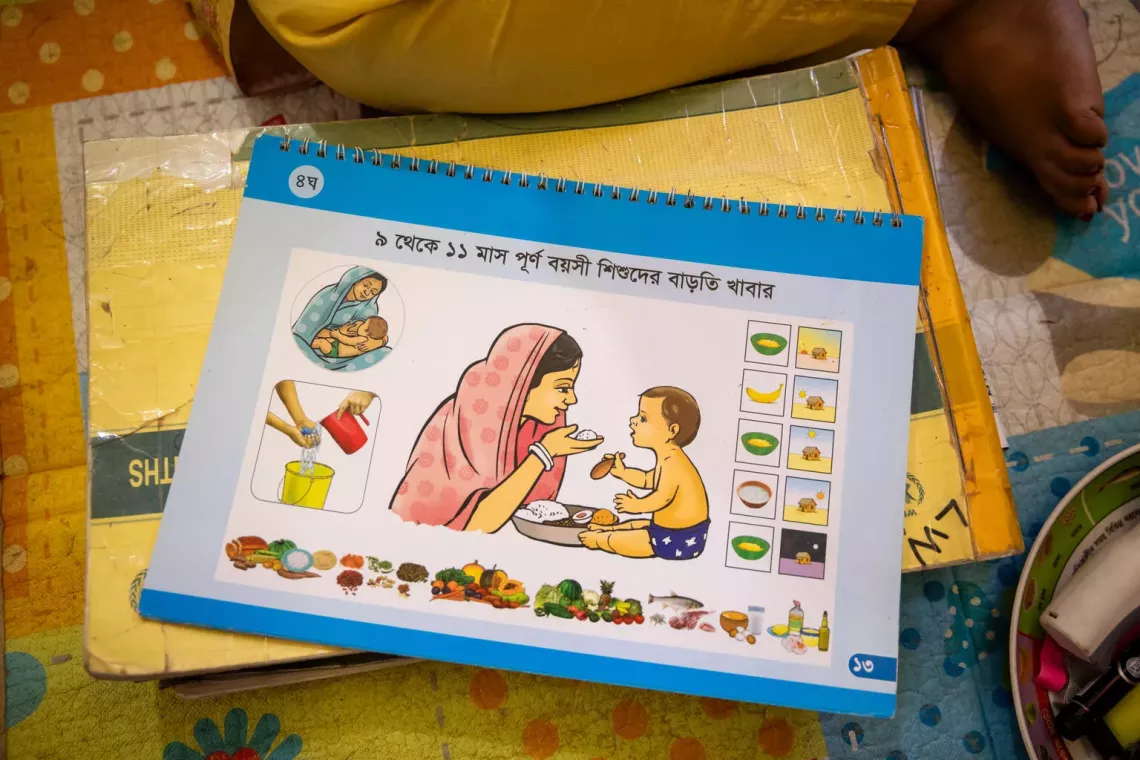
Tens of thousands of caregivers of children under 2 and pregnant women have received nutrition counselling and messaging on infant and young child feeding at the nutrition facilities, which also provide emergency nutrition supplies such as ready-to-use therapeutic food (RUTF), an energy dense, micronutrient paste used to treat children suffering from severe wasting.

Two-year-old Robiul received treatment after being diagnosed with severe wasting.
“I received RUTF and information on how to feed my child,” his mother, Laila, says. “I also learned that I needed to feed him more, so I give him rice, vegetables and an egg every day.”
Thanks to the supplies and services that she received at the facility, Robiul has since recovered.
“He’s smiling and more playful now. Seeing my child healthy and happy makes me happy.”
UNICEF is calling for funds to deliver healthy diets, services and practices to support good nutrition for Rohingya children, adolescents, and women. These services will give Rohingya children the best chance of surviving their first years of life while promoting healthy growth and development so they can reach their full potential.