The ‘little light’ of Muebe
How mobile brigades are saving lives in rural Mozambique.

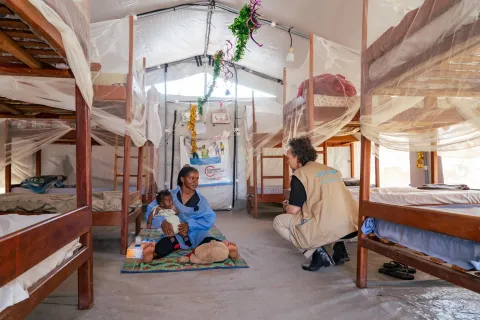
ZAMBEZIA, Mozambique – Jonita Santos watches on as her daughter runs around a tree, laughing with joy. Five-year-old Luzinha, whose name means ’Little Light’, brings a smile to the other mothers with her infectious energy.
Jonita and Luzinha are among dozens of women and children who are waiting to receive services provided by a mobile brigade during its monthly visit to Muebe, an isolated farming community near Mozambique’s coast, in the province of Zambezia. The brigades — teams of doctors and medical technicians that travel between communities — are crucial for delivering basic health services like vaccinations, nutrition, and HIV testing to some of the most remote communities in the country.
Before the mobile brigades started to visit, people in Muebe had to walk 15 kilometres to the nearest health centre. “We used to walk there and back, and it took all day,” Jonita says. “We’d leave at 7 a.m., arrive at the health centre at 10 a.m., then return home by 3 p.m. We’d miss a whole day working in the field.”
Jonita is proud that despite the trek she used to have to make, she missed only one vaccination appointment. But she adds: “Some women couldn’t take a whole day off and they went to traditional healers instead. As a result, some children were never vaccinated and became very sick.”
Time-saving, life-saving
Today, about 90 children in Muebe will receive a variety of services and medications from the two health workers who arrived on motorbikes carrying boxes of medical supplies. Children will receive vaccinations, vitamin A supplements, deworming tablets, and micronutrient powders, among other essentials.
In 2023, mobile brigades reached more than 149,000 children under the age of 2 in Mozambique. Jonita says she spends the time she saves walking to the health centre caring for her children and gathering more cassava and rice from the field.
“From my point of view, everything I can get at the hospital I can now get here at the mobile brigade,” Jonita says. “The community is helped by the mobile brigade because they can get the vaccinations and supplements for their children on time.”
Jonita knows from tragic experience the importance of this easier access to health care.
“A few years ago, my 5-year-old girl died of malaria,” she says. “I believe that such a situation wouldn’t happen now. With a mobile brigade near my house, it wouldn’t have been so bad. We could have saved my daughter’s life by getting medicine or treatment for malaria more quickly.”

The two young medical technicians operating today’s mobile brigade visit hail from the local area, which has helped them gain the confidence of the community.
“It’s the same two men working at the mobile brigade every month. They are from around here, and we trust them,” Jonita says. “They treat us with kindness and respect. We need these services every month, and they come back every month.”
The trust is evident as Luzinha calmly receives an injection from one of the technicians, without a tear shed. After receiving her vaccination, she’s quickly up and running around the tree again, brightening the day for the gathered crowd.
UNICEF has equipped and trained mobile brigades across Cabo Delgado, Nampula, Zambezia, and Sofala provinces with the support of the Government of Ireland, the Government of Japan, the European Union, and the US Agency for International Development.