Ebola disease
What it is, how it impacts children and what UNICEF is doing to respond

What is Ebola disease?
Ebola disease is a severe and often fatal illness caused by a virus. The disease takes its name from the Ebola River, located in the northern Democratic Republic of the Congo, where it was first detected in 1976.
Various outbreaks of Ebola have occurred since then.
Most recently, on 17 May 2026, the World Health Organization declared the outbreak in the Democratic Republic of the Congo a public health emergency of international concern. The outbreak is caused by the Bundibugyo virus, for which there is currently no approved vaccine or treatment. Previous outbreaks in 2014 and 2018 were caused by the Zaire virus, which now have licensed vaccines and treatments.
How does Ebola spread?
Ebola disease spreads through direct contact with:
- The blood, bodily fluids or organs of an infected person
- Contaminated surfaces or materials, like clothing, bedding or medical equipment
- Infected wild animals, such as fruit bats, monkeys or apes
Transmission most commonly occurs within households and during unsafe burial practices. It's amplified in health facilities where infection prevention measures are insufficient.
The virus is not airborne, nor does it spread through mosquitoes and other insects.
What are the main symptoms of Ebola disease?
In children, like adults, Ebola symptoms typically begin with sore throat, fever, headache, fatigue and muscle pain. These symptoms mimic common childhood illnesses like malaria, which can lead to misdiagnosis and delayed care.
Within days, the illness can progress rapidly to nausea, vomiting, abdominal pain, diarrhoea and, in some cases, bleeding.
Symptoms can appear between 2 and 21 days after infection.
Are children more vulnerable to Ebola than adults?
Yes, evidence from various outbreaks shows that children face higher risks associated with Ebola. Early symptoms of the disease can resemble malaria, which may delay a child's diagnosis and treatment. Children are also prone to faster clinical deterioration due to rapid dehydration, malnutrition and other comorbidities.
When it comes to exposure, girls (and women) are often disproportionately at risk. This is because they're more likely to bear caregiving responsibilities, putting them in greater contact with infected family members and health facilities.
How else are children affected by an Ebola outbreak?
Even children who remain safe from infection can suffer severely during an Ebola outbreak.
Outbreaks shutter schools and health clinics, and disrupt other essential services children depend on, like immunization programmes. Fear, too, keeps families away from medical care. Evidence from West Africa shows child deaths from untreated malaria and measles likely exceeded deaths from Ebola itself.
The psychosocial distress of living through an Ebola outbreak bears heavy on children. They risk losing their parents and loved ones, and can face serious discrimination or stigma when they or a family member falls ill.
For children living in places affected by armed conflict and displacement, disease outbreaks can snap already-weakened protection systems. This raises the risk of violence, including sexual violence against women and girls.
What can families do to protect themselves?
Families living in or around an area affected by Ebola should be sure to follow guidance issued by health authorities and trained community health workers. Key protective measures include:
- Reporting any Ebola-like symptoms early, and seeking care immediately, through safe, trusted health services
- Avoiding direct contact with the blood or bodily fluids of anyone who is sick or who has died from Ebola-like symptoms
- Supporting safe and dignified burials led by trained response teams
- Practicing regular and thorough hand hygiene
- Avoiding and countering rumours and misinformation, which can delay people from seeking care and worsen transmission
If you're showing symptoms of Ebola or have come into contact with someone who has, adhere to national public health measures – including active monitoring and completing the full 21-day follow-up quarantine period – to reduce the risk of further transmission.
How does misinformation about Ebola complicate efforts to control transmission?
Misinformation magnifies the fear and uncertainty that accompany disease outbreaks, often causing people to act in ways that increase rates of transmission.
If communities misunderstand or mistrust guidance issued by health authorities, for example, they may resist isolating when they show Ebola-like symptoms – or refuse to decontaminate infected spaces.
This is why trusted community engagement and clear, accurate communication are central to response efforts.
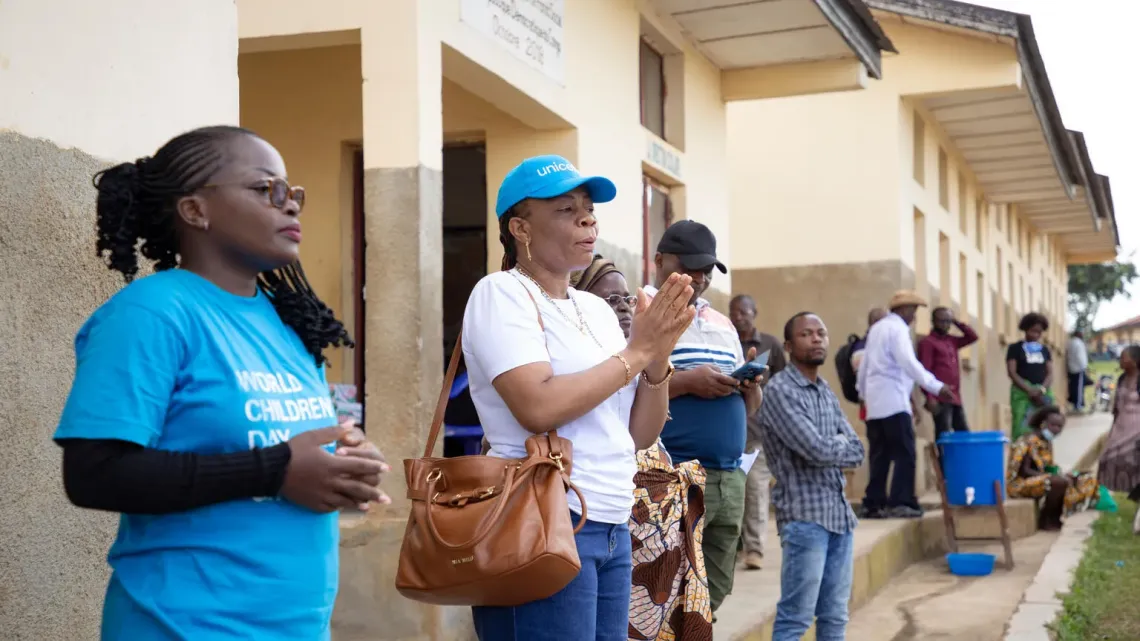
UNICEF and partners work with local leaders, religious leaders, women’s groups and other community networks to listen to people's concerns and offer tangible help. Instead of relying on top-down messaging, we train and deploy local health workers to support their communities. These workers share information on prevention, detect cases early, assist with contact tracing, and mobilize others to do the same.
How does UNICEF help protect communities from Ebola?
UNICEF works with the World Health Organization and national health authorities in countries affected by Ebola to help keep children protected from the disease.
We support community-led approaches, proven effective in previous outbreaks, to arm families with the information and resources they need to reduce their risk of infection.
Here's how:
- Building trust with the communities we serve: Disease outbreaks spark fear and mistrust that deepen when response efforts aren't well communicated. That's why UNICEF partners with local leaders, religious groups, youth and women’s networks, and Ebola survivors to share information on protective measures. We also help families understand how the virus is transmitted, and what they can do to reduce their risk of infection.
- Infection prevention and control: To help stop the spread of the virus, UNICEF trains and equips local water, sanitation and hygiene (WASH) teams to safely decontaminate homes, schools and health facilities when a new case is confirmed. We also support the installation of critical handwashing stations and temperature screenings in public spaces.
- Front-line psychosocial support: Our teams provide timely psychosocial support to children coping with the uncertainty and trauma of an outbreak. We help families transfer loved ones to treatment centres, organize safe and dignified burials, and understand the importance of household disinfection. Our teams also help with contact tracing for early detection.