Clean water returns to town in South Sudan
How a newly restored water treatment plant in one town is making a real difference in people's lives.

- English
- Français
In South Sudan, water supply and hygiene services have been deeply affected by the ongoing conflict. It’s estimated that just under half of the population has access to safe water. A newly restored water treatment plant in one town is making a real difference in people's lives.
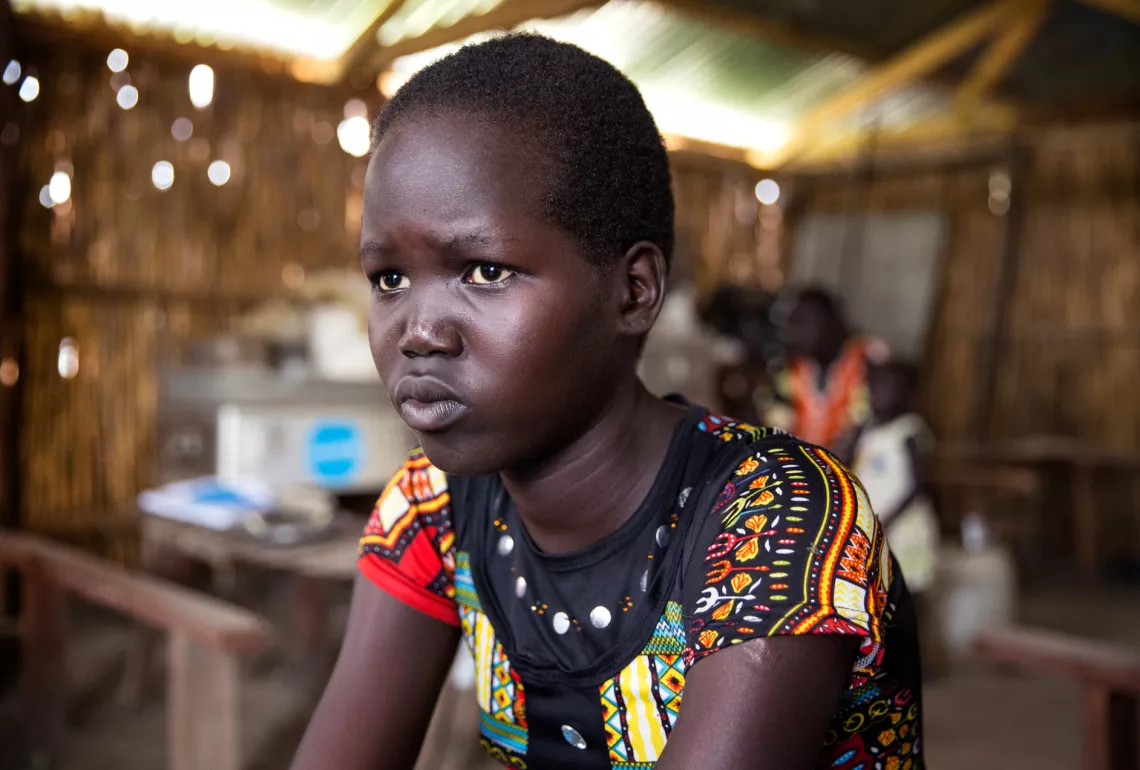
BENTIU, South Sudan, 5 September 2017 – Imagine having to fetch water from a river every day and it taking more than an hour each time. Now imagine having to do that using a wheelchair.
This was the challenge Nyahok Yar faced every day in her town of Bentiu, in the north of South Sudan. She had to wheel herself along on a tricycle, sometimes in temperatures over 40 degrees Celsius. When the rainy season came, the journey was almost impossible.
“Sometimes during the rainy season, it was too muddy, I couldn’t move with my bike to get water and I was stuck in my house,” says Nyahok.
She had to rely on neighbours to help her get water. There were times, though, when no one was available, so she had to go out on her own in the rain where she could get stranded for hours on the road.
“Sometimes when I was stuck on the road, I used to have to stay all night because no one was helping me. I was away from my children and I was so worried, nobody was caring for them,” says Nyahok.
Unsafe water: disease and malnutrition
South Sudan’s water supply and hygiene services have been severely affected by the conflict that began in 2013. Nearly 5.1 million of the most vulnerable people in the country need access to safe water and basic sanitation facilities.
Many water pumps have been damaged because of the conflict or made dysfunctional due to a lack of repairs, as well as Bentiu’s water treatment plant.
Unsafe water put children at risk of deadly diseases. Water and sanitation related diseases are one of the leading causes of death in children under 5 years old worldwide. Every day, over 800 children under 5 die from diarrhoea linked to inadequate water, sanitation and hygiene.
Diarrhoea can prevent children from getting the nutrients they need to survive, ultimately leading to malnutrition. In South Sudan, more than 1.1 million children under 5 are estimated to be acutely malnourished, with almost 276,000 facing severe acute malnutrition, this year.
“No matter how much food a malnourished child eats, he or she will not get better if the water they are drinking is not safe,” says Manuel Fontaine, UNICEF Director of Emergency Programmes.
Malnourished children are also more vulnerable to waterborne diseases like cholera. In South Sudan, a cholera outbreak that first began in June 2016 is the most severe and protracted in the country’s history with 19,742 cases and 355 deaths as of 31 July 2017.
Life changing services
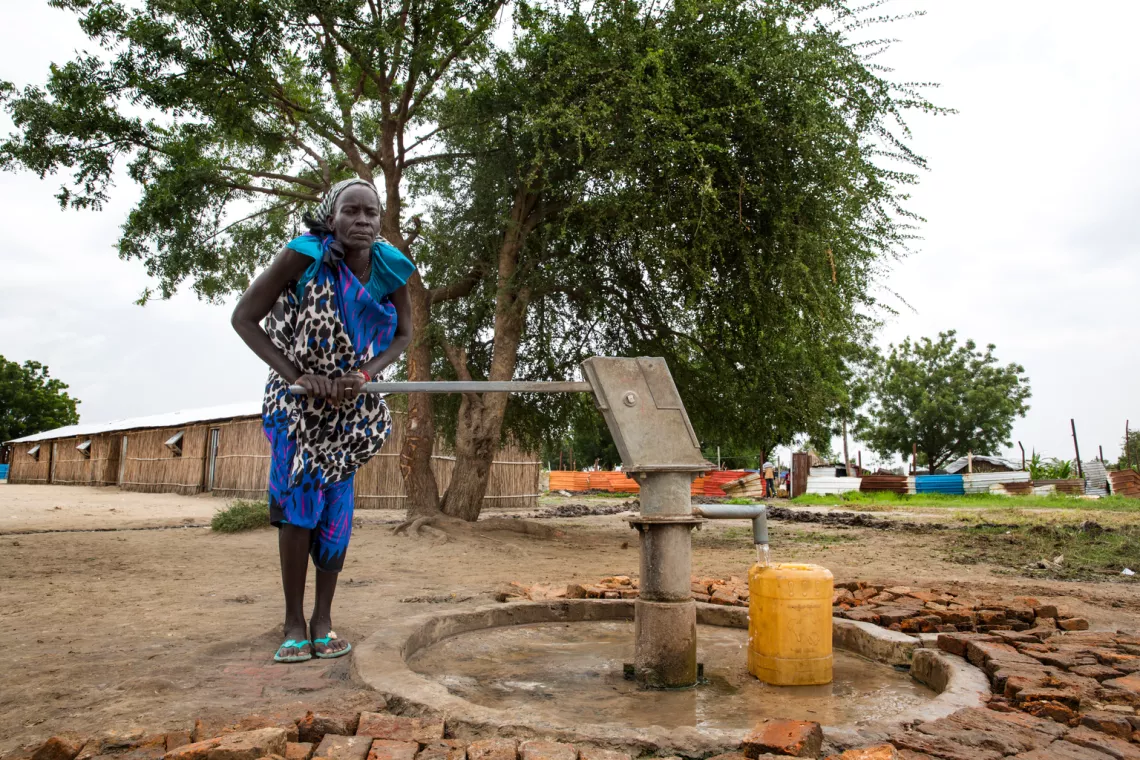
In Bentiu UNICEF and partners have rehabilitated and upgraded the town's water treatment plant through an initiative funded by USAID. The water supply system is now fully operational and the plant produces about 500,000 litres per day of safe, treated water. The water is then pumped to 22 water points across the city, including schools, health facilities and communities. That includes a water pump near Nyahok.
Now it takes her only five minutes to collect water with the help of her children, making it possible for her to make the journey several times a day.
Such basic services are life changing, not just for individuals like Nyahok, but entire communities.
At Machakos Primary School in Bentiu, the school’s head teacher James Thudan Kuol says more students have begun attending school since the water stand was rehabilitated.
“Good things are happening now,” he says. “The teachers are here and the children have come, a good number of them. There is a now a feeding programme installed – all of that was possible because of clean and easy access to water.”
The Bentiu hospital is also benefitting. Giel Samuel, Chief Executive Director of the hospital, explains how clean water is crucial for treating patients, especially as the hospital is now seeing an increase of patients with illnesses such as malaria due to the rainy season.
In 2017, UNICEF has supported more than 600,000 people across South Sudan to access safe water and over 200,000 people with appropriate sanitation facilities.