Watching hundreds of families and children trudging across the Islam-Qala border between Iran and Afghanistan, under the heat of the midday sun, weathering winds blowing sand and dust into their faces, is one of the most arresting sights I’ve witnessed since joining SouthAsia as the UNICEF Regional Director.
It’s hard to describe the numbers of Afghan returnees or quantify their despair. Some days have seen up to 30,000 people cross the border. June alone saw 160,000 Afghans return.
Before even listening to the returnees, their faces told stories. Stories of being hurriedly uprooted; of leaving behind friends and homes and possessions. Tales of hunger and exhaustion, exacerbating the already disorienting journey. Questions about what next -- and the anxiety of not knowing the answers.
It is a scene of desperation.
UNICEF and our partners, and other agencies and NGOs, are on site responding to the many needs.
We are on the ground giving young children vaccinations to prevent the spread of sickness. Afghanistan is a polio endemic country; making sure children are protected against this crippling disease is a priority for us. Nutrition counsellors are weighing and measuring as many children as they can, and providing Ready to Use Therapeutic Food for the malnourished. To prevent dehydration, we’re distributing safe water. We’ve also provided toilets. And for the youngest children, child friendly spaces provide blessed respite – a moment where children can rest, recuperate and play.
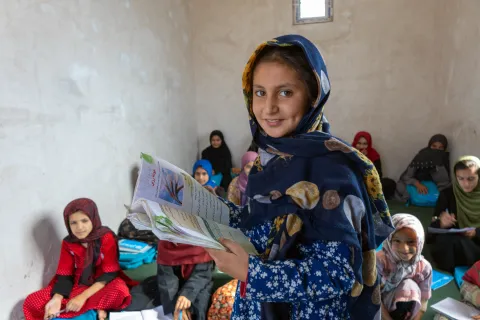
Fatouma, 16, was studying in Iran. Her ambition? To be a doctor. Now, entering Afghanistan, where girls and women are denied their right to learn, she’s worried about her future.
One young boy I spoke to, who had gone to Iran several years ago to work and earn some money for his family, was bereft because he was returning to his family empty-handed. No child should carry that burden.
In the child friendly space, Sahar, age 9, drew a picture of the home she had left in Iran. She described it as having two bedrooms and a large garden – represented in her picture by a single tree. She already misses it. She was happy there.
Listening to these stories, as a UNICEF staff member and as a father was difficult.
The needs are vast. UNICEF and partners are doing what we can to meet the immediate needs here, but we urgently need more funding, more support from the global community to ramp up and sustain the response to this acute humanitarian crisis.
Afghanistan has fallen out of the headlines but we cannot, we must not, forget the children and mothers of this country who so desperately need a helping hand.