UNICEF Annual Report 2024
Staying and delivering for children
It was a difficult time to be a child in 2024. With deepening violent conflict, climate shocks and poverty, children faced skyrocketing needs while the resources to respond continued to shrink.
But as this year’s Annual Report shows, across more than 190 countries and territories, UNICEF was there, saving and uplifting the lives of millions of children – even in the hardest-to-reach places. Together with our partners, we delivered clean water and sanitation, protection and psychosocial support, health, nutrition, and immunization services, and education and skills development.
The world in 2025 continues to be one of significant political shifts and volatility, economic uncertainty and deepening humanitarian crises. To succeed, UNICEF must be at its best.
But announced and anticipated funding cuts are limiting UNICEF’s ability to reach millions of children in dire need. These new cuts are creating a global funding crisis that will put the lives of millions of additional children at risk.
In today’s world, everything is interconnected, and aid cuts anywhere threaten security and economic prosperity everywhere.
Explore UNICEF’s achievements in 2024
Evolving together | Top 10 achievements | For every child |
Voices of UNICEF youth advocates | Financials
Evolving together
As needs continue to outpace funding, we must always be the best stewards for the precious resources entrusted to us. We are constantly evaluating our operations and resources to become more agile, efficient and responsive to diverse situations.
For example, we have enhanced our data and analytics capabilities, capitalizing on new tools to capture the rapidly evolving situation of children and enable the timely delivery of information to decision makers, and invested in digital solutions to better reach underserved children. We have streamlined our operations while deepening local partnerships and strengthening resilient national systems.
What’s at risk
Every dollar invested in humanitarian and development aid creates long-term benefits and a more stable and secure world. Aid ensures infectious diseases do not spread across borders and mitigates the risks of instability and violence. Millions of children are alive today because of the global commitment to proven interventions such as vaccines, nutrition and access to safe water and basic sanitation. With our partners, we have made historic progress. Since 2000, global under-5 mortality has dropped by 50 per cent. Millions more have been protected with improved health and brighter futures. Without the right policy choices and adequate investment, we risk reversing these hard-earned gains, with millions more children dying from preventable causes. We cannot allow that to happen.
Staying and delivering
I have seen firsthand how UNICEF is the bulwark against threats to children’s rights and their well-being – especially during these challenging and unpredictable times. With our global footprint and strong partnerships, UNICEF does what few others can: Respond to crises quickly while building long-term resilience.
Just as we have for almost 80 years, we are determined to stay and deliver for the world’s children. But we can’t do it without your support.
UNICEF implores all donors to continue to fund critical aid programmes for the world’s children. We cannot fail them now.
—
Foreword by Catherine Russell, UNICEF Executive Director
Our top 10 achievements in 2024
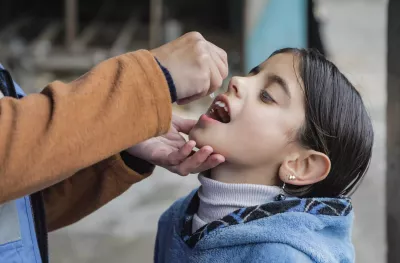
Over 1.5 billion polio vaccine doses were delivered to 87 countries, contributing to the reduction of global polio cases by nearly 25 per cent between 2023 and 2024.
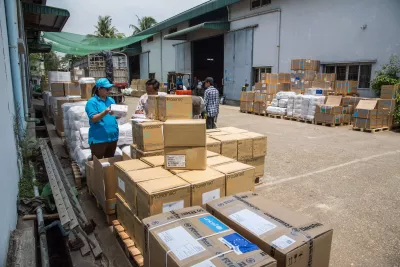
Humanitarian assistance was delivered to millions of children across 448 emergencies in 104 countries.
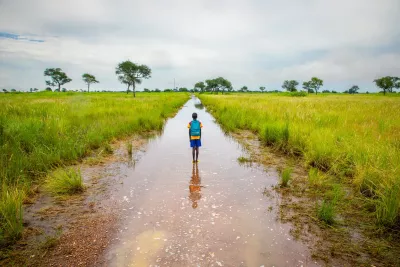
102 countries implemented climate programmes (from 68 countries in 2022).
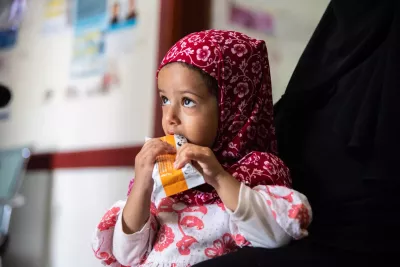
251 million children under 5 were reached with early detection services for wasting, and 9.3 million with treatment for severe wasting and other forms of severe acute malnutrition.
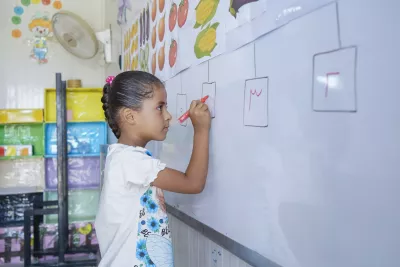
26 million out-of-school children and adolescents gained access to education, including 9 million in humanitarian settings and 3.7 million children on the move.
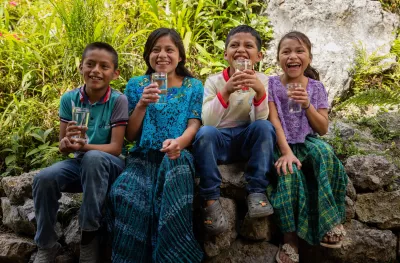
6.7 million people used climate-resilient water systems (from 5.4 million in 2022).
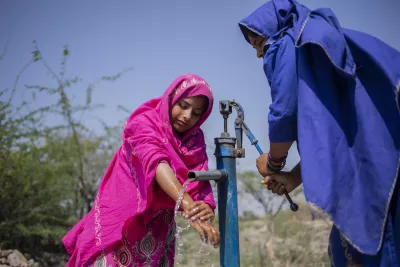
Over 18 million people gained access to basic sanitation services, more than 33 million to safe water, and over 21 million to basic hygiene services.
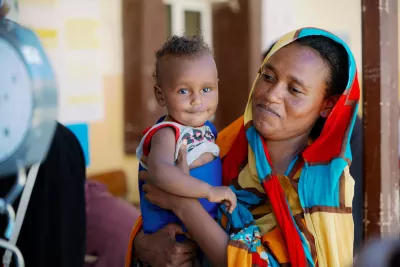
18.5 million parents and caregivers accessed UNICEF-supported parenting programmes (from 11.8 million in 2022).
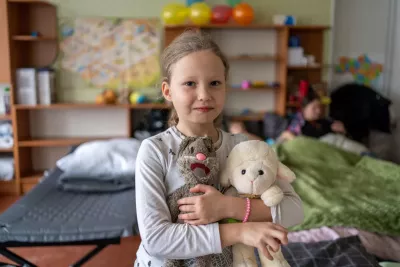
91 countries were supported for more effective investments in childrenthrough advocacy and engagement with partners (from 78 in 2022).
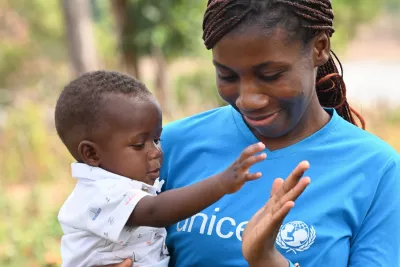
Across 110 countries, 6.2 million children who experienced violence received health, social work, justice or law enforcement services, a 36 per cent increase from 2023.
For every child
UNICEF is dedicated to the well-being of all children, but our unparalleled reach is at risk:
- UNICEF is active in more than 190 countries and territories, drawing on a vast network of skilled and committed staff and partners. Proven approaches are adapted and scaled to meet challenges in diverse contexts around the world.
- UNICEF runs the world’s largest humanitarian warehouse – storing essential supplies for safe water, sanitation and hygiene, education, health and nutrition – including medical products and pharmaceuticals. This type of scale, reach, and expertise enables us to save lives and help prevent emergencies from escalating into full-scale crises.
- UNICEF supports health centres where 1 in 4 babies worldwide are born.
- UNICEF is the world’s largest buyer of life-saving vaccines and supplier of Ready-to-Use Therapeutic Food (RUTF), ensuring children suffering from severe malnutrition can be treated.
- UNICEF is the largest provider of water, sanitation and hygiene services, with programmes in more than 100 countries, providing over 35 million people with safe water access every year.
Saving and protecting children’s lives is a collective endeavor. That’s why UNICEF is calling for UN Member States to fulfill their Funding Compact commitment and for all donors to prioritize flexible funding within their overall portfolio of giving to UNICEF.
Financials
Revenue by source and funding type, 2024
UNICEF Expenditure, 2024
(US$ millions)
| Budget Category | Expenditure |
|---|---|
| Development | $7,381 |
| Programme | $7,178 |
| Development effectiveness | $203 |
| Management | $407 |
| United Nations development coordination | $10 |
| Independent oversight and assurance | $29 |
| Special purpose (including capital investment) | $33 |
| Private fundraising and partnerships | $239 |
| Total expenditure | $8,099 |
Top 20 resource partners by contributions received
(US$ millions)
| Partner | Regular Resources | Other Resources (Regular) | Other Resources (Emergency) | Total |
|---|---|---|---|---|
| United States | $137 | $114 | $867 | $1,118 |
| Germany | $66 | $503 | $110 | $679 |
| European Commission | $0 | $302 | $248 | $550 |
| World Bank -Washington D.C. | $0 | $439 | $0 | $439 |
| United Kingdom | $20 | $82 | $310 | $413 |
| United States Fund for UNICEF | $15 | $230 | $44 | $288 |
| European Investment Bank | $0 | $248 | $0 | $248 |
| Global Partnership for Education | $0 | $221 | $0 | $221 |
| GAVI The Vaccine Alliance | $0 | $162 | $23 | $185 |
| Sweden | $57 | $50 | $76 | $183 |
| UNOCHA | $0 | $0 | $174 | $174 |
| Japan Committee for UNICEF | $145 | $14 | $15 | $173 |
| Netherlands (Kingdom of the) | $47 | $90 | $34 | $171 |
| Republic of Korea | $15 | $39 | $88 | $142 |
| Norway | $45 | $38 | $52 | $136 |
| German Committee for UNICEF | $69 | $26 | $35 | $130 |
| United Kingdom Committee for UNICEF | $33 | $57 | $24 | $114 |
| Japan | $11 | $17 | $81 | $110 |
| Canada | $11 | $66 | $27 | $104 |
| Korean Committee for UNICEF | $85 | $8 | $6 | $99 |
Highlights
This report highlights UNICEF's key achievements in 2024 across its five goal areas, humanitarian action and engagement with young people in seven regions along with key financial information.