

UNICEF Executive Director calls for urgent investment in children in Bangladesh and measures to end child marriage
Nearly one in two girls is married before age 18, putting her education, health and future at risk.
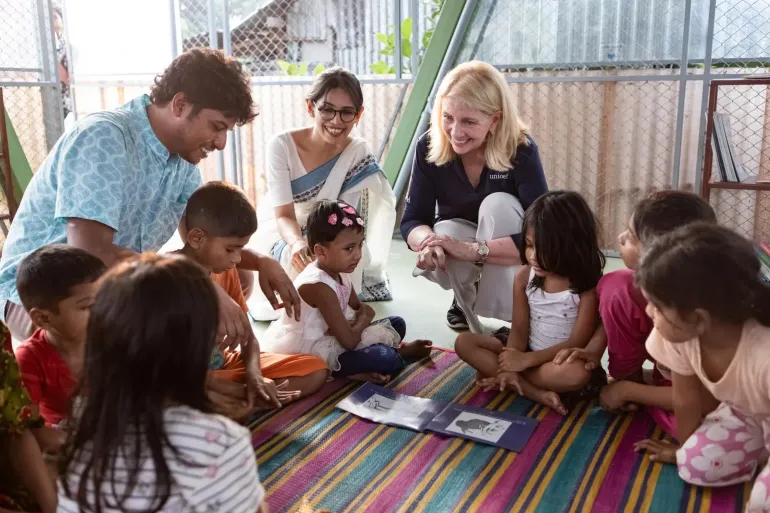
NEW YORK/DHAKA, Bangladesh, 20 October - UNICEF Executive Director Catherine Russell today called for urgent investment in children in Bangladesh after a three-day visit, which included meeting families in Korail, Dhaka’s largest informal settlement, and Rohingya refugees and host communities in Cox’s Bazar.
Russell urged action on three fronts: ending child marriage and keeping girls in school; delivering on the Government’s commitment of investing five per cent of the country’s Gross Domestic Product in both education and in health; and protecting quality learning for Rohingya and host-community children.
In Korail, Russell heard from children and parents about poverty, disrupted education and limited basic services. Adolescent girls shared their ambitions and the pressures that can force them out of school and into marriage.
“I met a 14-year-old girl named Bushra, who told me how community leaders at a UNICEF-supported child protection hub had worked with Bushra’s father to save her from early marriage,” said Russell. “Keeping girls in school and providing them with the health, education and protection services they need will deliver a brighter future for them, for their communities, and for Bangladesh.”
Nearly half - 47.2 per cent - of Bangladesh’s women aged 20 to 24 were married before age 18, according to the Bangladesh Multiple Indicator Cluster Survey 2025. Child marriage drives girls out of school, fuels early pregnancy and narrows lifelong opportunities. UNICEF calls for girls to complete secondary school, and for addressing loopholes in the national law that permit child marriage.
Russell met with senior officials, including Shama Obaed Islam, State Minister for Foreign Affairs of Bangladesh. She expressed appreciation for the Government’s commitment to increase the budget for education and health services, noting the importance of turning promises into action.
“Budgets reflect priorities,” Russell said. “Investing in children’s quality education, health, nutrition and protection is investing in Bangladesh’s future.”
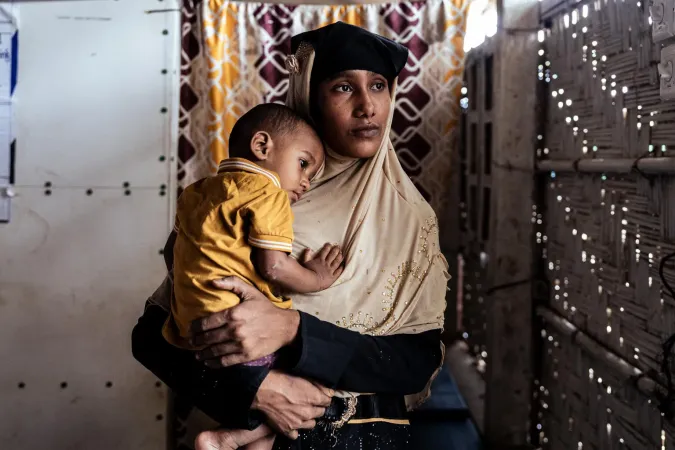
In Cox’s Bazar, one of the largest refugee camps in the world, Russell met Rohingya children and families and visited UNICEF-supported learning activities. While recognizing the country’s generosity in hosting Rohingya refugees, Russell appealed to the international community to continue their support for both the refugees and the host communities.
Russell visited a UNICEF-supported learning centre where she heard first-hand from students and teachers about the importance of education and vocational skills. Beyond learning, education protects children from exploitation, trafficking, child marriage and recruitment by armed groups.
“Rohingya children have lost so much to violence, displacement and uncertainty. They cannot lose their education too,” Russell said. “The world must invest in them, and in the communities that welcomed them.”
Across Bangladesh, UNICEF works with the Government and partners to strengthen systems and services that children and families depend on. UNICEF supports access to quality education, primary health care, immunization, nutrition, safe water and sanitation, and child protection services.
UNICEF also works to prevent child marriage and violence against children, empower adolescent girls, strengthen social protection and promote greater public investment in children. Through evidence, policy advocacy and support to national and local institutions, UNICEF helps ensure that essential services reach the children most at risk of being left behind.
In Cox's Bazar, UNICEF and partners provide life-saving and essential services to Rohingya refugee children and families, including treatment and prevention of malnutrition, safe drinking water, sanitation, education, health care, child protection and psychosocial support. UNICEF also supports vulnerable host communities.
As humanitarian funding declines, sustained international support is critical to protect essential services, preserve the gains achieved and ensure that refugee and host-community children are not left behind.
Media contacts
Additional resources
About UNICEF
UNICEF, the United Nations agency for children, works to protect the rights of every child, everywhere, especially the most disadvantaged children and in the toughest places to reach. Across more than 190 countries and territories, we do whatever it takes to help children survive, thrive, and fulfil their potential.
Follow UNICEF on X, Facebook, Instagram and YouTube


