From warehouses to families in need
Pre-positioned lifesaving supplies are making a continuous journey from Kathmandu to families affected by the recent floods in Nepal
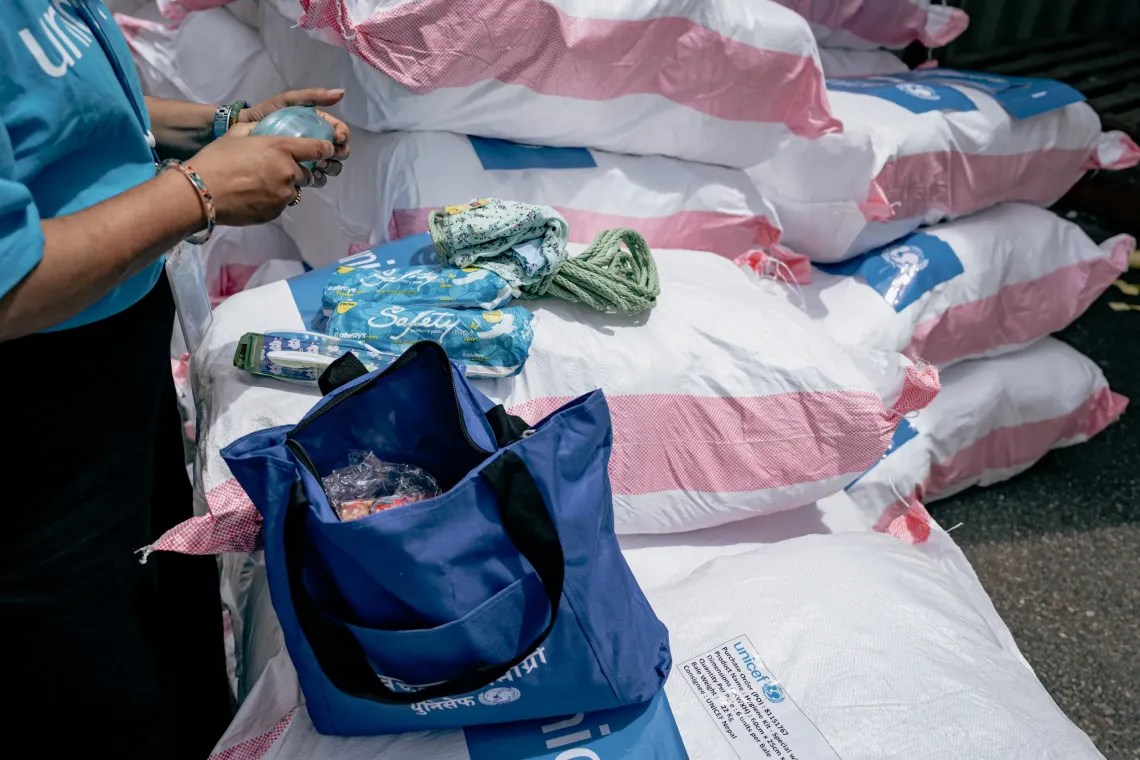
At UNICEF’s warehouse in Kathmandu, stacks of hygiene kits, buckets, collapsible jerrycans and water treatment supplies were checked, counted and loaded for the journey north. Each item had a practical purpose: helping families collect and store water safely, treat it before drinking, and maintain basic hygiene after floods damaged water systems and sanitation facilities.
The supplies had been pre-positioned, allowing them to be mobilized soon after flash floods swept through the Bhotekoshi–Trishuli river basin. In support of the government-led response, UNICEF released consignments to move towards flood-affected districts.

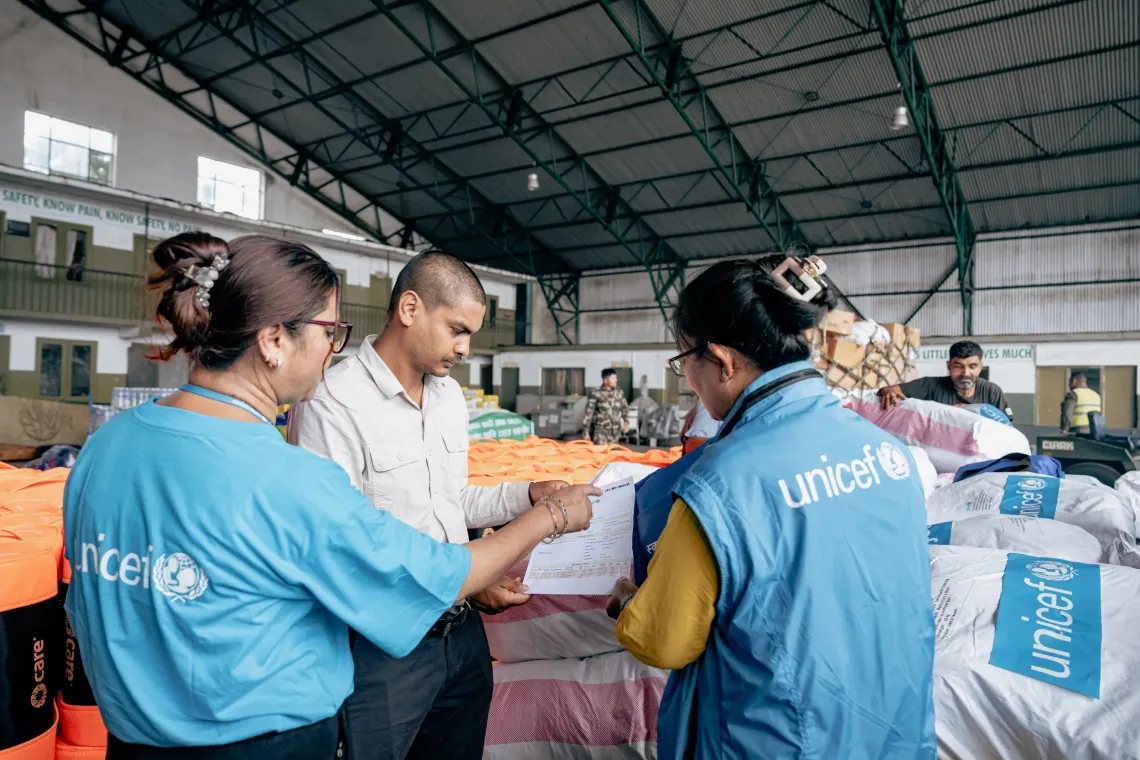


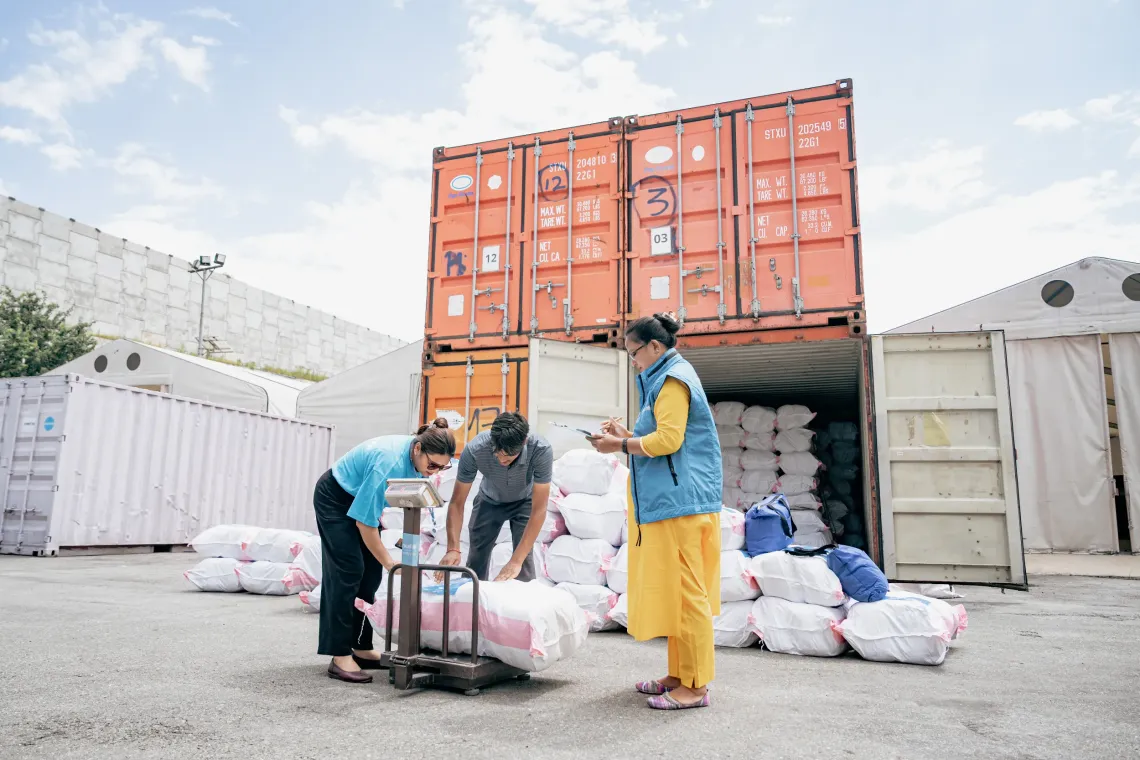
Getting them there was not straightforward. Floodwaters had washed away or badly damaged roads and bridges, leaving some communities cut off. Under government coordination, supplies moved through every available route: by truck where roads remained passable and by helicopter where they did not. UNICEF deployed additional logistics support to Nuwakot to help local authorities and partners coordinate and track deliveries.
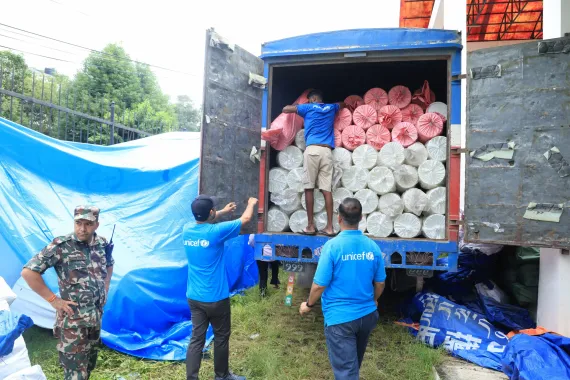
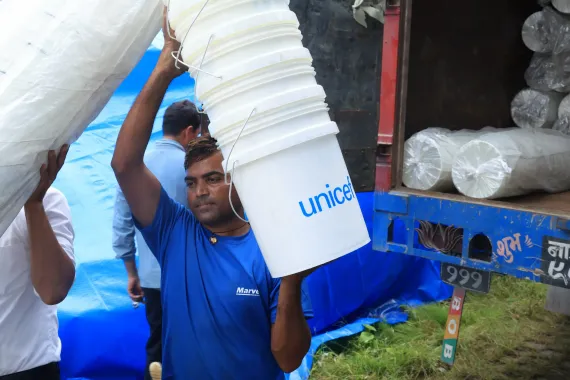
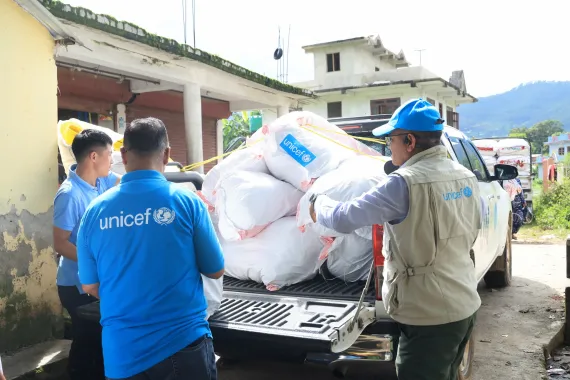
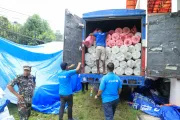
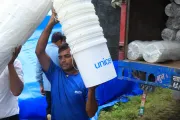
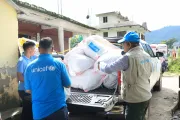
When one of the trucks arrived in Nuwakot District, it carried materials families needed: hygiene kits with soap and other essentials, buckets and mugs, jerrycans for carrying water, bottles of water treatment solution, and tarpaulins that could provide temporary cover and help create safe spaces.
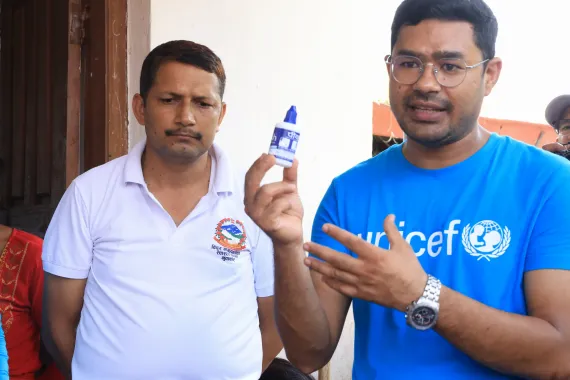
“For families who have lost so much, these supplies are critical. They mean safer water to drink, better protection from disease, and safe spaces for children during this difficult time,” said Naresh Nidal, Emergency Officer with UNICEF Nepal.
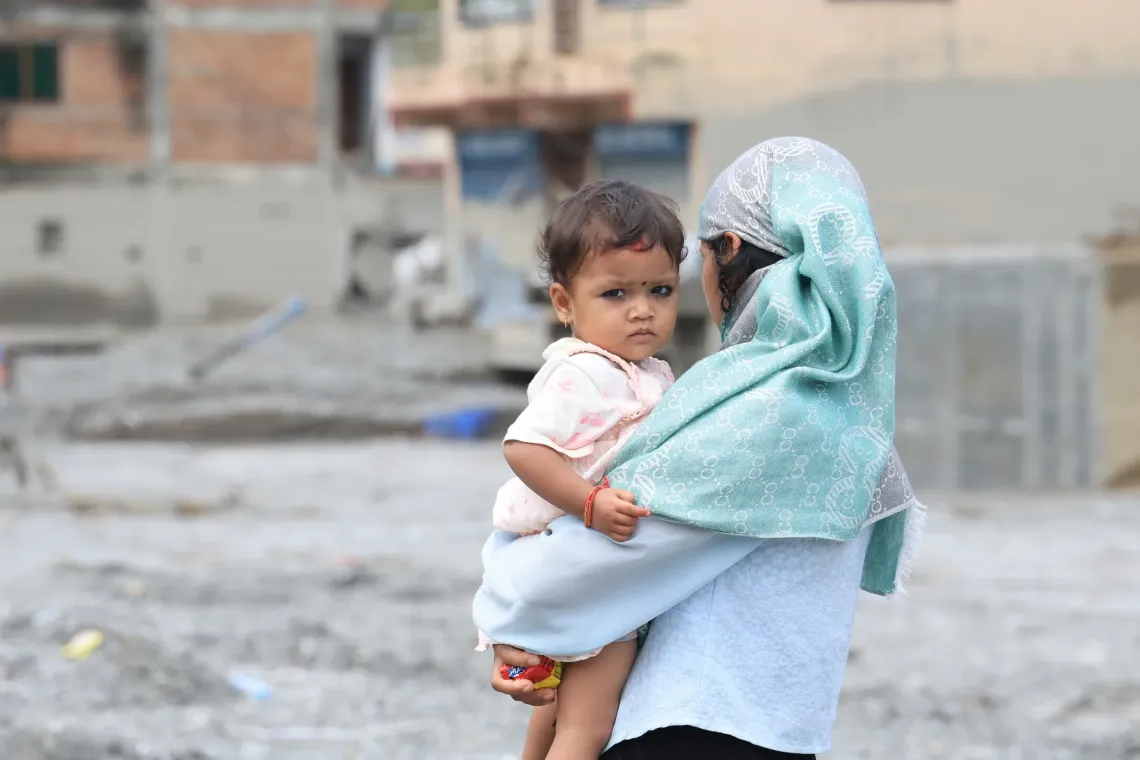
Most people left home with little more than the clothes they were wearing, so these are not simply household items. A jerrycan can make it possible to carry water from a safer source. Water treatment solution can reduce the risk of illness when supply systems are damaged.
Soap, sanitary materials and a bucket can help families protect their health and dignity while staying with relatives or in temporary shelters.
Across the affected districts, about 13,000 households—approximately 65,000 people, including more than 22,000 children—need safe drinking water, sanitation and hygiene support.
Damaged toilets, crowded shelters and disrupted water supplies increase the risk of waterborne and infectious diseases, particularly for young children.
UNICEF has dispatched critical WASH supplies for around 19,000 people in Rasuwa and Nuwakot. This includes more than 3,800 hygiene kits, 3,300 collapsible 10-litre jerrycans, 3,500 buckets, 3,500 one-litre mugs, 4,000 bottles of water treatment solution and more than 1,000 tarpaulin sheets.

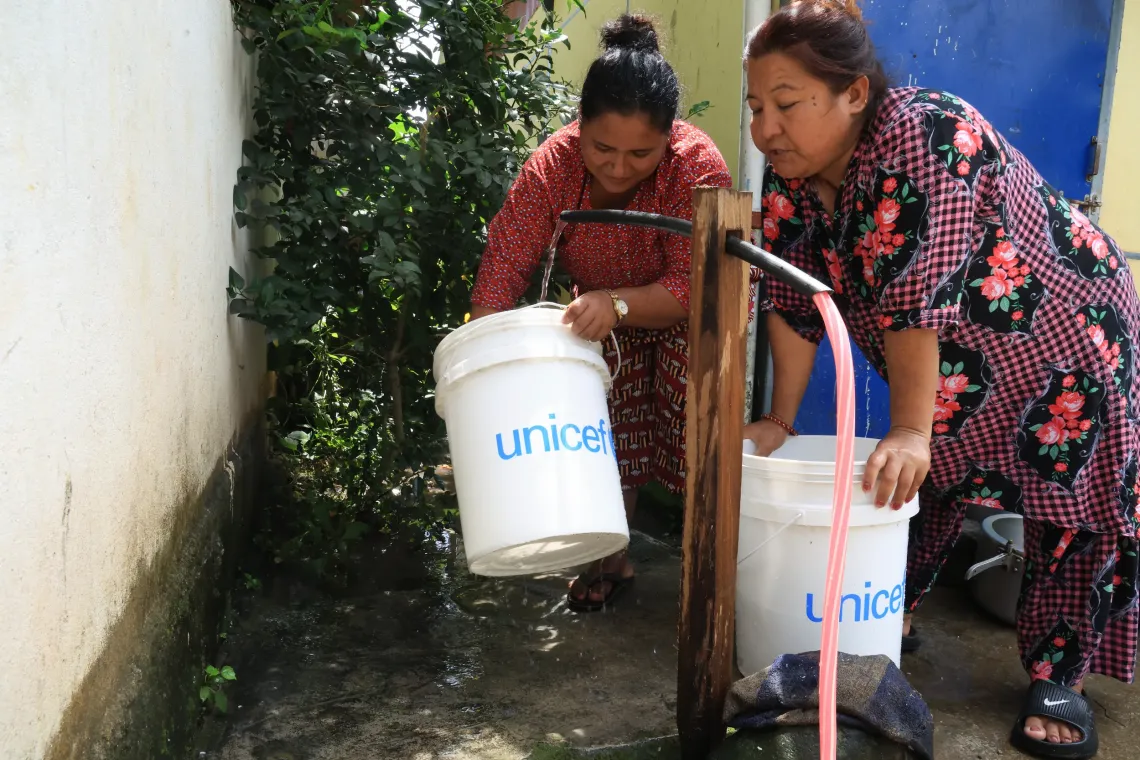

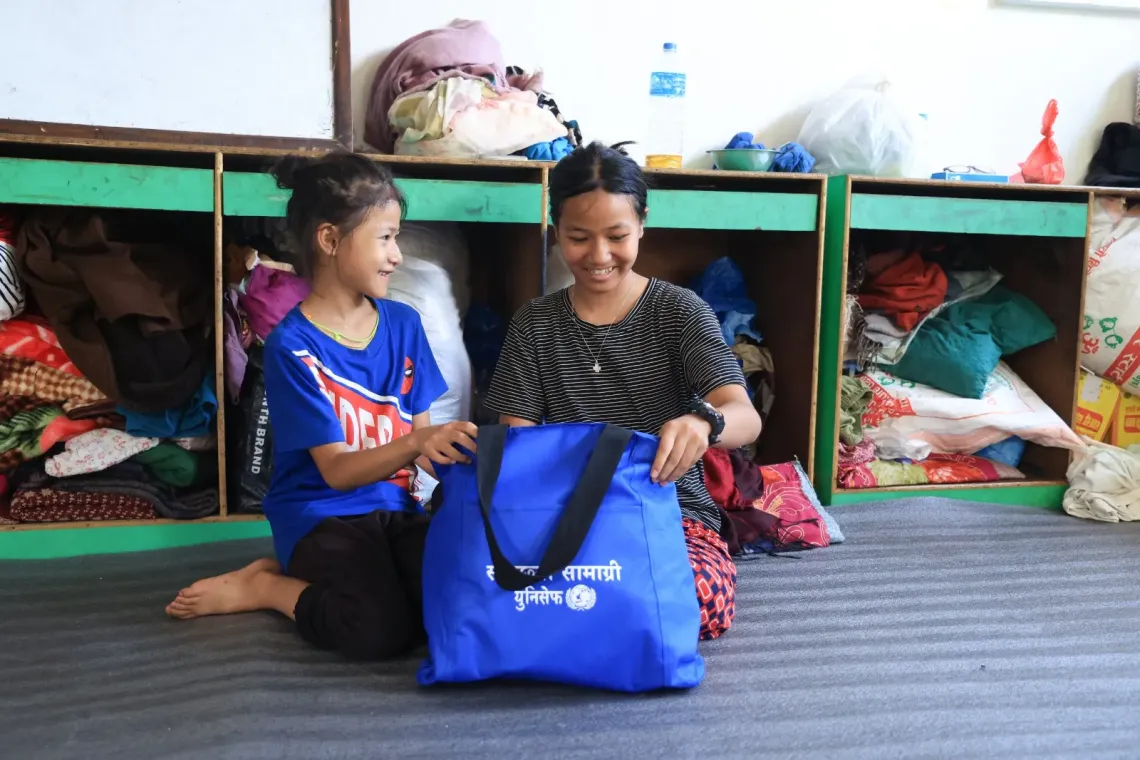
Distribution is accompanied by practical guidance. Government authorities, with support from UNICEF and partners, are demonstrating how to use water treatment products and sharing information on safe water handling and hygiene through community networks, mobile messages, radio and social media. UNICEF is also supporting government-led disease surveillance, water-quality monitoring and outbreak-prevention work.
As access improves, humanitarian teams including UNICEF will be able to reach more communities and the full scale of the needs will become clearer. The pre-positioned supplies provided a critical head start, but they will not be enough for the growing response. More resources are urgently needed so UNICEF can continue supporting government efforts to replenish stocks, deliver additional supplies, provide emergency water, sanitation and handwashing services, and repair damaged systems.
“The needs are enormous, and much more support is urgently needed to reach every child and family affected by the floods,” said Nidal.