Vaccines on the move
As flood-damaged roads cut off communities, UNICEF is supporting the Government-led oral cholera vaccination campaign to get vaccines safely to families at risk
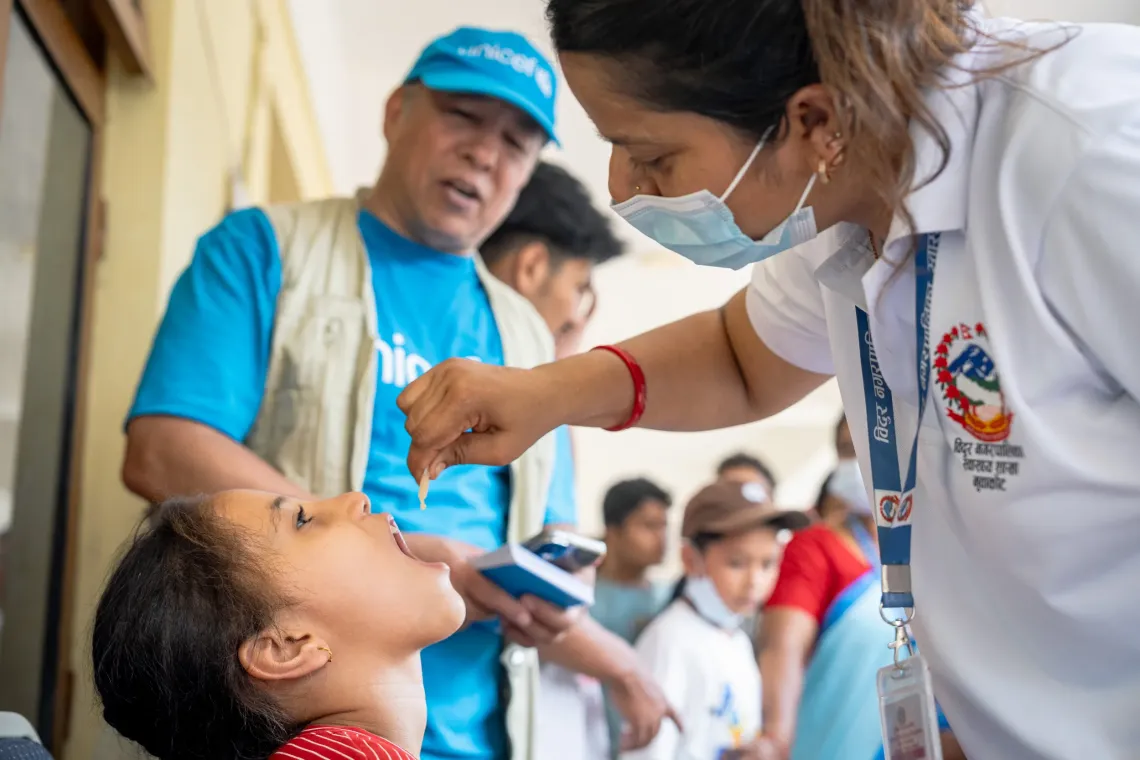
NUWAKOT, Nepal: In the flood-affected areas of Rasuwa and Nuwakot, getting essential vaccines to communities has become a challenge of navigating damaged roads, rivers and difficult terrain. For the Government of Nepal-led oral cholera vaccination campaign, vaccines are taking whatever safe route is possible, including across rivers by rope bridge and, in some areas, by drone.
For UNICEF cold chain specialist Hemraj Joshi, the journey is part of the work of making sure vaccines remain safe and effective until they reach the people who need them.

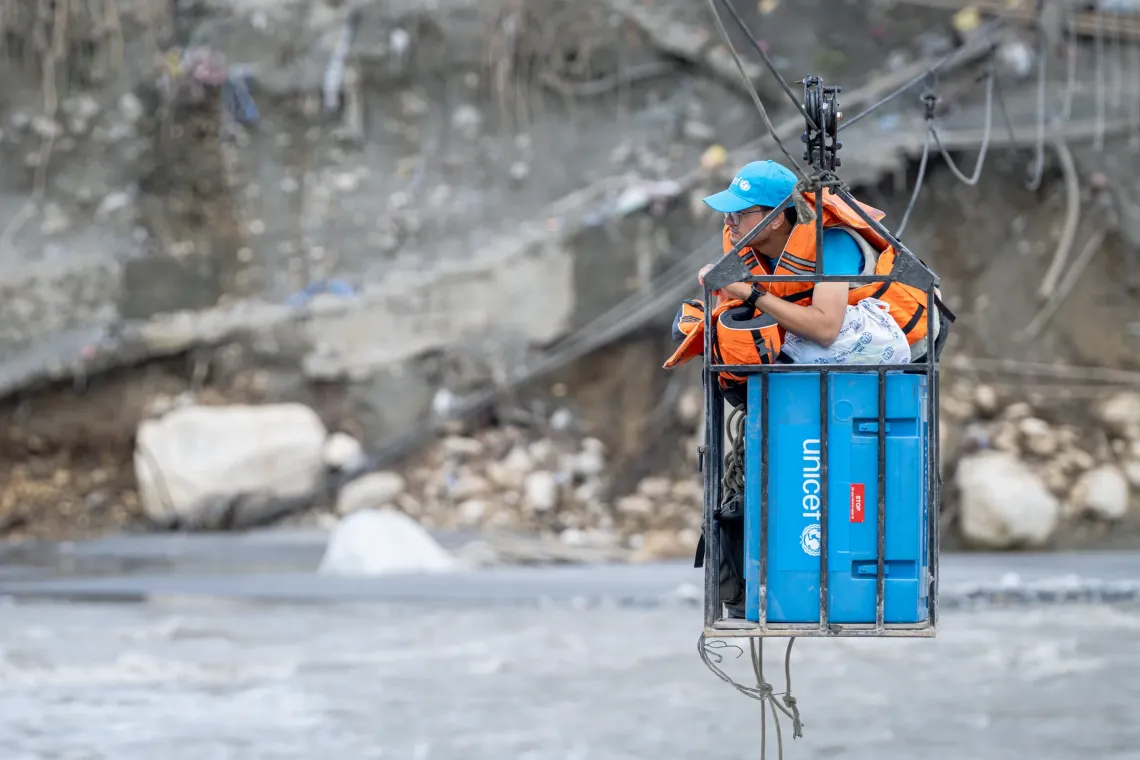


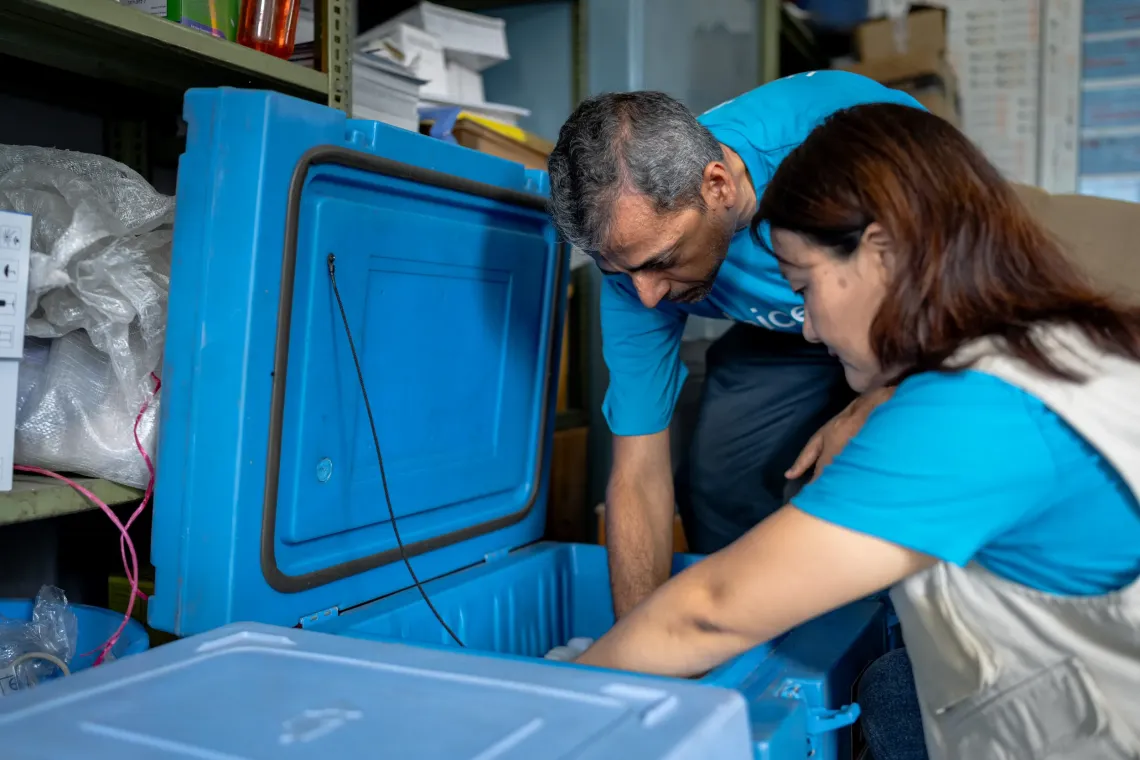
In one affected area, UNICEF-supported teams helped move oral cholera vaccines across a river using a tuïn, carefully protecting the supplies as they were carried from one side to the other. Elsewhere, with some roads still inaccessible, the Government has used drones to help deliver vaccines to hard-hit communities.
“In emergencies like this, every hour matters,” says Hemraj. “Our job is to make sure the vaccines remain safe, and that they reach the communities that need them as quickly as possible.”
The campaign is being carried out as a preparedness measure after the 26 August flash floods damaged water supply systems, sanitation facilities, health services and cold-chain infrastructure. The risk of waterborne disease has increased in areas where families have been displaced and essential services disrupted.


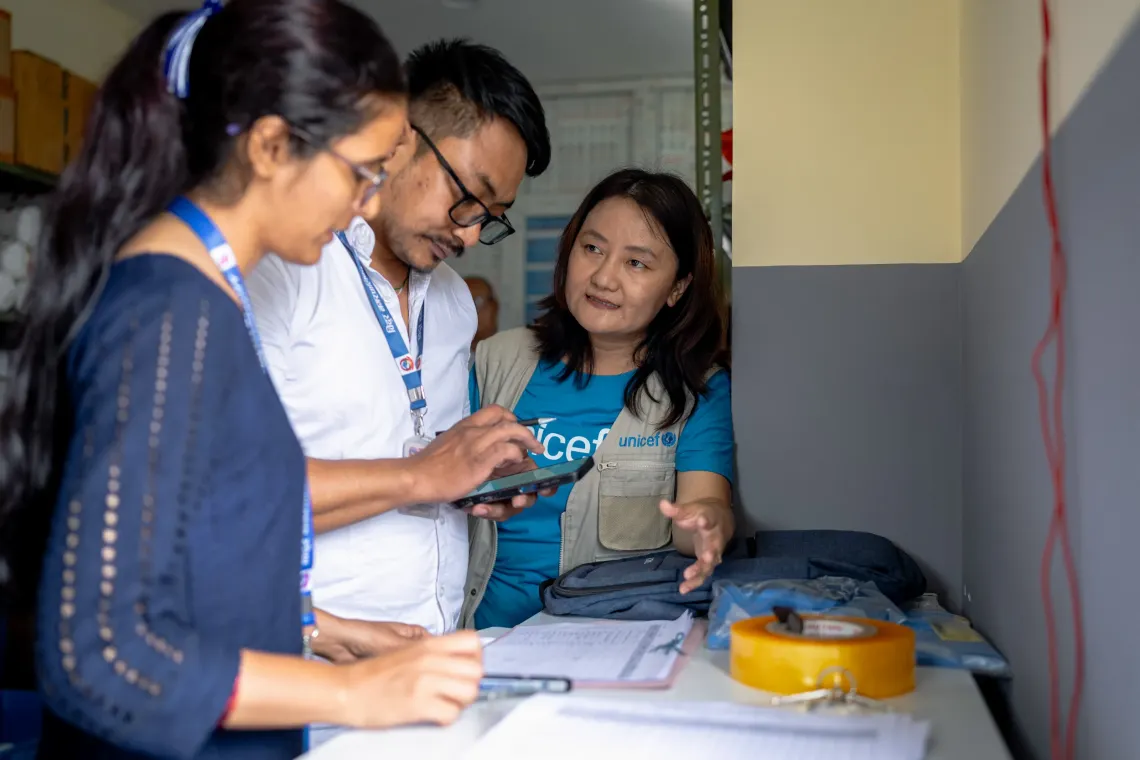
UNICEF has supported the transportation of 21,600 oral cholera vaccine doses to Rasuwa and 80,523 doses to Nuwakot, while also supporting vaccine availability, cold chain, logistics and coordination with government health teams and partners on the ground.
For communities still recovering from the floods, the campaign is one part of a wider effort to prevent disease before it spreads. Vaccination is being paired with safe water, sanitation, hygiene promotion, disease surveillance and support to health services — because protecting children and families after an emergency takes more than one intervention.
As vaccines make their way across rivers, damaged roads, difficult terrain and even through the air, the purpose is simple: to reach people before illness does.