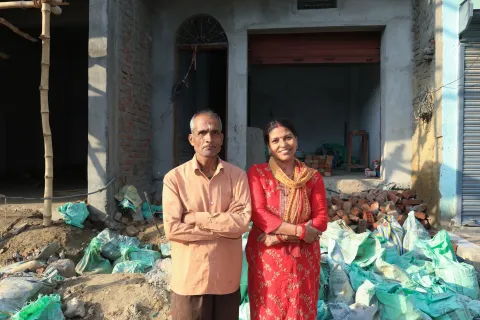
A small step, a big difference
How housing insurance, promoted as part of the SUPER project, has given one family in western Nepal more confidence in facing the future
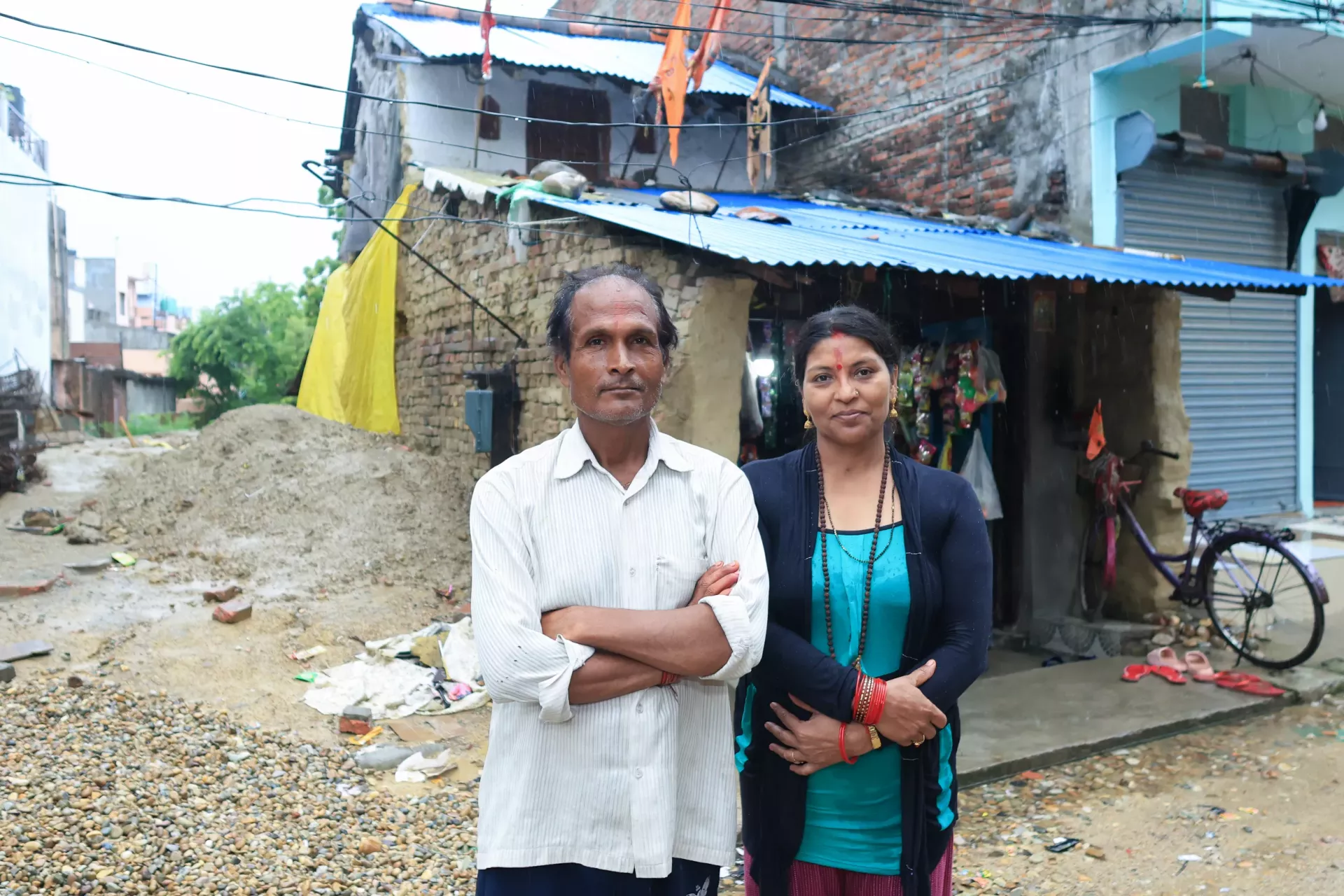
Banke, Nepal: Every year when the rains begin, Lila and her husband Uttam brace themselves. Their home in Nepalgunj Sub-Metropolitan City in Banke District in western Nepal — built generations ago from mud and brick — has always been vulnerable. Two years ago, one of the walls collapsed during heavy rains. This year, they've covered parts of the house with tarpaulin to try and keep the water out.
Earthquakes worry them too. So does fire, especially given how closely packed this inner city settlement is.
“No one would wish their home to fall,” Lila says. “Everyone needs somewhere to stay. And you do whatever you can to protect your home.”
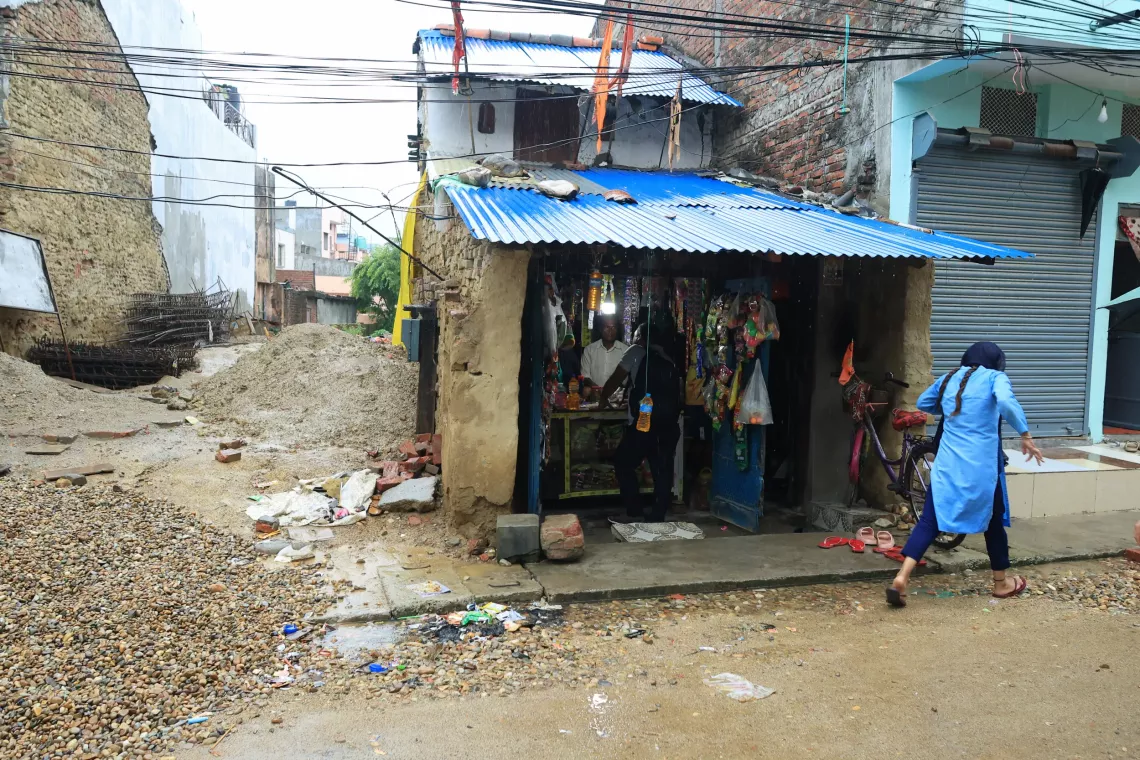
This sentiment was why when, not to long ago, the couple learned about a new housing insurance scheme through their local ward office, they had been immediately interested. Staff had visited them at home to explain how insurance could help families recover from disaster-related damage.
The idea clicked right away. “We don’t know what the future holds,” says Lila. “If nothing happens, that’s fine. But if something does, at least there’s a safety net — especially for our children.”
The multi-hazard insurance scheme is part of the Strengthening Urban Preparedness, Earthquake Preparedness and Response (SUPER) project — led by UNDP, UNICEF, UN Women, and Handicap International, thanks to support from the European Union. In Nepalgunj, the project partnered with the local government and an insurance company to roll out one of the country’s first household insurance programmes.
“The process was simple,” Lila says. “No hassle. It’s a good initiative.”

She now encourages others in her community to sign up, helping them see the long-term benefits. “I tell people: a few hundred rupees a year is a small price for peace of mind.”
For families like Lila’s, this small investment brings more than just financial protection — it brings security for their children’s future. It’s also about looking out for one another in the community.
“The money we pay can help other families too,” she says. “If the whole community took up this facility, it would prevent a lot of suffering.”