Safe water for dignity
In a marginalized community in western Nepal, the Girls Matter project has provided access to safe water and toilets, restoring a sense of dignity to locals

Dailekh, Nepal: For Radha Badi, the challenges of living in this small village in Tallo Dhungeshwor in Dullu Municipality in Dailekh District in western Nepal have continued to pile up over the years.

Foremost is the fact that Radha and her family, like many from the historically marginalized Badi community in Nepal, have long suffered financial hardships.
This was made worse by the absence of a reliable water source nearby, forcing community members to make long treks daily to fetch water for their drinking and household needs. Radha, a mother of four, would have to strap her youngest to her back to make that journey.
“It was a constant struggle,” the 31-year-old says.
To add to their difficulties, the area is also vulnerable to flooding. Radha recalls having to evacuate her home in 2014 when the swollen river had entered the village and driven residents out.
Until the waters receded, she and her neighbours had consumed untreated water from the river. The flood also damaged sanitation facilities, and without toilets to use, the community also fell to open defecation, worsening the sanitation situation and heightening the risk of water-borne illness.
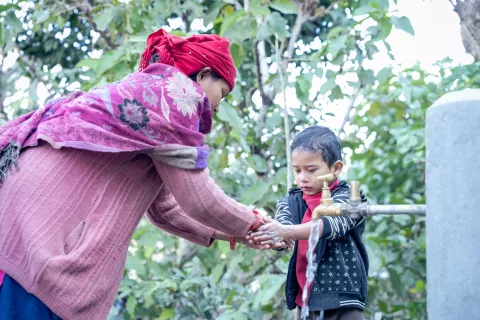
All this would change after the arrival of the “one house, one tap” initiative in the village, introduced with the support of the Girls Matter project.
Under this, UNICEF, in partnership with SOSEC Nepal and the Integrated Water Resources Management Project, and in collaboration with the Dullu Municipality, was able to bring safe water to 106 families, including Radha’s.
The initiative, completed in July 2024, comprised the establishment of a comprehensive water supply system wherein a reservoir tank was built to collect water from a stable source, to be then piped to individual homes.
It was also equipped with a fully functional auto-dosing chlorination system to ensure safe water. Community leadership and ownership have played a big role in the project’s success, exemplified by the formation of a water users’ committee made up entirely of community members.

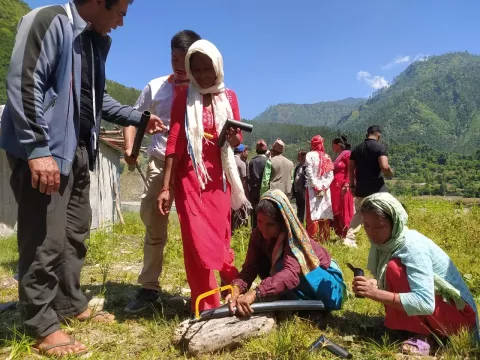
This committee would be in charge of monitoring of water quality and source protection. To support these efforts, the project has also trained village maintenance workers to undertake regular repair and maintenance of the water supply system.

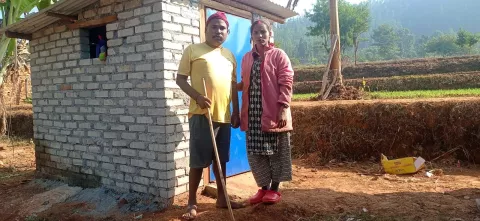
In addition, 15 new toilets have also been constructed in the village, much to the relief of families who have been struggling with limited facilities. Furthermore, awareness programmes on water, sanitation and hygiene have also been conducted, encompassing household water purification techniques and the health hazards of open defecation, among other topics.
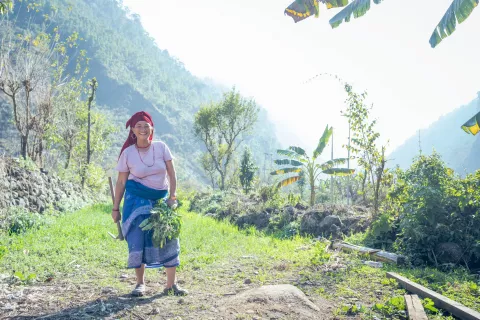
Radha says she is much more hopeful about the future, now that she is freed from the burdens of fetching water from a distance and is enjoying easier access to toilets.
“I have more time to tend to my children, to my home and garden,” she says.


Others in the community share her optimism. Hira Badi, a member of the water users’ committee, notes that the availability of toilets and water has been a significant step forward, especially for the Badi community.
“We couldn’t afford to build our own toilets... the few common toilets we had were not enough for everyone, so we had to resort to open defecation,” he says. “That has changed now.”
Devisara Badi, a local resident and ward member in Dullu Municipality Ward 1, agrees. “We’ve come a long way from drinking water straight from the river... this support has been invaluable for us.”