Restoring dignity
In western Nepal, the Joint Recovery Action Plan (JRAP) is helping marginalized families, including individuals living with disabilities, take steps toward living with dignity

Rukum West, Nepal: Krishna BK has been unable to move the lower part of his body for the past five years. “I depend on my family for everything,” he says, sharing how his physical disability limits his independence.
Krishna lives with his wife, Moti, and their two young sons, in Chaurjahari Municipality in Rukum West District in Nepal’s western hills. Lack of a steady income means the family has long struggled financially. “The food we grow on our small piece of land doesn’t even last a month,” explains Krishna.
“We rely on my disability allowance and help from relatives just to survive.”
For years, sanitation was another constant struggle. The family had no toilet and had to resort to defecating in nearby forests or streams.
“It was especially difficult at night,” Moti says. “I had to help Krishna, using a container to collect waste and then disposing of it in the forest. It was embarrassing and unsafe, with the fear of wild animals and judgment from neighbors always present.”
The 2023 earthquake exacerbated these challenges, causing widespread destruction across Rukum West. The quake damaged homes, public infrastructure and water systems, leaving many families without access to basic necessities.
For Krishna’s family, the earthquake only worsened their already precarious situation.
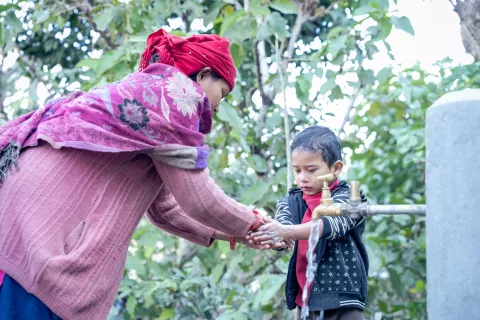
Things changed, however, when the Joint Recovery Action Plan (JRAP) – through its local partner organization Social Awareness Centre Nepal – reached out to Krishna with the offer to build a new disability-friendly toilet in their home. The new toilet would include a septic tank and a handwashing facility, built with Krishna’s needs in mind.
JRAP was launched in 2024 under Nepal’s National Disaster Risk Reduction and Management Authority (NDRRMA) with financial support from the UK’s Foreign, Commonwealth, and Development Office (FCDO), and implemented by UNICEF, IOM, UNFPA, and WFP under the leadership of the UN Resident Coordinator’s Office (RCO). The objective? To address the needs of disaster-affected communities and build resilience.

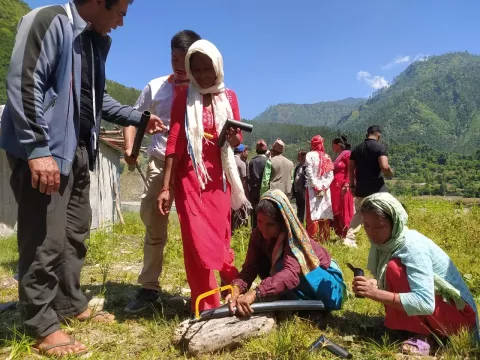
The construction of toilets for marginalized families, many of whom lack the means to build toilets themselves, is a crucial part of JRAP’s efforts to restore dignity and improve living conditions.
Krishna says the new toilet has made a big difference in their lives. “I am beyond happy,” he says. “I feel like this toilet has restored our dignity and self-respect.”