One brick at a time
Jashante’s story is a testament to how initiatives under JRAP, designed to equip communities with the skills to rebuild after a disaster, can create a ripple effect of recovery and opportunity

Rukum West, Nepal: These days, Jashante Kami is a familiar figure in his community. Tools in hand, he is often found hard at work reconstructing homes, schools and water systems damaged by the earthquake that struck western Nepal in November 2023, including Rukum West, where he lives.
“While part of my earnings as a mason supports my family’s daily needs, the rest is reinvested in restoring essential services,” he says.

However, the journey to this point was not without its challenges. Coming from the historically marginalized Dalit community, Jashante has faced social and economic hardships throughout his life. The 2023 earthquake added another layer of devastation. Striking late at night, it destroyed homes, schools and water systems across the region, leaving families grappling with loss and uncertainty.
In the aftermath, Jashante’s family faced an uphill battle. Not only had they lost their home, but they also struggled with food insecurity and the lack of basic services, such as clean water and sanitation. As the community sought to rebuild, a skilled mason training programme organized through the Joint Recovery Action Plan (JRAP) and facilitated locally by partner organization HRDC Jajarkot presented Jashante with an opportunity to turn things around.
Launched in 2024, JRAP is an initiative of Nepal’s National Disaster Risk Reduction and Management Authority (NDRRMA), financially supported by the UK’s Foreign, Commonwealth, and Development Office (FCDO). It is implemented by UNICEF, IOM, UNFPA, and WFP under the leadership of the UN Resident Coordinator’s Office. The programme addresses the needs of disaster-affected communities, focusing on resilience, recovery and sustainable development.
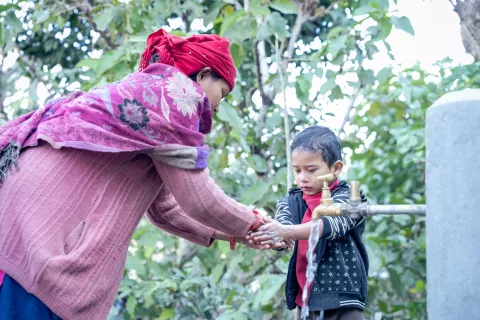
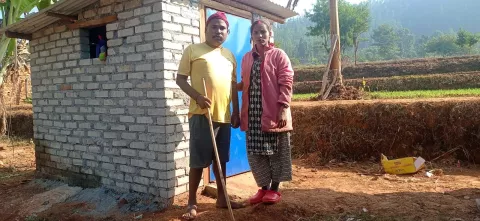
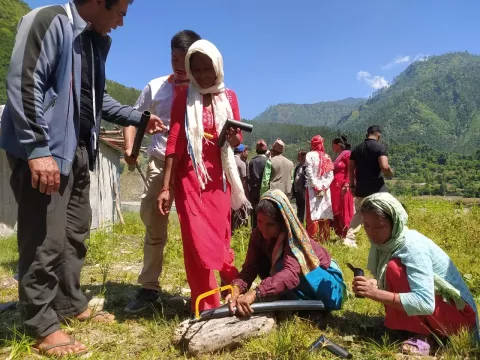
The three-day mason training that Jashante participated in combined theoretical lessons with hands-on practice, focusing on constructing earthquake-resistant structures and restoring critical WASH infrastructure, such as water systems, homes, institutional latrines and handwashing facilities at both school and community levels. Jashante says he found it all eye-opening.
"The training gave me a real sense of how important water, sanitation and hygiene really are," he explains. "It also made me see how I could play a role in the rehabilitation and reconstruction of my community after the earthquake."

Since completing the programme, Jashante has been putting his knowledge into practice, repairing damaged infrastructure and promoting healthier hygiene practices. His efforts have improved the lives of many in his community while also providing his family with stability and hope for the future.
“I am proud to be part of this effort," Jashante concludes simply.