The life-saving power of a healthy diet
In far-western Nepal, a young mother learns to thwart local superstition and focus instead on proper nutrition and cleanliness to keep her child healthy
Doti, Nepal: Blindly following traditional beliefs can risk inviting dangerous consequences. That was the experience of Khema Devi Bhul, a resident of Shikhar Municipality of Doti District in far-west Nepal.
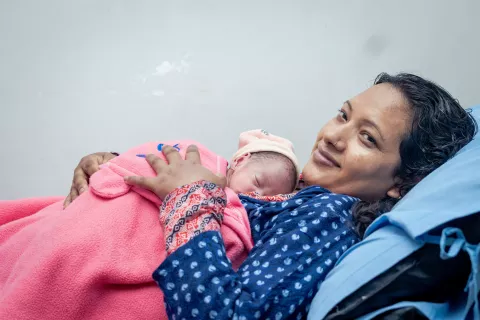
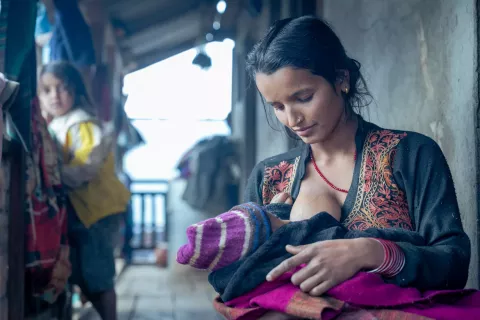
Khema had given birth to a little girl - Samikshya - at the Banlekh Health Post. The child, who weighed three kilos at birth, was breastfed immediately, and when she turned six months old, given solid food.

However, burdened by household chores like collecting firewood for the household and grass for the cattle, Khema struggled to give proper care to the child, particularly in maintaining hygiene and ensuring a nutritious diet.
As a result of which Samikshya soon developed a skin infection on her head. Seeing this, Khema’s neighbours and community members were full of advice for her based on deep-rooted traditional beliefs and superstitions; they warned her, for example, against giving the child a bath or taking her to the hospital.
The more Khema took their advice, the further Samikshya’s condition worsened. Thankfully, some of the local female community health volunteers or FCHVs came into contact with the family and identified Samikshya as being severe acutely malnourished. They said the skin infection was due to lack of cleanliness and nutritious food. They advised Khema to quickly visit the nearest health post, a three-hour walk from the family’s home.
Determined to seek treatment for her child, Khema made the trek to the health facility. There, the health workers gave her some medication for the skin infection and advised her to wash the child’s head three times a day. She was also given packets of ready-to-use-therapeutic food (RUTF) packets to help with Samikshya’s malnutrition.
Khema followed the healthworkers’ advice, giving Samikshyathe RUTF and other nutritious food as well as keeping her clean and washed. Soon, the child gained weight and the skin infection began to heal.

“Initially, she was seven and half kilos, and then she gained two kilos, so now she weighs a healthy nine kilos,” Khema says with a smile on her face. “I am very thankful to those who provided the RUTF packets.”
She is also relieved that she met with the FCHVs in time to seek treatment for her child and thereby managed to avoid the worst consequences of following superstition.
“It was my mistake to have listened to what others were saying, as it could’ve posed a huge threat to my child’s life," Khema says.
Thanks to interventions through the Government of Nepal’s Multi-Sector Nutrition Plan (MSNP), Khema is now among those mothers around the country who have come to truly understand the importance of quality and diversity in a child’s diet and the impact of cleanliness. As such, Khema had met with representatives of the Government, the European Union and UNICEF during a recent visit, and expressed her gratitude to the support provided through the MSNP.
Such support is particularly crucial in the country’s remote far-west, where lack of awareness regarding proper diets and hygiene combined with poverty, has deeply impacted children’s health, according to Khageshwor Prasad Bohora, health official at the Banlekh Health. He explains that even though people do grow crops in their gardens, they do not consume these themselves, rather focus on selling them.


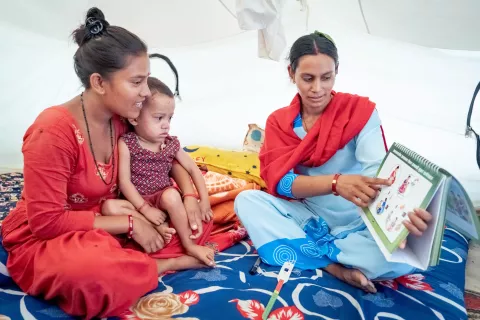
However, of late, with increased flow of information through various mediums – including the female community health volunteers – engaged by the MSNP, there is more understanding about what constitutes healthy food, and the role it plays in a child’s overall health. More people in Khema’s village, for instance, are now beginning to consume the food they grow, only selling what is left over.
Since 2013, UNICEF has been supporting the Government of Nepal in implementing MSNP, generously funded by the European Union, to reduce the number of malnourished children in Nepal by promoting healthy, nutritious, and diversified diets for adolescents, pregnant women, breastfeeding mothers, infants, and young children.