Holding on to childhood
After narrowly surviving the flood, 14-year-old Swostik is holding on to his family, to football and his dream of one day becoming a professional player
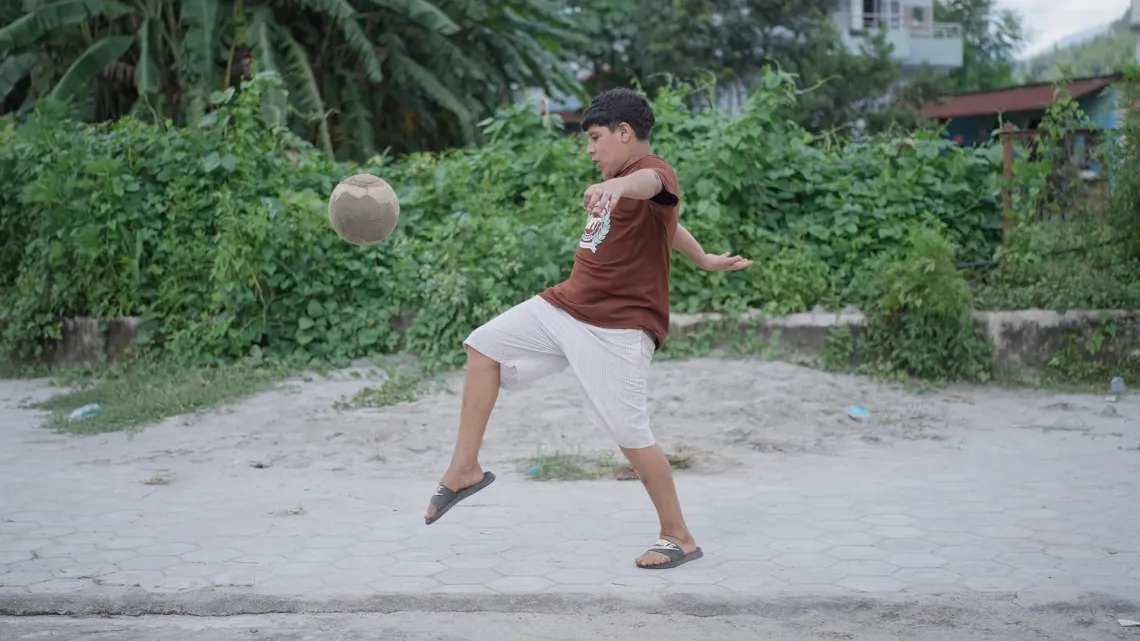
Nuwakot, Nepal: Before the flood, much of Swostik Paudel’s free time revolved around football. The 14-year-old Grade 9 student played with friends whenever he could and dreamed of becoming a footballer, inspired by France and Kylian Mbappé.
“Before all this, I used to spend most of my time in school and hang out with friends when I was free,” he says. “Mostly we would play football. That’s how we passed time.”
On the morning of the flood, however, an ordinary school day became a fight for survival. Swostik’s parents had left for Gosainkunda after his mother prepared food for him and his younger sister. Once he had eaten, cleaned up and dressed for school, he set out with a young boy from the neighbourhood.
“We were almost at school when we saw people on the road looking at the river,” Swostik recalls. “Suddenly, we saw a huge cloud of dust coming towards us. We all started to run, my schoolmates and I.”
Swostik and the boy tried to reach higher ground. As other children crossed a small canal, Swostik let them go ahead. When it was his turn, the floodwaters pulled him in.
“I was swept away again; the force was enormous,” he says. “I remember being pulled high up, and then dropped down as the water fell.” He hit his head on a rock and was pinned beneath a fallen tree. “I thought I was dead at this point.”
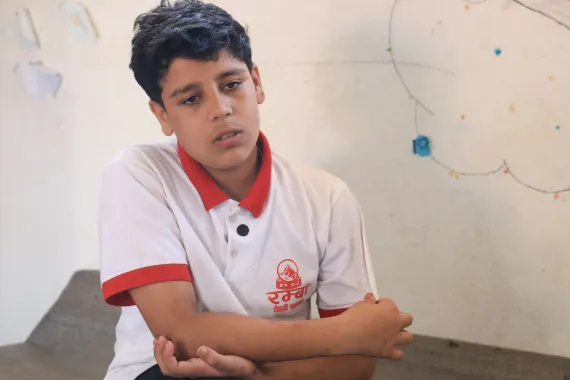
Another wave carried him away. Somehow, he landed in a field below his school. “I held on to a wall, to plants, whatever I could find,” he says. “I was finally able to stand up and got out of the water.” He struggled through the mud, climbed into the jungle with villagers and later found his sister there.
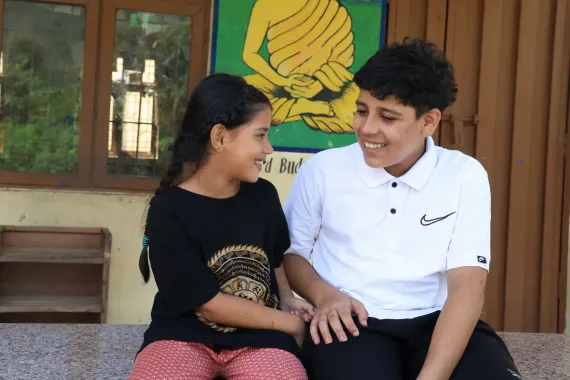
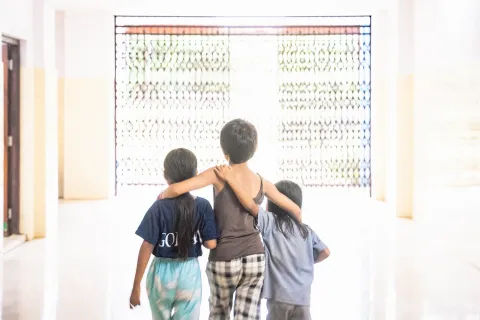
The siblings spent the night in a house on higher ground, separated from their parents.
“My sister was crying constantly for my parents,” Swostik says. “She cried herself to sleep.” The family was reunited the next morning. Later, they learned that the young boy who had been walking with Swostik had died in the flood.
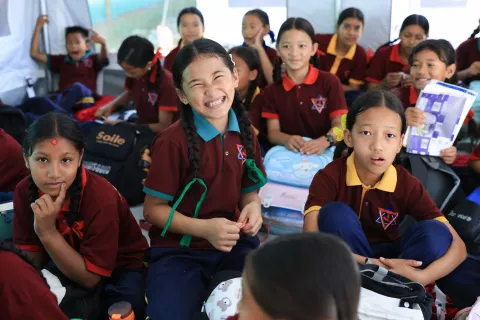
Swostik, his sister and their parents are now staying in a local school with other displaced families.
Their home and belongings are gone.
His sister was injured and could not walk, while Swostik was bruised and hurt.

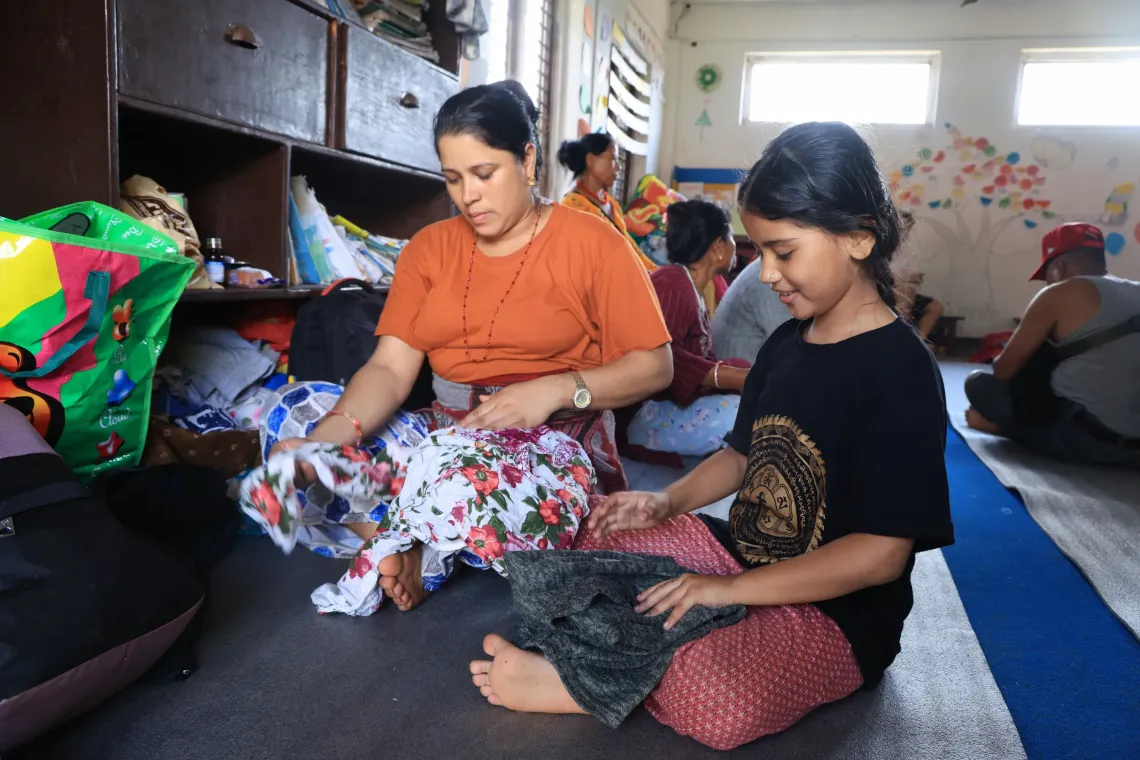

“When we got near our house, we saw that everything was gone,” says his mother, Ashmita. Unable to reach the children, she eventually heard from a villager who was taking them uphill. “I was so relieved hearing that.”
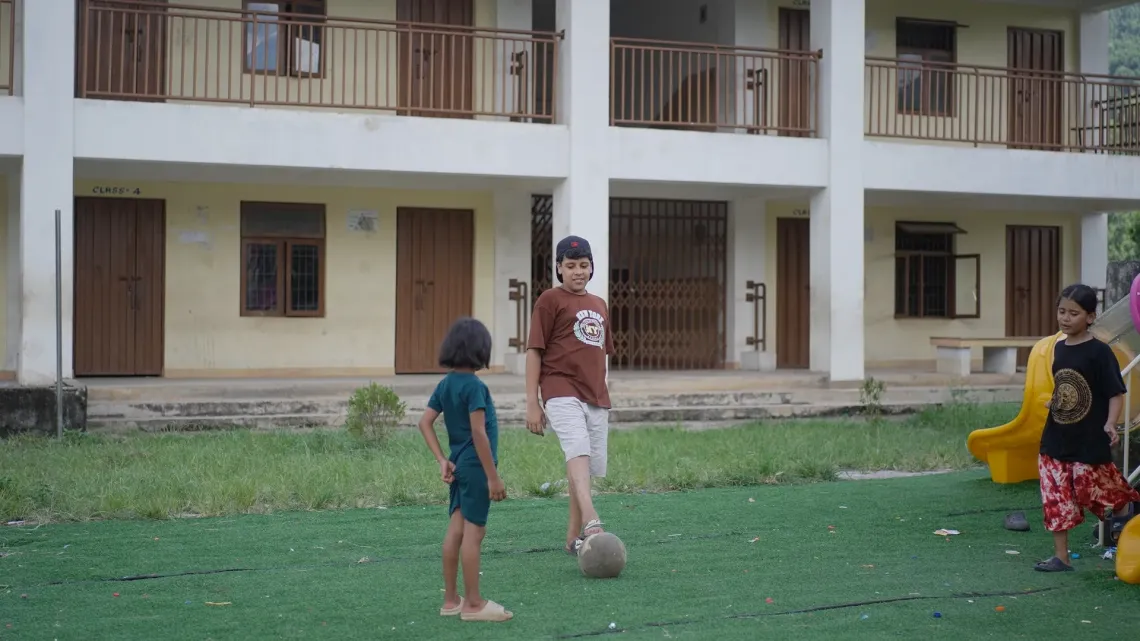
At the shelter, football offers Swostik a small connection to the life he knew before. “Some children have brought a football here,” he says. “Even though it’s punctured, we’ve been passing it around. Some friends have also been playing matches.”
The game gives older children something familiar to do, but Swostik is also worried about falling behind in class. His school is among the many affected along the river corridor. Asmita shares his concern. “My son is in Grade 9; he’ll have to give the Grade 10 exams next year,” she says. “If nothing else, I wish we could let him go back to school soon.”
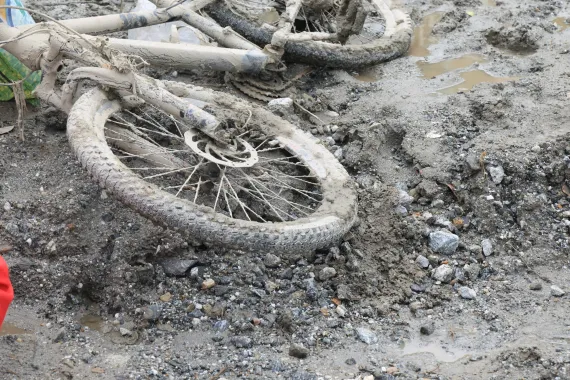
Estimates show that at least 19 schools have been damaged by the floods, including eight completely and eight partially destroyed, while assessments continue for three others.
A further 80 schools within one kilometre of the river may also have been affected.
Many schools have lost textbooks, furniture, computers, recreational materials and other essential supplies, while damaged classrooms have left children without safe places to learn.
More than 10,000 school-age children need immediate psychosocial support and access to safe, protective learning spaces so they can cope with trauma, continue learning and regain a sense of routine.
UNICEF is working with the Government of Nepal and partners to assess damage and finalize the education response plan. Pre-positioned supplies are being dispatched, and efforts are underway to establish temporary learning spaces with appropriate water, sanitation and hygiene facilities. Immediate priorities also include replacing essential learning materials and providing psychosocial support to affected children and teachers.
As recovery continues, UNICEF will support the rehabilitation and reconstruction of damaged learning facilities using climate-resilient and disaster-informed approaches, helping schools better withstand future shocks.
For Swostik, returning to a safe classroom would mean more than catching up on lessons. It would restore time with friends, a familiar daily routine and space to keep imagining the future.
Amid the uncertainty, he remains clear about what he wants: “I want to be a footballer when I grow up.”