Laura Leads the Way Against Child Marriage
“I don’t see it as a limitation,” Laura says. “I was born like this.”

Nampula Province, August 2026 - Every time Laura travels to a community dialogue on child marriage, she must hand-crank her tricycle across the deep sand of her community in Monapo District, Nampula Province.
The journey is slow, but missing the meeting is not an option.
Laura has a physical disability and gets around on a hand-cranked tricycle. In her community, she is known first as a mother, a farmer and a local leader.
“I don’t see it as a limitation,” Laura says. “I was born like this.”
At 30, Laura is raising four children as a single mother. She farms a small field to feed them and serves as a family head, representing 20 households in her community. In this role, she helps share information, bring families together and mobilize people for community meetings on issues affecting children and families.
For Laura, the journey to the dialogues is not only about attending a meeting. It is about protecting the future she wants for her children.
Laura left school in Grade 2. Her eldest daughter is already several grades further than that. That difference matters deeply to her.
“I don’t want my daughters thinking they have to marry someone so they can support me,” Laura says. “I feed them with what I grow from my own small field. I don’t want that thinking in their heads. I want them to go to school, to study, to be like anybody else.”
Nearly half of women aged 20 to 24 in Mozambique, 48.4 per cent, were married or in union before age 18, according to the 2022 to 2023 Demographic and Health Survey. Poverty, gender inequality, limited access to education and social expectations all contribute to the practice.
For mothers like Laura, these pressures are not abstract. They are part of the daily choices families face when food, school costs and household needs compete for attention.
That is why Laura makes the journey to the community dialogues.
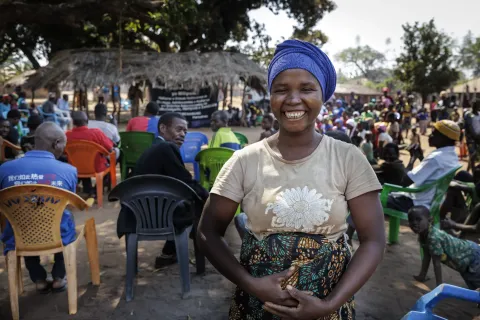
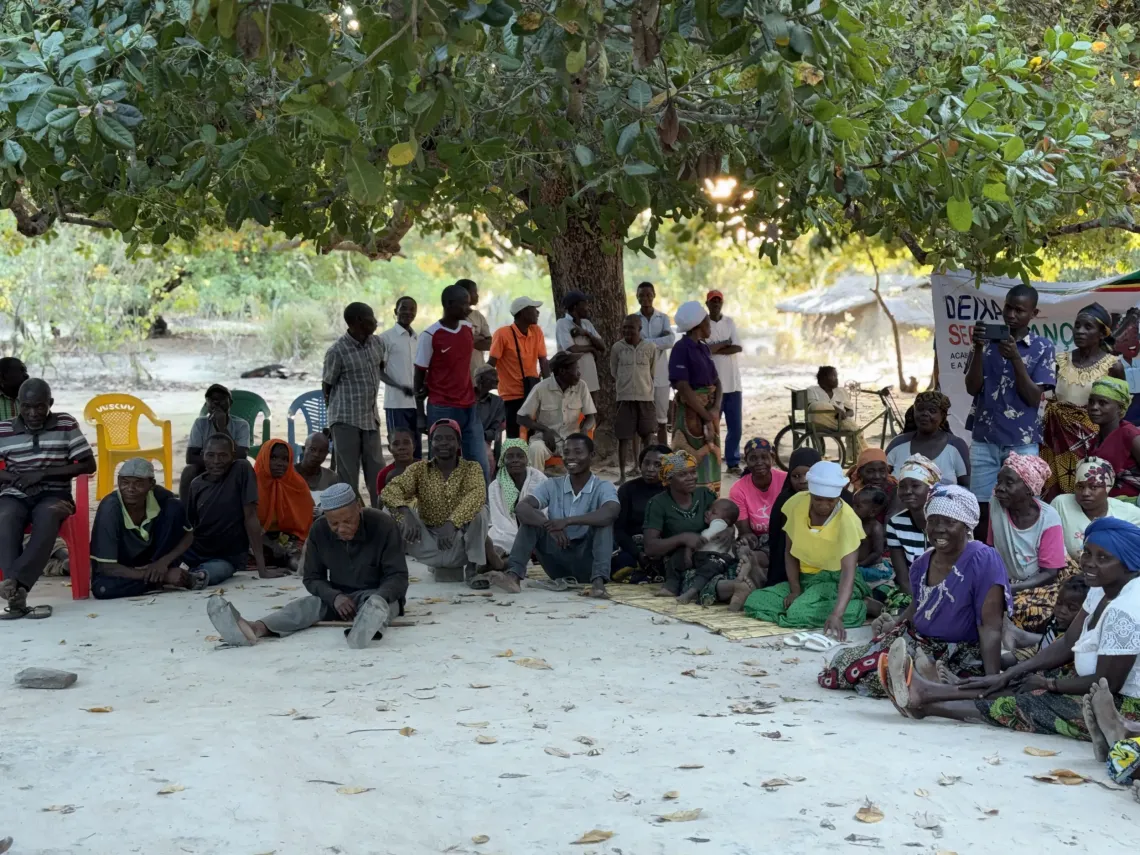
Held under the shade of mango trees, the dialogues bring together parents, community leaders and young people to discuss child marriage, violence against children and the importance of keeping girls in school. A banner at the meeting reads: “Let me be a child.”
During the discussions, families talk openly about the risks girls face, the value of education and the role adults can play in protecting children. For Laura, the sessions give her information she can take back home and share with others.
“I come because I need to learn what is being discussed, so I can protect my children,” she says. “I’m raising them by myself. I don’t have anyone else to support me. It is also a chance to build a network with other people, people who can support my children too, with school and with what they need at home.”
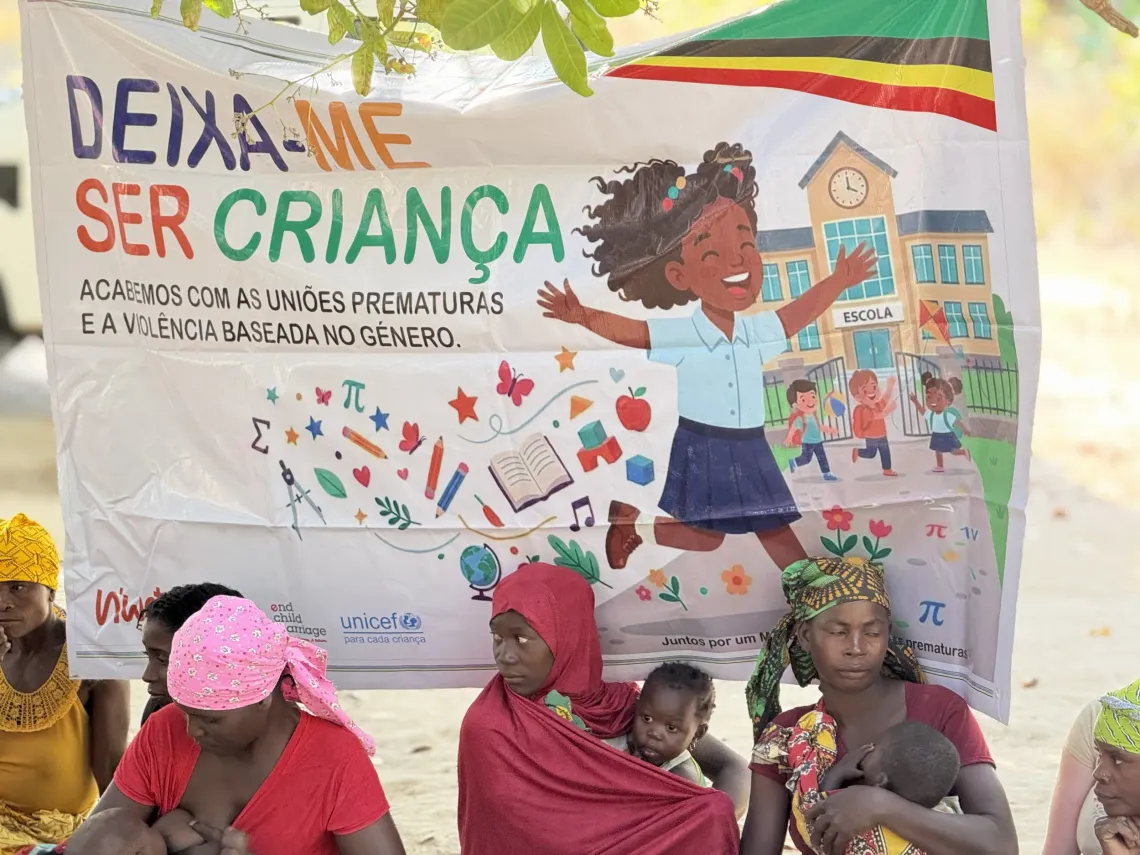
UNICEF supports these community dialogues as part of wider efforts to prevent child marriage and strengthen community protection for children. The conversations help communities identify risks, discuss harmful practices and agree on ways to protect children. The dialogues are a prevention and community protection activity; they do not provide direct material or financial assistance to participating families.
For Laura, the change begins at home. She speaks to her children about school and encourages her daughters to continue their education. She wants them to grow with opportunities she did not have.
The barriers she meets on the way are practical, not personal: unpaved sand tracks, long distances between homesteads and a tricycle that is overdue for repair.
When the meeting ends, Laura begins the journey back across the same sandy paths.
“I want them to go to school,” she says. “I want them to study.”
The community dialogues attended by Laura were supported by the UNICEF-UNFPA Global Programme to End Child Marriage, funded by the Governments of Canada, Italy, the Netherlands, Norway and the United Kingdom, and Zonta International.