Hope comes closer for children in Nonge
UNICEF, with support from EU ECHO and ESA HF, continues to assist the Government of Mozambique in expanding nutrition services in Cabo Delgado.
- Português
- English
Mueda, Cabo Delgado - For families in Nonge, a community in Mueda district, reaching health care can mean a long and tiring journey. The nearest health facility is almost two hours away, a distance that can delay care for children who need urgent support.
Once a month, that distance becomes shorter when a mobile health brigade arrives in the community, bringing essential services closer to children and families.
I brought my children here because the hospital is far away. It takes almost two hours to get there. Here, it is close to home, and my daughters can receive the treatment they need
A mother's determination
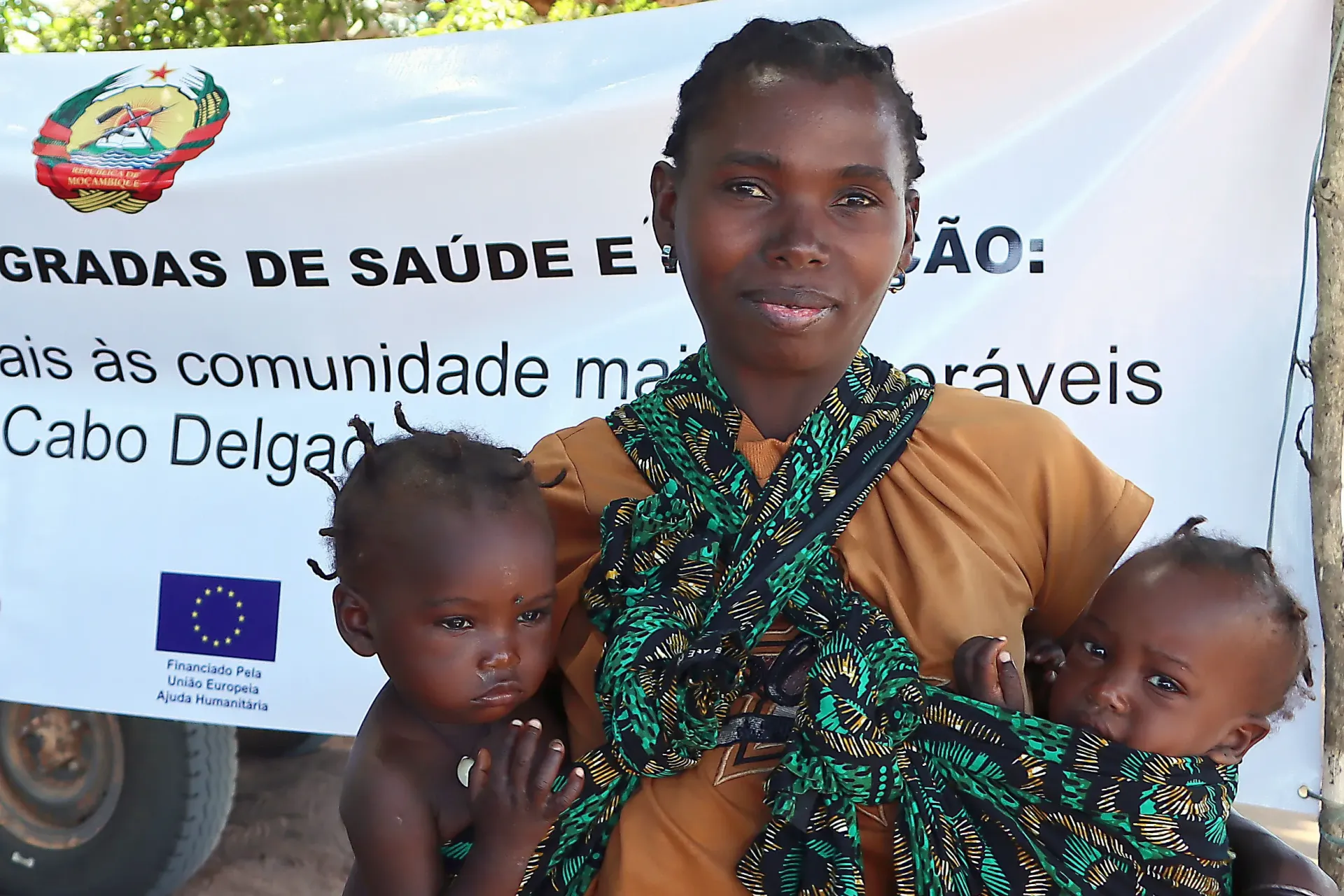
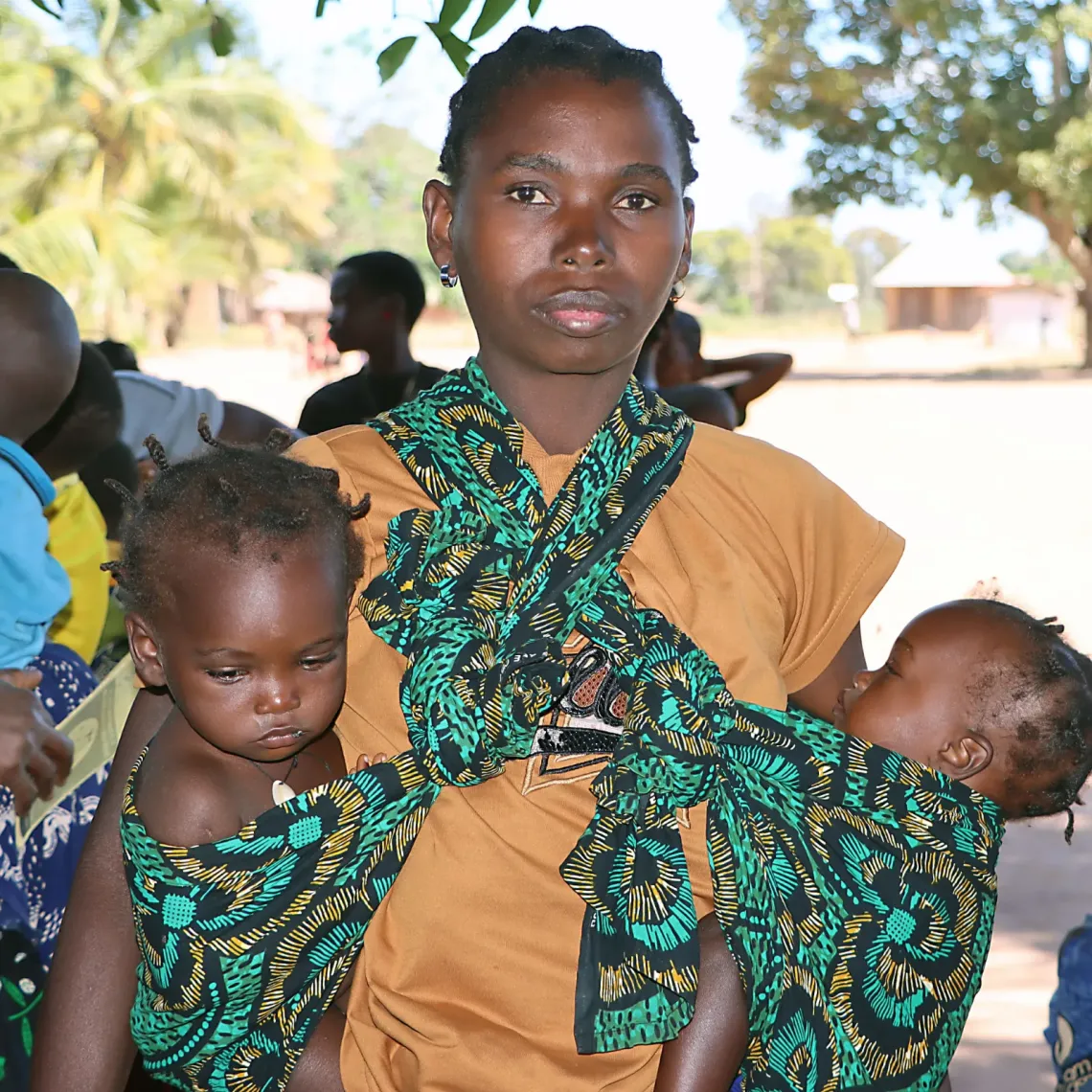
Among the mothers waiting for the mobile brigade is Flora António, 32, who has brought her twin daughters, Martina and Marquinha, aged 1 year and 3 months.
Two months ago, both girls were diagnosed with severe acute malnutrition. For Flora, the diagnosis was frightening, but it also marked the beginning of treatment and support.
"I brought them here because the hospital is far away. It takes almost two hours to get there. Here, it is close to home, and my daughters can receive the treatment they need," says Flora.
Since then, the mobile brigade has become an essential part of the family's recovery journey. Marquinha has started to regain weight and her appetite has returned. Martina still needs close care, but Flora remains hopeful and determined.
"I want to see my daughter well and at a good weight like her twin sister," she says.
Treatment close to home
During each visit, health workers screen children for malnutrition, provide nutrition counselling, monitor children already in treatment and offer immediate support when needed.
For Martina, that support includes ready-to-use therapeutic food, known as RUTF. The small sachets are used to treat severe acute malnutrition and can help children recover when taken correctly and consistently.
"I know that this 'chocolate' will help my daughter. I will also follow the advice I received here so I can feed her better at home," Flora says.
For families like Flora's, the mobile brigades do more than provide health services. They reduce the time and cost of seeking care, help identify children at risk earlier and support mothers and caregivers with practical guidance.
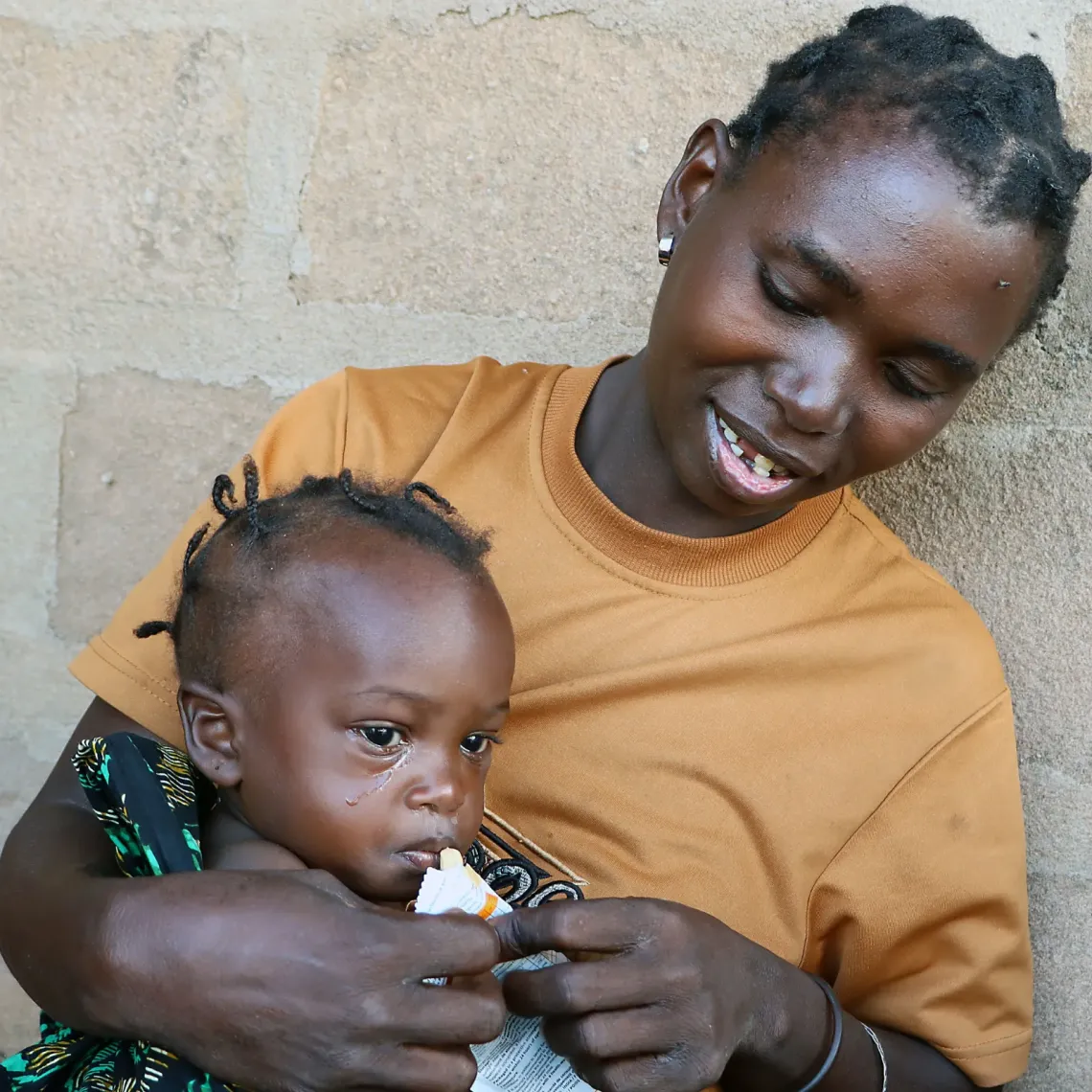
I know that this 'chocolate' (RUTF) will help my daughter. I will also follow the advice I received here so I can feed her better at home.
Reaching children who need support
UNICEF is supporting mobile health brigades in Cabo Delgado in partnership with the Government of Mozambique, with the generous support of the European Union Civil Protection and Humanitarian Aid Operations (ECHO) and the Mozambique Humanitarian Fund (MOZ HF).
This support helps expand mobile brigades, strengthen early screening for malnutrition and ensure that children at risk receive timely treatment.
In places like Nonge, where distance can stand between a child and the care they need, bringing services closer can make a life-changing difference.
For Flora, the change is clear. She no longer has to choose between distance and care. Today, she has support close to home. Above all, she has hope for her daughters' recovery.