A father’s journey to keep his youngest child healthy
The PIN programme is implemented with support from the Government of Germany through KfW Development Bank.
Mihiriri, Nampula - High above the Indian Ocean, in the coastal community of Mihiriri, families can see large container ships passing in the distance on their way to Nacala port. Behind them are fields of cassava. Ahead is the sea. During the rainy season, the roads to this isolated part of Memba District become so difficult that the quickest way to Nacala city is often by boat.
For many parents, taking a child to a health facility means spending a full day away from their fields and from caring for the rest of the family. That is why the monthly visit of the Integrated Nutrition Package programme, known as PIN, is so important.
There is no clinic building in Mihiriri. Instead, community health workers create a temporary outreach point with a table, chairs, weighing equipment and children’s health cards. One by one, they monitor each child’s growth, check whether vaccines are due, and speak with caregivers about the practices that help young children stay healthy and well nourished.
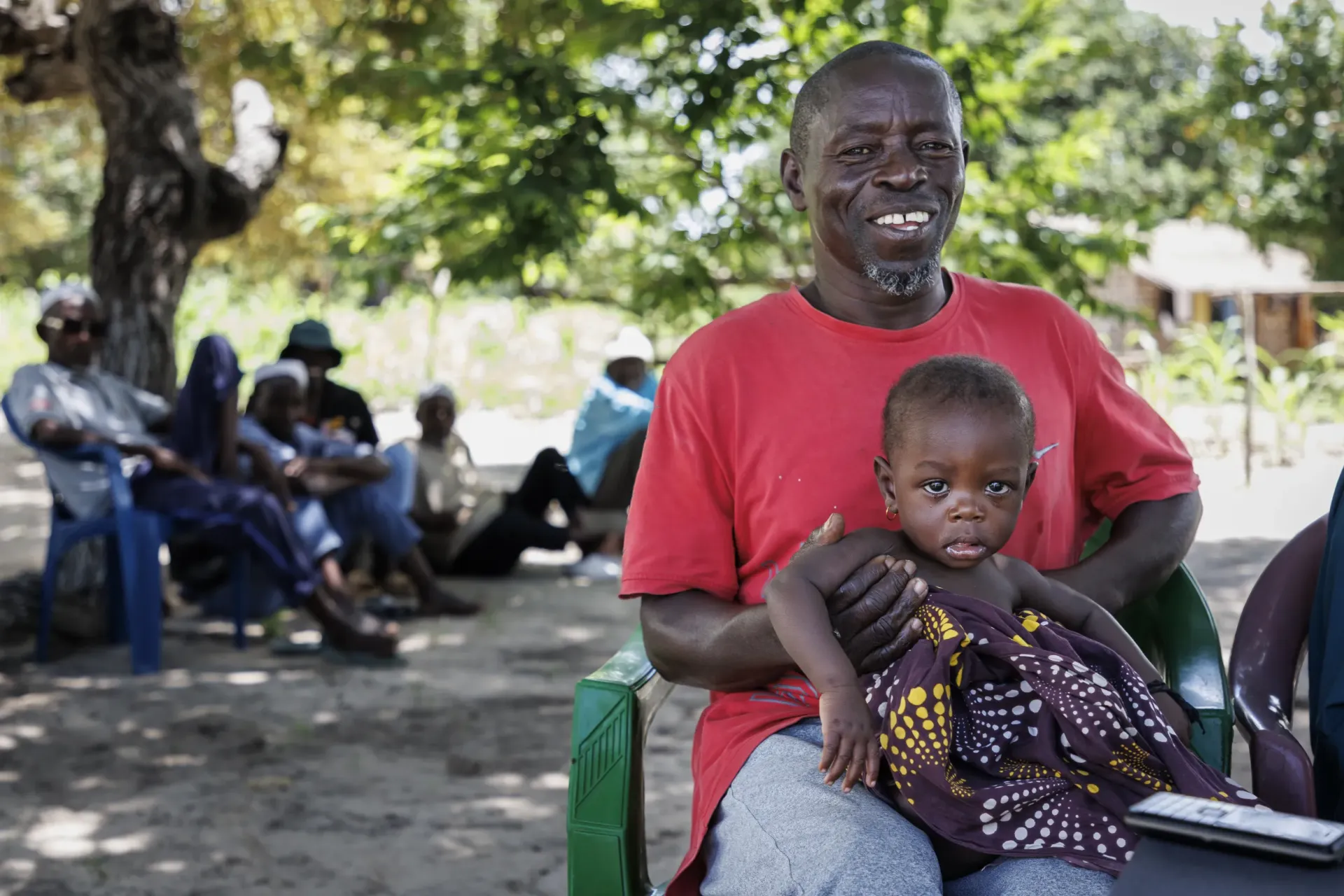
Among the parents waiting is 53-year-old Salimo Iaquide. A farmer and father of nine, has brought his youngest child, eight-month-old Nilza Salimo, for her monthly check-up.
“It is important to come to PIN each month to see if the baby is healthy and to get medicine if she has any problems,” Salimo says. “PIN has helped keep her healthy and strong. Today, she has no illness.”
Most days, Salimo works in his field harvesting cassava. Each month, either he or his wife brings Nilza to the PIN session, depending on who is most needed at home or in the fields.
“Having PIN come here is very good for the community,” he says. “Many people do not have time to spend a whole day travelling to a hospital because they have to work in the fields. If parents spend the day travelling, they also lose time to cook and feed the other children at home.”
The health workers visit Mihiriri once a month and see around 50 children. The main health issues they encounter include diarrhoea, malaria and, in some cases, malnutrition.
Across Mozambique, 15 per cent of children suffer from malnutrition. For children under two, good nutrition is especially important for growth, immunity and development.
PIN helps caregivers prevent malnutrition and support healthy child development through seven interlinked services: counselling on exclusive breastfeeding, complementary feeding, sanitation and hygiene, vitamin A supplementation, micronutrient powders, deworming, and growth monitoring.
For Salimo, the sessions have helped him better understand how to care for Nilza.
“I have learned a lot here,” he says. “I have learned about the important things to measure in a baby, like height and weight. I have also learned about giving the right food, making sure the baby has all her vaccines, and introducing food after six months of breastfeeding.”
On the day of the session, Salimo is one of only two fathers present. Most of the caregivers waiting with children are mothers. But for him, child health is a shared responsibility.
“Other fathers should come here with their children to understand whether a baby is healthy or not, and to know when to give medicine,” he says. “Both parents should participate in the lives and health of their children. Fathers need to know these things too.”
The PIN programme is implemented with support from the Government of Germany through KfW Development Bank. By bringing nutrition services closer to families, the programme helps caregivers in remote communities protect their children’s health and development.
As the session continues in Mihiriri, Salimo waits patiently with Nilza. For him, the monthly visit is not only about checking whether his daughter is growing well. It is also about learning how to give her the best possible start.
“PIN has helped keep her healthy and strong,” he says. “That is why we come every month.”